Looking for a convection wall heater with a thermostat that efficiently warms a room without noisy fans or high energy bills? This guide highlights five suitable options from trusted brands, explains who each model is best for, and helps you compare features like wattage, splash resistance, and thermostat capabilities. Each heater is wall-mounted, uses convection to circulate warm air, and includes safety features for steady, reliable heating.
| Product | Power | Room Size (approx.) | Special Feature | Thermostat |
|---|---|---|---|---|
| EconoHome Convection Wall Heater 250W (Updated Model) | 250W | Up to 120 Sq Ft | IP44 splash proof, triple reinforced design | Yes (thermostat options listed) |
| EconoHome Convection Wall Heater 400W (Updated Model) | 400W | Up to 120 Sq Ft | Heat reflectors included, triple reinforced | Yes |
| EconoHome Wall Heater Panel 400W (Updated Model) | 400W | Up to 120 Sq Ft | Heat reflector included, adjustable plug-in thermostat | Yes |
| EconoHome Convection Wall Heater 600W | 600W | Up to 300 Sq Ft | Adjustable heat reflector, triple reinforced construction | Yes |
| 400W | Up to 120 Sq Ft | Fan-less, stack convection, safety sensor | Yes |
EconoHome 250W Convection Wall Heater with Thermostat
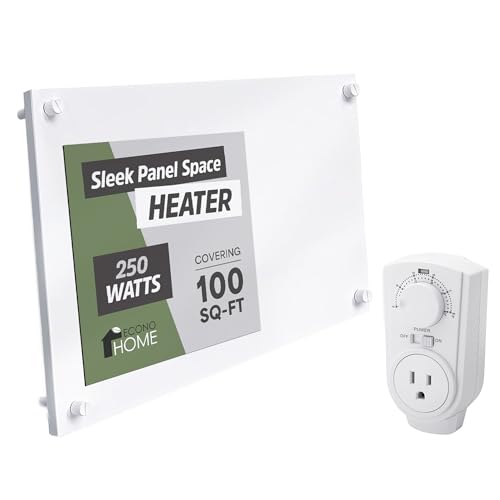
This 250W model is designed for smaller rooms or bathrooms up to about 120 square feet. It features IP44 splash protection and a compact panel that can be hard-wired for installation. The unit operates at a constant temperature and primarily uses convection currents to circulate warm air. It is triple reinforced for electrical safety and includes a 3-year manufacturer warranty. Best for compact spaces and bathroom zones where splash resistance is a priority. Caution: ensure proper distance from water for safety, and verify hard-wiring suitability before installation.
EconoHome 400W Convection Wall Heater with Thermostat (Updated Model)
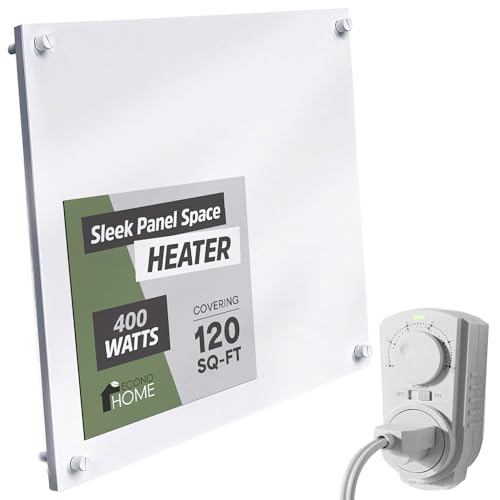
Designed for mid-sized spaces up to 120 square feet, this 400W panel includes a heat reflector and overheat protection for added safety. It uses convection to move air and offers a thermostat for steady comfort. The model is positioned as a cost-saving choice with triple-insulated construction and a paintable, sleek finish to blend with interior décor. Best for rooms where you want a balance of efficiency and a larger heating footprint. Limitation: heavier unit may require dedicated mounting hardware and electrical access.
EconoHome 400W Wall Heater Panel with Thermostat

This 400W panel emphasizes energy savings, claiming up to 50% reduction in heating costs versus conventional space heaters. It includes a heat reflector and an adjustable plug-in thermostat, with a broad temperature range for consistent ambient warmth. Best for users who want a cost-conscious option with straightforward thermostat control and a modern, flush-mounted appearance. Note: as a wall panel, installation may be easier in fixed wall cavities than in stud-filled retrofit scenarios.
EconoHome 600W Convection Wall Heater

With 600W of power, this model targets larger rooms up to about 300 square feet. It includes an adjustable heat reflector and a triple-reinforced construction for electrical safety. The unit supports a plug-in thermostat option and is designed to be hard-wired for permanent installation. Best for family rooms or open-plan spaces where higher heat output is desired. Caution: ensure electrical circuit capacity matches the higher wattage to avoid overloading.
Envi Plug-in Electric Panel Wall Heaters

The ENVI panel offers a plug-in design with a fan-less operation and a stack convection method. It emphasizes safe, low-wattage heating suitable for targeted spaces and can run continuously with safety features like a wall-sense sensor. Best for bedrooms or home offices where silent operation and air cleanliness are priorities. Limitation: as a plug-in model, it may be less suitable for retrofits without accessible outlets near installation points.
Buying Guide
Key considerations when choosing a convection wall heater with a thermostat:
- Room size and wattage: Match heater wattage to room size. Higher wattage is needed for larger areas; undersized units struggle to maintain comfort.
- Thermostat type: Decide between plug-in thermostats, built-in thermostats, or smart controls. Built-in thermostats simplify setup, while smart controls offer remote scheduling.
- Installation and wiring: Some units are designed for hard-wiring, others for plug-in use. Confirm electrical capacity and clearances from walls and water sources.
- Safety features: Look for overheat protection, safety sensors, splash protection (IP ratings), and cool-to-touch casings where applicable.
- Energy efficiency: Consider models advertised as energy-saving, with heat reflectors and heat distribution features to minimize wasted heat.
- Design and finish: Choose a finish that blends with décor; some models are paintable or have slim profiles for unobtrusive mounting.
- Longevity and warranty: A multi-year warranty can indicate product reliability and manufacturer confidence.
How to Choose Between Models
- Small rooms or bathrooms: A 250W to 400W model with splash protection offers efficient, compact heating.
- Medium living spaces: A 400W model with a built-in thermostat provides better coverage and control.
- Larger rooms or open layouts: A 600W model delivers higher heat output for quicker comfort and even warmth.
- Quiet operation: If sound matters, prefer fan-less designs and convection-focused airflow.
Installation Tips
- Place heaters away from water sources and ensure recommended clearance from walls or furniture.
- Follow manufacturer mounting hardware and electrical guidelines for safe operation.
- Use a dedicated circuit where possible for higher wattage units.
FAQ
- What is a convection wall heater?
Answer: It heats the surrounding air and circulates it through convection currents, typically resulting in even room warmth with minimal noise. - Do these units have built-in thermostats?
Answer: Yes, the selected models include built-in or plug-in thermostat options for steady temperature control. - Are they safe to touch?
Answer: Most models feature warm-to-touch casings and safety guards; some have cool-to-touch designs or safety sensors. - Is hard-wiring required?
Answer: Several models are designed for hard-wiring, while others can plug into standard outlets. Verify installation requirements before buying. - Can I install these in a bathroom?
Answer: Some models have IP-rated splash protection suitable for bathrooms; check the product’s IP rating and installation guidelines. - Will these reduce my energy bills?
Answer: Energy-efficient convection heaters with heat reflectors and programmable thermostats can help lower heating costs when used properly.