Looking for a do-it-yourself mini split that can cool or heat individual rooms without professional installation? This guide highlights top options that are designed for simple DIY setup, with compact footprints and energy-efficient performance. The best picks here are suited for different space sizes and user needs, from small bedrooms to home offices. Each product summary includes who it’s best for and why it stands out, plus practical cautions to consider before you buy. A quick comparison table follows to help you compare key points at a glance.
Product Comparison Snapshot
- GarveeHome SEER 18.5 — Best for mid-size rooms up to 750 sq ft, energy efficient with smart features.
- MRCOOL Easy Pro Series 12k — Best for DIY first-timers, straightforward installation and cost efficiency.
- Feelfunn 9000 BTU — Best for compact spaces up to 550 sq ft, strong smart control.
- Senville LETO 9000 BTU — Best for Alexa-enabled convenience and versatile all-season use.
- MRCOOL DIY 24k BTU — Best for larger rooms up to around 1000 sq ft with higher efficiency.
GarveeHome SEER 18.5 12000BTU Mini Split Overview

The GarveeHome system targets efficiency and ease of DIY installation. It is designed for rooms up to 750 square feet, offering inverter cooling with a SEER of 18.5. This model is ideal for buyers who want energy savings and programmable control, including a 24/7 timer and sleep mode. It comes with a DIY installation kit and a step-by-step guide, making it a practical option for experienced DIY installers. A caution: while refrigerant is pre-charged, the unit typically requires vacuumization during setup to meet optimal performance.
- Best for mid-size rooms where energy efficiency is a priority.
- Better for buyers comfortable with a DIY installation workflow and a video guide.
MRCOOL 12000 BTU Easy Pro Series

This 12,000 BTU ductless inverter mini split is positioned as a straightforward DIY installation option. It supports heating and cooling for spaces up to roughly 550 square feet and emphasizes low-profile operation with a focus on cost efficiency. It is well-suited for homeowners who want a simple, pre-charged solution that minimizes setup complexity. A potential limitation is that it targets smaller spaces, so larger rooms may require more capacity.
- Best for small to medium rooms when DIY is a priority.
- Choose this if you want a cost-effective, easy-to-install system with heating and cooling.
Feelfunn 9000BTU Mini Split With Smart Control
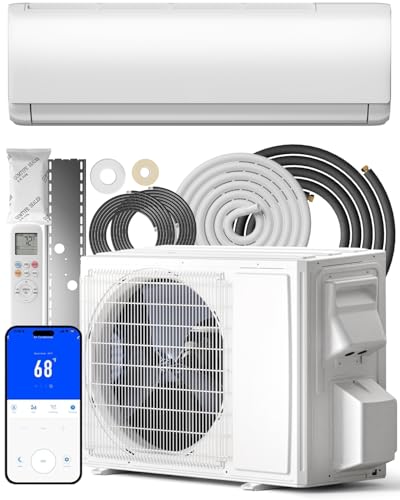
The Feelfunn model provides 9000 BTU cooling with 22 SEER2 efficiency, suitable for spaces up to about 550 square feet. It emphasizes smart control, including Alexa and Google Assistant compatibility, plus a remote for flexible use. A notable benefit is its weather-resilient outdoor unit and self-cleaning features for low maintenance. The caveat: the stated cooling/heating endpoints suggest it’s best for moderate climates and rooms not exceeding the 550 sq ft range.
- Best for tech-savvy buyers who want voice control and smart home integration.
- Better for smaller living areas like bedrooms or compact living rooms.
Senville LETO 9000 BTU Inverter Mini Split
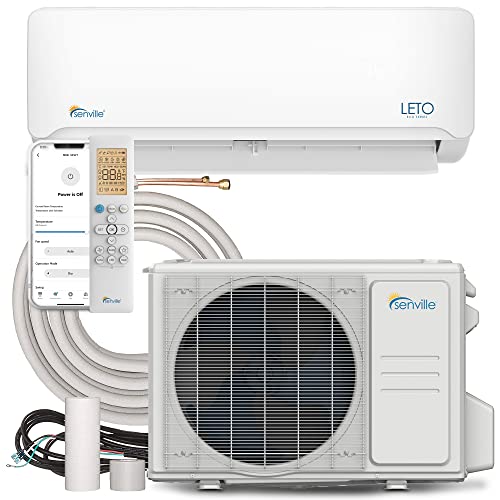
The Senville LETO series 9000 BTU model is designed for all-season use with inverter technology and compatibility with Alexa. It acts as a versatile four-in-one system, providing air conditioning, a heat pump, dehumidification, and a fan. It is well-suited for bedrooms, living spaces, and small commercial settings that demand flexible climate control. A limitation to note is that performance may vary in extreme cold, as with many air-source heat pumps, depending on installation specifics.
- Best for users who want Alexa-enabled voice control and multi-function capability.
- Choose this if you need a stylish, all-season unit for medium-sized rooms.
Senville LETO 12000 BTU Inverter Mini Split
This 12,000 BTU Senville LETO unit adds higher capacity while maintaining the same all-season, voice-enabled, four-in-one framework. It targets spaces around 600–750 square feet depending on insulation and climate. It’s appropriate for larger bedrooms, open-plan living areas, or small offices seeking consistent climate control with app and voice integration. A caution: higher capacity units may require more robust electrical considerations during DIY setup.
- Best for medium to larger rooms requiring more cooling capacity.
- Better for users who want integrated control via Alexa and robust performance.
MRCOOL DIY 24k Mini Split for Bigger Spaces

The MRCOOL DIY 24k BTU unit delivers higher capacity suitable for larger rooms up to about 1,000 square feet. It is designed for energy efficiency with a SEER2 rating and a pre-charged line set for easier DIY installation. The product is best for users who need a single-system solution for bigger spaces while preserving DIY convenience. Limitation to consider: larger footprints require careful electrical and structural planning on-site to ensure optimal performance.
- Best for larger rooms or open-plan areas where DIY setup is preferred.
- Choose this if you need higher capacity without moving to a centralized system.
Buying Guide: Do-It-Yourself Mini Splits
What should you check before buying a DIY mini split? Start with space size, climate, and installation tolerance. Consider BTU rating in relation to room size, insulation quality, and sun exposure. Look for inverter technology for energy efficiency and quieter operation. Verify that the kit includes essential installation hardware and clear instructions.
Key questions for buyers
- What size room can the unit handle? Match BTU to square footage and ceiling height for comfort.
- Is installation truly DIY-friendly? Check included tools, line sets, and refrigerant pre-charge details.
- Does the system support smart control? Look for WiFi, app access, and voice assistant compatibility.
- What are the operating noise levels? Quieter units improve comfort in bedrooms and studies.
- How reliable is the warranty and service model? Review the warranty terms and on-site support options.
Space planning and installation considerations
- Choose indoor and outdoor unit placement to maximize airflow and minimize obstruction.
- Ensure electrical supply matches the system’s requirements and local codes.
- Prepare for vacuumizing the refrigerant line during setup to optimize efficiency.
All-season flexibility and energy use
All selected models emphasize energy efficiency and flexible operation across seasons. Inverter technology helps modulate cooling or heating to maintain comfort without large power swings. When choosing a unit, weigh the climate where you live and how frequently you need heating versus cooling.
FAQ
- Q: Can I install a mini split myself if I’m not very handy? A: DIY installation is possible on many models, but follow the manufacturer’s instructions closely and consider professional help if you’re uncertain about electrical work or refrigerant handling.
- Q: Do these systems require professional refrigerant charging? A: Some kits are pre-charged for easier DIY setup, but vacuuming and final charging are usually required during installation for optimal performance.
- Q: Are mini splits a good option for apartments? A: Yes, especially compact units designed for smaller spaces and lightweight installation. Always check building codes and HOA rules before installation.
- Q: How do smart features improve everyday use? A: WiFi control and voice assistants let you adjust temperature remotely, set schedules, and automate climate changes based on routines.
- Q: What should I do if the unit doesn’t cool evenly? A: Verify proper installation, airflow path, and insulation. Uneven cooling can stem from improper outdoor unit placement or blocked vents.
- Q: Can I expand a DIY system later? A: Some brands offer multi-zone or add-on capacity, but compatibility varies. Check product documentation for expansion options.