Answering your search for a dependable domestic water booster system, this guide highlights five top options that are best suited for homes, apartments, gardens, and small properties. Each product is evaluated for pressure consistency, energy efficiency, and ease of installation. Ideal buyers include homeowners with low municipal pressure, people with multi-story homes, and those seeking automatic pressure control without manual priming. The table below compares key details to aid quick shopping decisions.
| Product | Type | Max Pressure | Flow (GPH / GPM) | Key Benefit |
|---|---|---|---|---|
| Aquastrong Smart 45 | Whole-house booster | 80 PSI | 1500 GPH | Automatic, constant pressure, durable design |
| DAB E.SYBOX | Integrated electronic booster | 210 ft head | Up to 32 gpm | Residential-ready, compact system |
| Aquastrong 1320 GPH Shallow Well Garden | Shallow well booster | 164 ft head | 1320 GPH | Stainless steel, pressure switch auto operation |
| TDRFORCE 540E | Inline booster pump | 5.5 GPM (approx. 330 GPH) | Up to 160 ft lift | Versatile for RV, garden, and marine use |
| Auto Water Pressure Booster Pump (MARGAR) | Domestic booster with control panel | Not specified | 26 GPM | Smart switch with standby mode |
Aquastrong Smart 45: All‑In‑One Home Pressure Booster

The Aquastrong Smart 45 is a fully integrated domestic booster designed for automatic, constant pressure across all taps. It features a stainless steel impeller, a maintenance-free pressure tank, and an outlet with a check valve. The system uses an air-cooled permanent magnet motor with inverter technology to deliver energy savings and quiet operation. Best for households seeking automatic pressure management and quiet performance in a single robust unit. A potential caveat is that the maximum flow and head depend on installation constraints and water temperature; verify compatibility with your plumbing layout.
DAB E.SYBOX 230V Water Booster System

The DAB E.SYBOX is an integrated electronic booster system suitable for domestic use, offering substantial head height and flow. It is best for homes needing compact equipment with automatic electronic regulation to maintain steady pressure. Choose this if you want a fully integrated electronic solution with reliable automatic adjustments. A limitation to note is that installation may require precise plumbing connections and electrical setup to maximize performance.
Aquastrong 1320 GPH Shallow Well Garden Pump
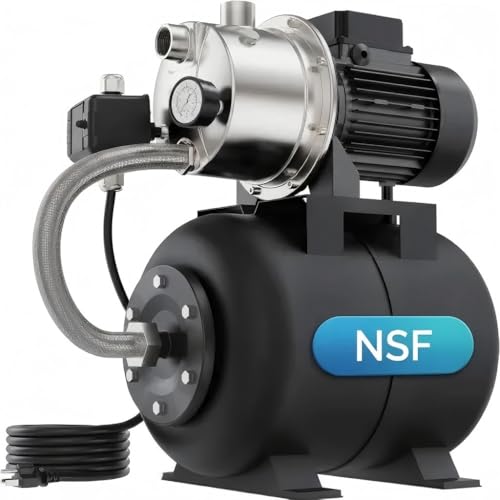
This shallow well jet pump features stainless steel housing and a compact 5-gallon pressure tank with automatic pressure switch. It provides strong suction, up to 26 feet, and can deliver up to 164 feet of head with a maximum of 1340–1320 GPH, depending on setup. Best for garden irrigation and domestic water supply where a stainless steel, corrosion-resistant unit is preferred. A limitation is its reliance on a shallow well configuration; deeper wells may require a different setup.
TDRFORCE 540E Inline Water Booster

The TDRFORCE 540E offers 5.5 GPM (330 GPH) with a maximum lift of 160 ft, making it a versatile option for RVs, boats, and small homes needing a boost on demand. It supports 110V operation and is easy to install with standard fittings. Best for situations requiring a compact, on-demand water pressure solution. A potential drawback is its lower continuous flow compared to larger household boosters, which may limit use in high-demand scenarios.
Auto Water Pressure Booster Pump for Home (MARGAR)

The MARGAR auto booster pump provides 26 GPM with a smart automatic switch that starts with faucet use and enters standby mode otherwise. It includes a real-time pressure gauge and a pressure gauge panel for monitoring. Best for homeowners seeking an automatic, energy-conscious solution with visible pressure status. A note: the exact pressure range is not specified in the summary, so verify compatibility with your target pressure needs.
Buying Guide: Key Considerations for a Domestic Water Booster System
- Pressure needs: Match the unit’s max pressure or head to your home’s elevation and plumbing layout. Higher head is essential for multi-story homes or distant fixtures.
- Flow rate vs. power: Larger homes benefit from higher GPH/GPM. Consider energy efficiency features like inverter motors for ongoing savings.
- Control and automation: Smart switches, pressure sensors, and standby modes reduce wasted energy and ensure steady pressure.
- Materials and durability: Stainless steel components resist corrosion and hot water exposure; look for robust housings and leak prevention features.
- Installation and space: Integrated packages save installation time; evaluate space requirements and whether professional installation is recommended.
- Safety features: Automatic dry-run protection, overheat sensors, and protective enclosures help prevent damage to pumps and plumbing.
Frequently Asked Questions
- What is a domestic water booster system?
A domestic water booster system increases water pressure and maintains constant pressure across fixtures in a home. - Do these pumps require professional installation?
Some kits are plug-and-play, but many installations benefit from professional help to ensure proper wiring, plumbing, and electrical safety. - How do I choose the right head and flow?
Consider the highest fixture elevation and peak simultaneous usage. Higher head suits multi-story homes; higher flow supports multiple fixtures at once. - Are automatic booster systems energy-efficient?
Yes, models with inverter motors and smart controls adjust performance to demand, reducing energy use compared with constant-run pumps. - Can boosters handle hot water?
Many units tolerate hot water up to specified temperatures; always check the manufacturer’s temperature ratings before use with hot water lines. - What maintenance is required?
Routine inspections for leaks, valve integrity, and electrical connections extend pump life; some units have maintenance-free pressure tanks.