Answering the question “which dryer exhaust duct booster to choose?” this guide compares five top 4-inch power ventilators designed to improve airflow, reduce drying time, and curb lint buildup. This selection targets homeowners with long or winding vent runs, or spaces where exhaust efficiency is critical. The top picks are best for long ducts, energy savings, and safety features like built-in lint traps or auto-sensing sleep modes. Use the table below to quickly compare key points and then read deeper product notes to match your needs.
| Product | Airflow | Auto Function | Lint Safety | Best For |
|---|---|---|---|---|
| Dirlexal 4″ Booster | 160 CFM | Auto On/Off | Lint trap with view window | Long ducts over 25 ft |
| Rysmirs 4″ Booster | 240 CFM | Auto On/Off | Post-purge to clear lint | Complex vent runs |
| Suncourt Centrasense 4″ Kit | 4″ flow (unspecified CFM) | Auto sensor | Built-in error notification | Code-compliant safety |
| Tjernlund LB2 | Not specified | Automatic activation | Lint Blitzer impeller | 25 ft+ runs |
| Zuomeng 4″ Booster | 200 CFM | Auto with pressure sensor | Automatic operation | Long, bent vents |
Dirlexal 4 Inch Dryer Vent Booster Fan

The Dirlexal booster pushes 160 CFM to accelerate exhausting air through long runs over 25 feet. It includes an integrated lint trap with a clear view window, enabling quick lint checks without disassembly. An auto sensing feature starts and stops the unit with the dryer for hands-free operation. Best for households with lengthy or complex vent paths and a need for visible lint monitoring. Caution: ensure the duct path length and bends align with the product’s recommended range to optimize performance.
Rysmirs 4 Inch 240CFM Dryer Booster Fan

The Rysmirs booster delivers 240 CFM and supports long vent runs with a 25–100 foot range. It features auto-sync with the dryer and a post-purge function (3–5 minutes) to clear residual lint and moisture after cycles. This makes it a strong pick for homes with lengthy or twisty ductwork. Best for heavy-duty setups where lint buildup is a recurring concern. Caution: higher airflow may require more precise mounting to avoid vibration on long ducts.
Suncourt DEDPV Centrasense 4-Inch Kit
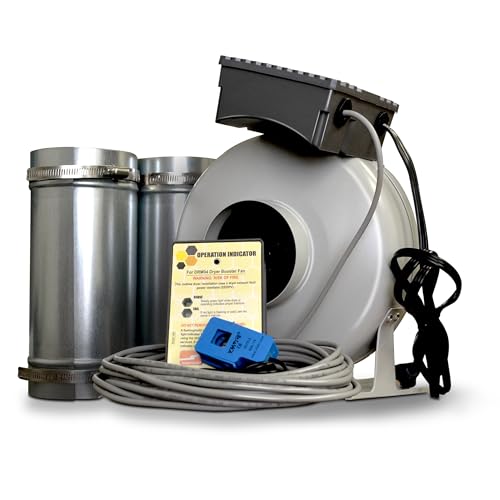
The Centrasense kit includes an automatic sensor, a remote status indicator, and UL 705 safety certification. It’s designed to prevent lint buildup and reduce drying times by maintaining consistent venting, especially in longer runs up to 100 equivalent feet. Best for code-conscious installations requiring safety monitoring. Limitation: the exact airflow rating is not specified in a straightforward CFM figure, so expect performance to vary with duct length.
Tjernlund LB2 No-Clog DEDPV Booster
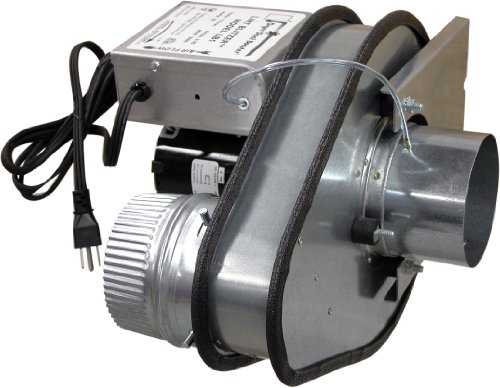
Tjernlund’s LB2 emphasizes a no-clog design with a lint-repellent impeller and a simple LED indicator on the control panel. It is recommended for dryer exhaust ducts 25 feet or longer, offering reliable automatic activation. Best for homes with older ductwork that tends to accumulate lint. Caution: some installations may require careful alignment to ensure the impeller remains clear of debris in longer runs.
Dryer Booster Fan with Auto On/Off
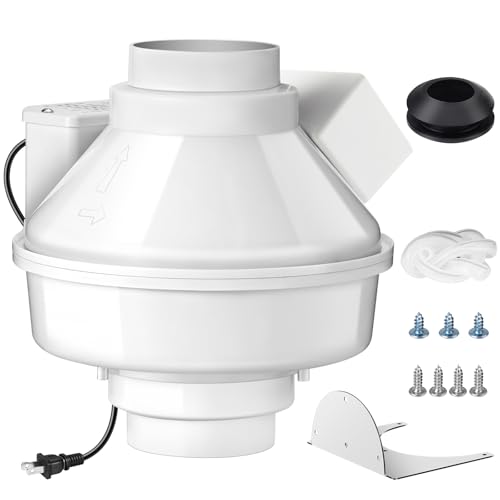
The GUOJINJISM booster delivers 167 CFM with an auto-on/off pressure sensor, removing the need for manual control and enabling seamless operation across a wide vent range. It suits long vent runs in basements or garages and can handle moisture buildup and lint more efficiently than passive systems. Best for automated, forget-free use. Caution: airflow figures can vary with duct length and curvature; verify compatibility with your exact duct layout.
Zuomeng M-4DBT Automatic Dryer Vent Booster

Zuomeng provides 200 CFM with automatic pressure-responsive operation, designed for long-duct ventilation and multiple bends. The system starts and stops with your dryer, aiming to shorten drying times and reduce lingering moisture. Best for users who want a smart, hands-free flow boost on lengthy or obstructed runs. Caution: ensure the unit is installed away from heat sources and in a straight section as recommended.
Buying Guide
- Vent length and bends matters. Choose a booster that clearly states suitability for your duct length and number of turns. Longer, more complex runs often benefit from higher CFM and automatic operation.
- Auto on/off and sensors. Auto-sensing models reduce forgetfulness and improve safety by coordinating with the dryer cycle. Look for pressure or airflow sensors and post-purge features for lint clearing.
- Lint management. Built-in lint traps or lint-repellent impellers help prevent blockages. A view window or remote status indicator aids maintenance checks and safety.
- Safety certifications. UL or IRC/IMC-compliant devices provide adherence to recognized safety standards. Ensure correct duct installation to meet building codes.
- Compatibility with your space. Indoor vs. outdoor installation, weather resistance, and mounting options should align with where you plan the booster to operate.
- Installation and maintenance. Consider models with simpler mounting and accessible lint-clearing paths. Some units offer post-purge cycles to clear residual moisture.
Frequently Asked Questions
- Do dryer booster fans really save energy? Yes. By increasing exhaust airflow, they shorten drying time and can reduce energy use in long vent runs.
- What CFM should I look for? Higher CFM helps longer or more complex ducts, but the ideal value depends on your duct length, bends, and dryer model. Check product guidelines for your setup.
- Are these safe to install myself? Many are designed for homeowner installation, but follow local codes and ensure proper duct sealing and clearance. Some installations may require a professional.
- Can I use a booster in all dryers? Booster fans are compatible with most standard 4-inch exhaust ducts, but verify compatibility with your dryer’s vent specifications and duct layout.
- Do boosters reduce lint buildup? Some units include lint traps and post-purge features that help reduce buildup, though regular cleaning of ducts remains important.
- Which model is best for long, multi-bend ducts? Models with higher CFM and auto-sensing features, such as Rysmirs or Zuomeng, are typically well-suited for long runs with multiple bends.