Answer: A 90 degree duct elbow helps redirect airflow when space is tight, preventing kinks and ensuring a smoother vent run. This guide compares top 90 degree elbows suitable for residential dryers, HVAC, and venting, so you can pick the best fit for your needs. Best for tight spaces, tight closets, or installations near walls where a straight run isn’t possible. The top picks are categorized by size, material, and adaptability to help you choose quickly. Below is a quick summary of five strong options and what they’re best for.
| Product | Best For | Key Benefit |
|---|---|---|
| Whirlpool 4396006RW | Residential dryers | Close-turn 90-degree fit with snap-lock installation |
| Mitchell Metal 4″ Adjustable Duct Elbow | Flexible HVAC routing | 0–90° adjustable for tight spaces |
| Hicarer 4″ Galvanized Dryer Elbow | Budget-friendly dryer venting | Robust galvanized construction with adjustable angle |
| ECOPRO VENT 4″ 90° | Industrial or multi-application use | Durable galvanized steel with precise bend |
| Duct Outlet 10″ Adjustable 90 Degree Elbow | Large-diameter duct runs | Adjustable to align long runs |
Whirlpool 4396006RW Genuine OEM Dryer Vent Elbow Connector

This 90-degree close-turn elbow is designed for Whirlpool and compatible dryers. It offers a genuine OEM fit to support proper alignment and secure performance. Best for homeowners replacing an OEM part in a standard 4-inch vent run where space is tight behind the dryer.
Best for: households seeking an exact OEM match for a reliable, tool-free snap-lock connection in a compact space. The elbow helps prevent crushing and kinking in close quarter installations.
Limitation: As a specific OEM part, it’s most suitable for Whirlpool models or compatible brands with the same vent diameter.
Mitchell Metal 4″ Adjustable Duct Elbow 90 Degree HVAC
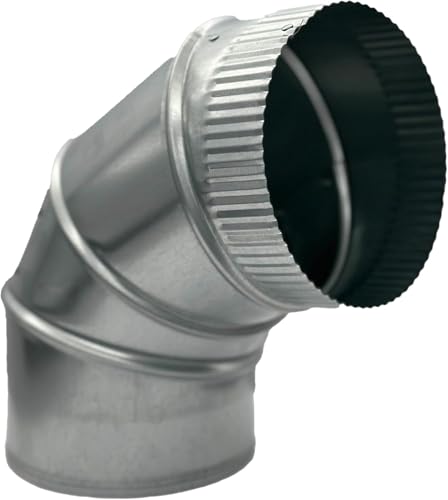
Crafted from galvanized steel, this 4-inch 90-degree elbow is designed for HVAC systems and duct runs. Its adjustable angle (0° to 90°) helps navigate tight spaces and aligns ducts for improved airflow. A solid choice for DIY or professional installations that require flexibility.
Best for: users who need a flexible, durable elbow that can adapt to awkward routing. Not ideal if you require a fixed, non-adjustable bend for a simple layout.
Hicarer 1 Pcs 4 Inch 90 Degree Galvanized Dryer Elbow

Made from galvanized steel, this 4-inch elbow offers a sturdy connection for dryer venting. The design accommodates a close 90-degree turn, with measurements ensuring a snug fit within a typical 4-inch system. It is suitable for upgrading an existing vent line or creating a new path in limited spaces.
Best for: buyers wanting an affordable, robust elbow for standard 4″ dryer venting. Limitation: minor angle adjustments may require tools to fine-tune alignment.
ECOPRO VENT 6″ Inch 90˚ Degree Galvanized Steel Duct Elbow

This 6-inch elbow provides a robust 90-degree bend for larger duct runs. Galvanized steel construction ensures durability in demanding environments. Suitable for HVAC or venting applications where a larger diameter elbow is needed to maintain airflow with minimal resistance.
Best for: larger-diameter vent paths or retrofit projects that require a strong, long-lasting bend. Caution: ensure the 6″ size matches your ductwork before purchase.
Duct Outlet 10″ Adjustable 90 Degree Elbow
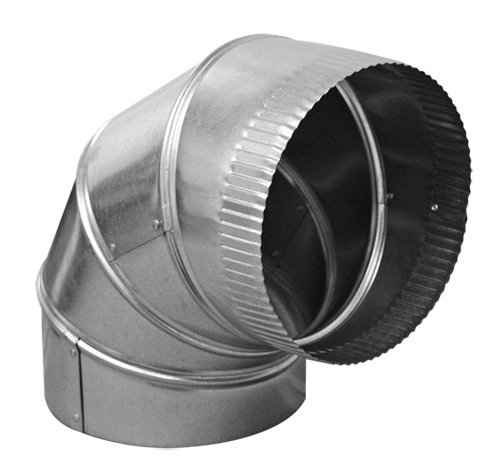
Designed for HVAC round duct installations, this 10-inch elbow is adjustable to align runs and create directional changes. The galvanized steel construction supports use in supply and return air paths, making it a versatile choice for larger systems or retrofit projects.
Best for: projects needing an adjustable, larger-diameter elbow to navigate lengthy duct runs. Limitation: compatibility depends on whether your duct system supports a 10″ elbow.
Buying Guide: 90 Degree Duct Elbows
What size should I choose?
Choose the diameter that matches your existing ducting. Common residential sizes are 4 inches and 6 inches. For larger systems or high-volume airflow, consider 6 inches or larger; ensure your ductwork and fittings align to avoid leaks.
Metal type and durability
Galvanized steel provides corrosion resistance and durability for long-term use. Aluminum is lighter, often used in space-saving applications, but may not be as robust in high-heat or heavy-duty environments.
Fixed vs. adjustable
Fixed elbows are simple and reliable for straightforward paths. Adjustable elbows offer flexibility to navigate tight corners or awkward layouts, but ensure your installation remains airtight after adjustment.
Installation considerations
Look for snap-lock connections or collars that simplify installation without tools when space is limited. Check for compatibility with your dryer or HVAC system’s vent diameter and ensure the elbow doesn’t create unnecessary resistance or sharp kinks.
Airflow impact
Elbows add turns that can increase resistance. When possible, minimize the number of bends and use larger diameters to maintain airflow efficiency and reduce draft loss.
Sealing and reliability
Use sealing tape or appropriate duct sealant to improve airtightness at joints. Avoid mismatched materials or incorrect orientations that could lead to leaks or moisture buildup.
Maintenance and safety
Inspect for rust, dents, or loose fittings periodically. Replace damaged elbows promptly to prevent reduced airflow or fire hazards in dryer vent applications.
Summary of considerations
- Match diameter to existing ducting.
- Choose fixed or adjustable based on space and required precision.
- Prefer galvanized steel for durability; consider aluminum for lighter-duty uses.
- Ensure airtight joints with proper sealing methods.
- Assess airflow impact and minimize unnecessary bends.
FAQ
- What is a 90-degree duct elbow used for?
A 90-degree duct elbow redirects airflow, allowing vent runs to navigate corners or tight spaces without kinking the duct.
- Can I use any 4-inch elbow for a dryer vent?
Only if the elbow matches your dryer’s vent diameter and connection type. Check compatibility with your model.
- Are adjustable elbows worth it for small spaces?
Yes. Adjustable elbows provide flexibility to align ducts precisely when space is constrained, reducing installation strain.
- Is galvanized steel better than aluminum for elbows?
Galvanized steel offers higher durability and resistance to moisture and rust, but aluminum can be lighter for limited-access installations.
- Do I need sealant at elbow joints?
Yes. Apply appropriate sealing tape or duct sealant to ensure airtight connections and prevent leaks.
- How do I choose between fixed and adjustable elbows?
Consider space constraints and whether you can plan a fixed path or need flexibility to adapt during installation.