Finding an efficient electric baseboard heater can improve comfort in bedrooms, living rooms, and home offices. This guide highlights five solid options suitable for various spaces, offering safe operation, reliable performance, and easy installation. Each product includes a quick feature snapshot to help you compare at a glance and choose the best fit for your needs.
| Product | Brand | Key Benefit |
|---|---|---|
| Cadet F Series 48″ Electric Baseboard Heater | Cadet | Strong heat output with simple mounting and safety shutoff |
| Cadet F Series 72 in. Electric Baseboard Heater | Cadet | Extended length for larger rooms, reliable 1500 W performance |
| Comfort Zone Electric Baseboard Space Heater CZ600 | Comfort Zone | Adjustable thermostat, dual heat settings, safety features |
| Air Choice 33” Baseboard Heater | Air Choice | Rapid heating, remote control, 3D flame ambiance option |
| EZ-HEAT CZ600 1,500W Baseboard Heater | EZ-HEAT | Robust convection heat with tip-over and overheat protection |
Cadet F Series 48-Inch Electric Baseboard Heater
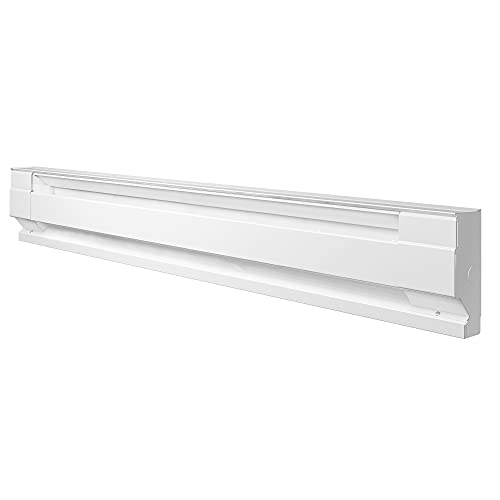
The Cadet F Series 48″ baseboard heater combines robust output with straightforward installation. It operates at 1000/750 watts and supports 240/208-volt wiring, making it suitable for mid-sized rooms. Its universal wiring and pre-punched knockouts simplify mounting either on the wall or along the floor line, which can reduce installation time and hardware costs. A high-temperature safety shutoff provides added protection, helping to prevent potential overheating in busy living spaces.
Cadet F Series 72-Inch Electric Baseboard Heater

Designed for larger rooms, this Cadet 72-inch model delivers 1500 watts at 120 volts, ensuring steady warmth across open spaces. Its longer length helps distribute heat more evenly along walls, reducing cold spots. Built with Cadet’s manufacturing standards, this unit emphasizes dependable operation and consistent performance, though installation may involve more mounting length. This heater is suitable for spaces where a continuous, comfortable heat source is preferred without frequent thermostat adjustments.
Comfort Zone CZ600 1,500W Baseboard Heater

This Comfort Zone model emphasizes safety and control. It provides 1500 watts of convection heating and includes an adjustable thermostat with two heat settings, letting you tailor warmth to specific rooms or times of day. Safety features include a tip-over switch, an overheat protection sensor, and a stay-cool exterior to minimize accidental contact burns. Its quiet operation makes it suitable for bedrooms or home offices where uninterrupted ambiance is desired.
Air Choice 33” Baseboard Heater With Remote

Air Choice offers a compact 33-inch heater with 1500W heating capability, suitable for larger rooms or office spaces. The top air outlet design supports efficient convection, with a remote and adjustable thermostat to control temperature from a distance. This model includes a 12-hour timer, plus overheat and tip-over protections, which enhance safety and convenience in shared living areas. The unit’s contemporary design blends with most decors while delivering rapid warmth.
Cadet F Series 36-Inch Electric Baseboard Heater
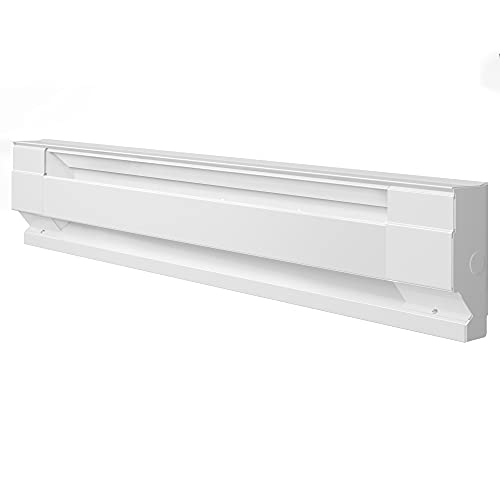
Cadet’s 36-inch model continues the brand’s emphasis on dependable convection heating. It offers multiple wattage options (750/563 watts) at 240/208 volts, enabling flexible installation in smaller rooms or zones that require targeted warmth. The unit features universal wiring and pre-punched knockouts for straightforward mounting, along with an all-metal, powder-coated finish to resist wear in busy spaces. It provides efficient, steady heat without complex setup.
Buying Guide: What To Consider When Choosing An Electric Baseboard Heater
When selecting an electric baseboard heater, consider room size, insulation, and desired control features. Longer units can distribute heat more evenly across larger walls, while higher wattages are necessary for rooms with poor insulation or higher ceilings. Choose units with built-in safety features such as tip-over switches, overheat protection, and stay-cool exteriors to minimize hazards, especially in homes with children or pets.
Thermostat options influence comfort and energy use. Heaters with adjustable thermostats or dual heat settings provide flexibility, allowing you to reduce energy consumption when rooms are warm enough. Remote controls or digital displays add convenience for quick adjustments from across the room. Noise level matters in bedrooms or study areas; convection-based baseboards generally operate quietly, maintaining a peaceful environment.
Installation considerations include mounting method, wall space, and electrical compatibility. Universal wiring and pre-punched knockouts simplify installation in many homes, potentially reducing labor costs. Verify voltage compatibility (120V vs. 240V/208V) to align with your home’s electrical panel and existing circuits. Powder-coated metal housings offer durability in high-traffic rooms, while a slim profile helps maintain a clean look along baseboards.
Energy efficiency and heat distribution are important for overall comfort and operating cost. Choose models designed for continuous use in living spaces. In smaller rooms, a 750–1000 W unit may suffice if the space is well-insulated. For larger rooms or open floor plans, consider 1500 W options or longer bases to promote even heat distribution and reduce cold spots.
Finally, ensure the heater matches your aesthetic and safety needs. Some models emphasize modern styling with integrated flame-like ambiance, while others focus on robust, all-metal construction. Safety certifications, easy maintenance, and compatibility with built-in thermostats or smart home systems can further influence your long-term satisfaction.
In sum, the best electric baseboard heater for your home balances heat output, installation ease, safety features, and user-friendly controls. The options listed above cover a range of room sizes and preferences, helping you achieve consistent, reliable warmth with minimal fuss.