Answering the demand for fast, reliable heat, these electric forced air heaters are ideal for small rooms, garages, and workspaces. The top picks cater to different use cases: compact home use, portable job-site warming, and larger spaces needing higher BTUs. This guide highlights options for enthusiasts who want efficient warmth without fuel or emissions, plus safety features and energy-saving modes.
| Product | Best For | Key Benefit |
|---|---|---|
| Dura Heat EUH4000 | Garages and workshops | High wattage for rapid heating |
| Comfort Zone CZ45E | Home offices and bedrooms | Adjustable thermostat and energy efficiency |
| Dura Heat EUH5000 | Medium to large rooms | Higher BTU with 5000 watts |
| DEWALT F340635 | Job sites and industrial spaces | Heavy-duty portability and 1.65 kW output |
| Additional note | Versatility across spaces | Multiple wattage options for different needs |
Dura Heat EUH4000 Electric Space Heater for Garage

The Dura Heat EUH4000 is a 240-volt electric space heater offering 3750–4000 watts and high heat output. It is best for larger garage spaces or workshops where rapid warming is needed. This model is suitable for builders and hobbyists who require quick, persistent heat in open or semi-enclosed areas. Energy use is substantial at full power, so it’s best used where sustained heat is desired rather than temporary warmth.
Who it’s best for: Equip owners and workshop users needing fast, strong heating in larger unfurnished spaces.
Why selected: High wattage translates to quick warmth and the ability to maintain a comfortable temperature in a shop or garage that lacks insulation.
Caution: Higher energy draw requires a dedicated 20-amp circuit; not ideal for small, retired power loads or spaces where a standard outlet is insufficient.
Comfort Zone CZ45E Indoor Space Heater

The CZ45E is a compact, 1500-watt electric heater with adjustable thermostat and safety features like a tip-over switch and overheat protection. It’s designed for small rooms, bedrooms, and home offices where steady but moderate warmth is preferred. Its energy-saving features aim to reduce consumption while maintaining comfort.
Who it’s best for: People seeking a modest, reliable heater for personal spaces or work desks.
Why selected: Adjustable heat and thermostat control offer personalized warmth without overpowering the room.
Caution: For spaces larger than a small room, the heat may not be sufficient; best used as a supplemental heater rather than primary warmth in larger areas.
Dura Heat EUH5000 Electric Forced Air Heater

The EUH5000 provides 5000 watts of heating capacity with 16,400 BTU output, making it suitable for medium to larger spaces such as workshops, garages, or tents. It’s a strong option for spaces that need more robust warmth during colder seasons. The higher wattage means it can warm spaces more quickly than smaller models.
Who it’s best for: Users needing substantial warmth in moderately large rooms or semi-outdoor spaces.
Why selected: Higher heat output helps reach comfortable temperatures faster in open or ventilated areas.
Caution: Higher current draw requires careful electrical planning; ensure proper circuit capacity before use in larger spaces.
DEWALT F340635 Electric Forced Air Heater
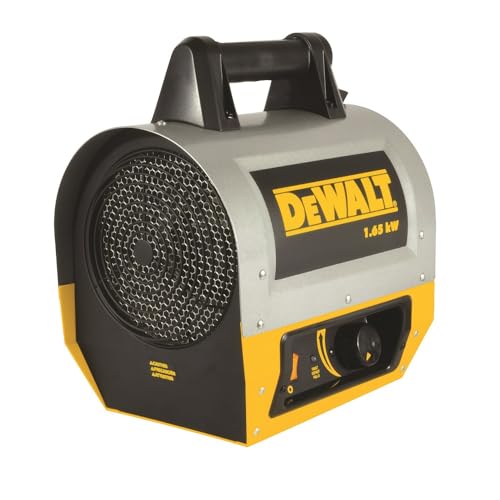
The DEWALT F340635 is a portable, heavy-duty electric forced air heater delivering 1.65 kW on standard 120-volt outlets, with a practical design for job sites and industrial environments. It’s built for durability and mobility, allowing quick warming in spaces like garages or construction sites without fuel or emissions.
Who it’s best for: Professionals needing a rugged, portable heater for temporary use on job sites.
Why selected: Combines portability with enough heat output for fast ambient warming in larger, open areas.
Caution: Requires a standard 120-volt outlet; situations demanding higher heat may exceed its 1.65 kW capacity.
Buying Guide: Key Considerations for Electric Forced Air Heaters
- Room size and heat output: Match BTU and wattage to space. Larger spaces need higher watts; smaller rooms benefit from lower-watt models to avoid overheating.
- Electrical requirements: Check voltage and circuit amperage. Some models demand dedicated circuits (20 amps), while others run on standard outlets (120V).
- Thermostat and controls: Adjustable thermostats and multiple heat settings improve energy efficiency and comfort.
- Safety features: Look for tip-over switches, overheat protection, and cool-touch housings for households with children or pets.
- Portability: Consider wheels or handles if you plan to move the heater between rooms or sites.
- Energy efficiency: Models with energy-saving modes or programmable timers help reduce power use over time.
- Installation and maintenance: Easy filter access, simple assemblies, and clear manuals simplify setup and ongoing use.
- Noise levels: Some units operate more quietly, which matters for bedrooms or offices.
Common buyer questions
- Do electric forced air heaters require special electrical wiring?
- Can these heaters be used outdoors?
- What is the typical wattage range for garage heaters?
- How quickly can I expect a space to warm up?
- Are there safety features that stop operation if a kid or pet touches them?
- Is it better to choose a higher wattage for faster warming or a lower wattage for energy savings?
FAQ Answers
- Do electric forced air heaters require special electrical wiring? Most household models run on standard 120V outlets, but high-wattage units may need dedicated circuits. Check the product’s electrical specifications before use.
- Can these heaters be used outdoors? Some models are designed for semi-outdoor spaces like garages, but most are intended for indoor use only. Always follow the manufacturer’s guidelines.
- What is the typical wattage range for garage heaters? Garage-focused units commonly range from about 1500W to 5000W, depending on space and insulation.
- How quickly can a space warm up? Higher-wattage models can raise ambient temperature faster, especially in uninsulated or windy spaces.
- Are there safety features to prevent injuries? Look for tip-over switches, overheat protection, and cool-to-touch exteriors to minimize accidents.
- Is higher wattage always better? Higher wattage heats spaces faster but increases energy use; choose wattage based on space size and the desired pace of warming.