Choosing the right electric water heater involves balancing flow needs, installation space, and energy efficiency. This guide highlights top electric options to help you compare tankless and mini-tank models, focusing on reliable brands and practical performance for American homes.
Summary of selected products: the list below emphasizes 2-on-demand electric tankless models for households with multiple outlets, plus compact mini-tank options for under-sink use. Each entry includes a brief note on capacity, installation requirements, and typical hot-water output for 2–3 fixtures. Use the Buying Guide to weigh factors like power supply, voltage, and whether you need whole-house or point-of-use solutions.
| Product | Type | Typical Use | Key Benefit |
|---|---|---|---|
| Orbek 14kW Tankless | Tankless | 2–3 points of use | Fast, endless hot water; compact 240V unit |
| Orbek 18kW Tankless | Tankless | 2–3 fixtures | Higher flow up to 4.17 GPM |
| WINTEMP 27kW Tankless | Tankless | Whole-house | High efficiency with up to 6.3 GPM |
| Rheem 18kW Tankless | Tankless | 2–4 fixtures | LED display and self-modulation |
| BOSCH Mini-Tank ES2.5 | Mini-Tank | Single faucet usage | Compact under-sink setup, 98% efficiency |
Orbek 14kW Tankless Electric

This 14kW on-demand electric model runs on 240V and requires a two-pole 60A breaker with 6 AWG wiring. It provides up to 3.38 GPM of hot water, suitable for 2–3 points of use simultaneously. Water-electricity separation helps minimize scale and corrosion. Output heats water rapidly, with potential energy savings relative to traditional tanks.
Orbek 18kW Tankless Electric
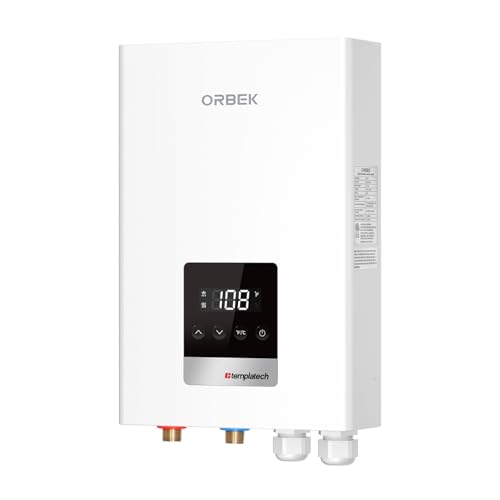
This 18kW unit requires dual 240V/40A breakers and 8 AWG wiring. It delivers up to 4.17 GPM for 2–3 fixtures, maintaining stable temperatures and quick hot-water delivery. As with other Orbek units, it emphasizes reduced energy use through water-electricity separation and fast response time.
Rheem 18kW Tankless Electric
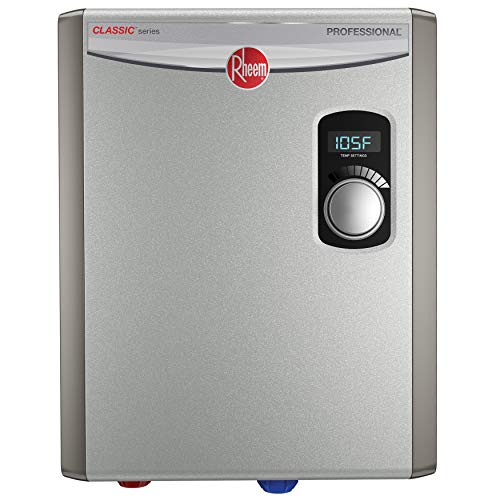
Rheem’s 18kW model features external digital thermostatic control with LED display and self-modulation to meet fluctuating hot-water demand. Copper immersion heating elements offer durability, and the unit supports flow up to about 4.4 GPM. It is designed for easy field service and includes a reliable performance profile for multiple fixtures.
WINTEMP 27kW Tankless Electric

The WINTEMP 27kW model operates at 240V and requires three double-pole 40A breakers with three 8 AWG cables. It yields up to 6.5 GPM, making it suitable for 2–4 points of use in a typical home. The system auto-adjusts energy use based on incoming water temperature and flow, offering substantial potential savings and stable temperatures during showers.
Electric Tankless Water Heater 110V 3000W

This 110V, 3000W under-sink unit provides instant hot water at point-of-use. It’s compact and easy to install under a sink, with an LED or digital display to monitor temperature. Note that at higher flow rates, performance may decline; it’s best for small-scale, non-shower applications with precise temperature needs.
CAMPLUX 18 Gallon Mini-Tank

This 18-gallon electric water heater is designed for larger point-of-use or small household needs, with 1500W heating and 24-hour insulation. It provides hot water at a customizable range (approximately 91–150°F) and is suitable for fixtures that require dependable short-term storage and delivery of hot water, such as kitchens or baths when integrated into a larger hot-water system.
BOSCH Electric Mini-Tank ES2.5
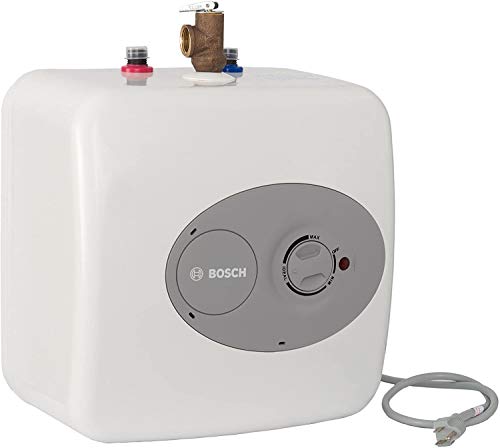
BOSCH’s Tronic 3000 ES2.5 is a compact 2.5-gallon mini-tank ideal for under-sink installation. It features high thermal efficiency, compact dimensions, and a 120V supply with a ready-to-plug-in configuration. This unit is well-suited for point-of-use hot water near a sink, reducing wait time for hot water in that location.
Buying Guide: Key Purchase Considerations
When selecting an electric water heater, start by calculating your peak hot-water demand. For tankless models, determine the number of fixtures you want to serve at once and match the unit’s flow rate (GPM) to that demand. A higher GPM supports multiple outlets but may require a larger electrical service or dedicated breakers.
Power requirements are crucial. Tankless units often need 240V with 40–60A breakers per unit, while larger models may require multiple breakers and thicker gauge wiring. Plan your electrical panel capacity and consult a professional electrician if needed to avoid overloading circuits.
Installation space and plumbing connections matter. Mini-tanks fit under sinks and offer near-instant hot water at specific locations, but they won’t supply water to multiple fixtures simultaneously. Tankless systems require proper venting, dedicated circuits, and correct pipe sizing for optimal performance.
Efficiency and maintenance should guide your choice. Look for units with features like self-modulation, water-electricity separation, and durable copper or glass-lined interiors. Regular maintenance, including flushing to prevent mineral buildup, extends the life of electric heaters and preserves efficiency.
Budget and long-term costs are impacted by upfront hardware, installation complexity, and energy savings. While tankless models often have higher upfront costs, their energy efficiency and continuous hot water can yield savings over time. Mini-tanks offer lower initial costs and quick improvements for single-location hot water needs.
Safety features are essential. Seek models with automatic shutoff for overheating, leakage protection, and robust insulation. A properly installed unit reduces risk while delivering reliable hot water when you need it.
Compatibility and support matter. Some brands provide extensive warranty coverage, easy serviceability, and widely available replacement parts. Reading product reviews and manufacturer resources can help you choose a solution that aligns with your home’s electrical system and hot-water goals.