Answering the question, these energy efficient electric baseboard heaters deliver consistent warmth with straightforward installation. This guide highlights models suited for small to large rooms, budget-conscious buyers, and those prioritizing quiet operation. Whether you want slim profiles, reliable convection heat, or easy thermostat control, the selections below help you compare features side by side. The top picks emphasize efficiency, durability, and simple wiring for common American homes.
| Product | Type | Voltage / Wattage | Best For |
|---|---|---|---|
| Cadet F Series 24″ Electric Baseboard Heater | Baseboard | 240/208 V • 350/262 W | Small rooms, budget-friendly retrofit |
| Cadet F Series 36″ Electric Baseboard Heater | Baseboard | 240/208 V • 750/563 W | Medium to large rooms, faster heat delivery |
| King 3K1207BW 750-Watt 120-Volt Baseboard Heater | Baseboard | 120 V • 750 W | Quick replacement, 120V circuits |
| Stelpro Brava Electric Baseboard Heater | Baseboard | 500 W • 120 V | Quiet convection, durable steel |
| DIMPLEX LC2005W31 500W Base Heater | Baseboard | 240 V • 500 W | Slim profile, fast heat flow |
Cadet F Series 24″ Electric Baseboard Heater
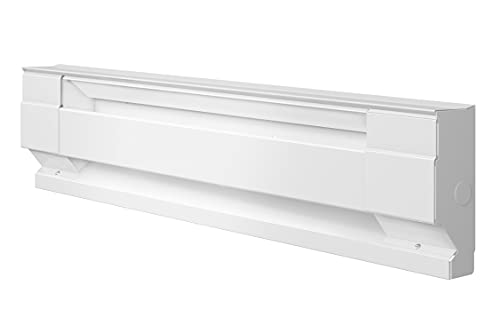
Features: White steel construction; electric power source. The compact 24″ model provides a steady, even heat suitable for small rooms. Best for buyers seeking a discreet, low-profile baseboard heater with straightforward wiring. Limitation: lower wattage means slower heat buildup in larger spaces.
Cadet F Series 36″ Electric Baseboard Heater
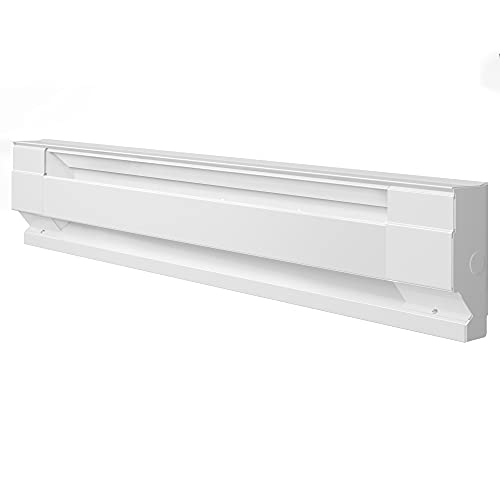
Features: 750/563 Watts, 240/208 Volts, white finish; pre-punched knockouts and universal wiring enable quick installation. Best for larger rooms or zones requiring stronger heat output. Better for faster warmth but may consume more energy if not managed by a thermostat.
King 3K1207BW 750W Baseboard Heater

Features: Aluminum ribbon fin element, full-length safety cutout, crushproof element. Best for 120V circuits where quick dispatch is needed and a compact, reliable baseboard solution. Caution: check compatibility with your existing wiring and thermostat setup to avoid overloading circuits.
Stelpro Brava Electric Baseboard Heater
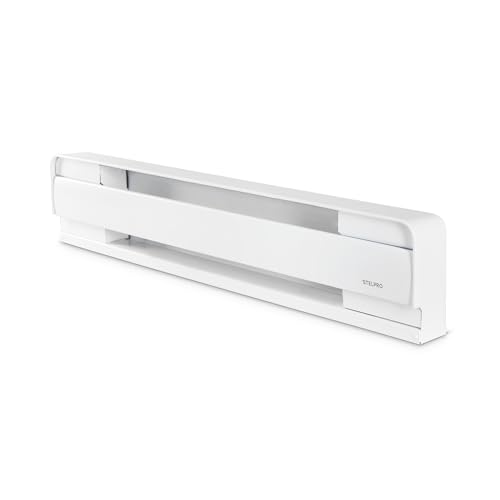
Features: 500W convection heater, 27 7/8″ L x 5 7/8″ H, hardwired installation. Best for quiet, evenly distributed heat without fans. Choose this for a durable, high-performance heater with a clean, modern look. Limitation: not plug-in; requires professional wiring or compatible thermostat kit for room control.
DIMPLEX LC2005W31 500W Base Heater

Features: 500W, 240V, 20″ white baseboard heater; shorter than traditional models with faster heat flow. Best for spaces needing a compact, efficient heater with rapid response. Caution: shorter length may require multiple units to heat larger rooms effectively.
Buying Guide
Key factors to compare when selecting energy efficient electric baseboard heaters:
What room size should influence your choice?
Measure square footage and ceiling height. Larger spaces benefit from higher wattage models or multiple units. For small rooms, 350–563 W units are often enough, while medium-to-large rooms may require 750 W or more per zone.
Wattage, voltage, and wiring considerations
Baseboard heaters come in 120V and 240V configurations. 240V units typically deliver more heat per unit with better efficiency per watt, but require compatible electrical wiring. Plan for thermostat compatibility and ensure a safe, dedicated circuit if possible.
Hardwired vs plug-in installation
Many baseboard heaters are designed to be hardwired for reliable operation, with some models offering simple plug-in setups. Hardwired units tend to be more aesthetically seamless and require thermostat integration for best efficiency. Always follow local electrical codes and consider professional installation when uncertain.
Thermostat control and energy savings
Thermostat-enabled control helps maintain comfort while avoiding energy waste. Look for units with space-temperature control compatibility and the ability to pair with wall thermostats or programmable controls for automatic setback schedules.
Durability, materials, and safety features
Steel or aluminum fins support durable operation, while full-length safety cutouts and flame-retardant constructions improve safety in busy spaces. Consider models with corrosion resistance for bathrooms or kitchens and ensure proper clearances from furniture and draperies.
Installation flexibility and aesthetics
Sleek profiles and pre-punched knockouts simplify installation in retrofit projects. If aesthetics matter, select white or neutral finishes that blend with baseboard trim and wall color. For tight spaces, shorter lengths or slim designs maximize room appearance without sacrificing warmth.
Summary of recommended approaches
- Small rooms: 24″ Cadet model for cost-effective warmth.
- Medium rooms: 36″ Cadet for quicker heat distribution.
- 120V circuits: King 750W for space-saving, straightforward wiring.
- Quiet operation: Stelpro Brava for silent convection heat.
- Compact and fast heat flow: DIMPLEX LC2005W31 for tight spaces.
FAQ
- Q: Do baseboard heaters use a lot of electricity?
A: They consume wattage as rated, so energy use depends on room size and thermostat settings. Efficient use comes from appropriate sizing and temperature control. - Q: Is a thermostat required for baseboard heaters?
A: Not always, but a thermostat improves efficiency by regulating heat output and minimizing wasted energy. - Q: Can I install baseboard heaters myself?
A: Some plug-in models are DIY-friendly, but hardwired units and thermostat integration can require a licensed electrician and compliance with local codes. - Q: Are baseboard heaters safe for homes with children or pets?
A: Many models feature safety cutouts and durable housings. Ensure proper clearance and consider models with tip-over protection and durable materials. - Q: Which model is best for a basement or garage?
A: A higher wattage, 240V unit with robust insulation is typically better for colder spaces, paired with an appropriate thermostat. - Q: How many baseboard heaters do I need?
A: It depends on room size, insulation, and desired comfort. Use the manufacturer’s wattage guidance and add zones for better control.