If you need reliable outdoor hot water, an exterior tankless water heater can be the right choice. This guide highlights five top options, focused on outdoor installation and fast, on-demand heating. The picks cater to different home sizes and usage patterns, from small homes to multi-outlet setups. Use the quick product table below to compare key capabilities at a glance.
| Product | Max GPM | BTU/Power | Best For |
|---|---|---|---|
| APUS 190,000 BTU Outdoor Tankless Water Heater | 8.1 | 190,000 BTU | Large homes with multiple simultaneous needs |
| Rheem RTG-84XLN-3 | 8.4 | 180,000 BTU | 2–3 bathroom homes with peak demand |
| ORBEK Natural Gas Tankless Water Heater | 5.1 | 120,000 BTU | Smaller homes or modest hot water needs |
| Rinnai RE180eP | up to 6.9 | 180,000 BTU | Compact outdoor option with higher flow |
| Rinnai REP199eN Smart-Circ | up to 7.9 | 199,000 BTU | Smart recirculation with steady supply |
APUS 190,000 BTU Outdoor Tankless Water Heater

Features: This high-efficiency gas tankless unit delivers 190,000 BTU and 8.1 GPM, suitable for whole-home use. It can supply 3 showers and 2 faucets simultaneously, with a minimum flow of 0.79 GPM to perform reliably under low-water pressure. Temperature is remotely adjustable via app (Tuya) or wired controller, with ±1°F accuracy. Outdoor-friendly size and standard 3/4″ connections facilitate straightforward installation.
Best for: Large homes with several simultaneous hot-water needs, or households requiring strong performance in variable water pressure.
Limitations to consider: Outdoor unit requires proper weatherproof mounting and venting; ensure compatibility with existing gas lines and electrical supply.
Rheem RTG-84XLN-3 Outdoor Tankless Water Heater
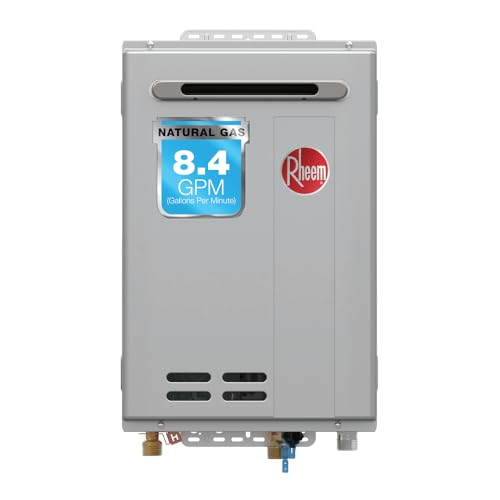
Features: Delivers up to 8.4 GPM with 180,000 BTU output, designed for outdoor installation with a durable cabinet and easy wall mounting by a qualified installer. Intended for homes with multiple hot-water needs across 2–3 bathrooms, ensuring fast and reliable hot water even during peak demand.
Best for: Mid-sized homes needing robust performance without complexity.
Limitations to consider: Outdoor placement requires weatherproofing and professional installation for venting and gas connections.
ORBEK Natural Gas Tankless Water Heater

Features: 120,000 BTU with 5.1 GPM flow, optimized for continuous hot water for 2–4 outlets. Includes 0.53 GPM low-flow start and rapid heat exchange with a control system that maintains water within ±1°F. CSA certified with multiple protections for safe operation.
Best for: Smaller homes or households with moderate hot-water demands, who still want efficient on-demand heating.
Limitations to consider: Lower maximum GPM compared to larger units; may not cover several simultaneous showers in very large homes.
Rinnai RE180eP Non-Condensing Outdoor Tankless Water Heater

Features: Up to 6.9 GPM with 180,000 BTU, designed for outdoor use. LED screen shows service reminders and error codes. Compact footprint similar to a suitcase, with 15-, 5-, and 1-year guarantees affecting heat exchanger, labor, and parts. WiFi control via a ControlR module is supported (control module not included).
Best for: Those seeking a compact, outdoor unit with strong flow and potential smart-control integration.
Limitations to consider: ControlR WiFi module is not included; ensure compatibility with your preferred smart-home setup.
Ranein Natural Gas Tankless Water Heater

Features: Outdoor unit with 190,000 BTU and compact dimensions (24.3″L × 15.1″W × 8.1″H). Includes safety features like adjustable combustion and stable operation under varying wind/temperature. Designed for easy installation with standard 3/4″ fittings.
Best for: Homeowners who want a strong outdoor option with safe operation and compact footprint.
Limitations to consider: Ensure proper ventilation and venting considerations for outdoor exposure and piping runs.
Rheem RTG-70XLN-3 Outdoor Tankless Water Heater
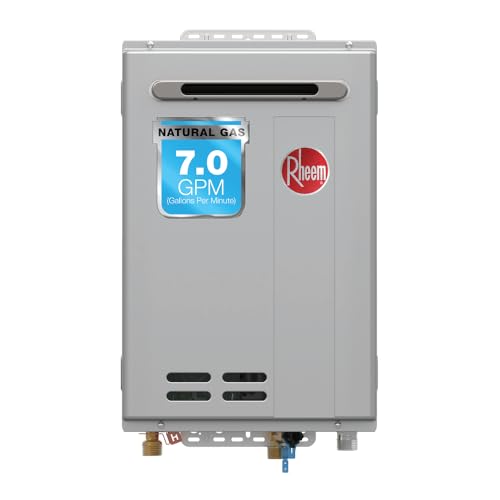
Features: 7.0 GPM capacity with 160,000 BTU, designed for outdoor installation with a durable cabinet and external mounting readiness. Suitable for typical 2–3 bathroom homes, maintaining hot water supply during peak usage.
Best for: Homes with moderate hot-water load that benefit from a robust outdoor unit.
Limitations to consider: May require professional setup for gas and venting alignment in certain jurisdictions.
Buying Guide
What to consider when choosing an exterior tankless water heater
- Hot-water demand: Estimate GPM needs based on how many fixtures run simultaneously. Higher GPM units support more outlets.
- Gas supply and venting: Confirm available gas pressure (natural gas or propane) and ensure proper venting and outdoor clearance.
- Weather resistance: Look for outdoor-rated enclosures and corrosion-resistant materials to endure the elements.
- Installation requirements: Check clearances, electrical supply, and whether professional installation is needed for gas lines and vents.
- Control features: Some models offer remote or WiFi control, which can improve convenience and energy management.
- Warranty and maintenance: Review coverage for heat exchangers, parts, and labor to understand long-term costs.
Single-family vs. multi-outlet scenarios
- Families with multiple bathrooms and high simultaneous hot-water usage benefit from higher GPM and BTU units (e.g., 8.0+ GPM).
- Smaller homes or limited hot-water needs can prioritize compact outdoor units with adequate GPM (around 5–7 GPM).
Fuel type and efficiency
- Natural gas units typically offer higher BTU and fast recovery; propane variants are alternatives in areas without natural gas.
- Non-condensing vs. condensing designs affect efficiency and venting requirements; most exterior units here are non-condensing.
Smart features and future-proofing
- Consider models with app control, compatibility with smart thermostats, or built-in recirculation for faster hot water delivery.
- Smart-Circ and similar technologies can reduce water waste by returning hot water to the heater more quickly.
Installation considerations and safety
- Outdoor installation requires weatherproofing, proper clearance, and secure mounting to withstand wind and weather.
- Gas connections and venting should meet local codes; professional installation is commonly required.
Quick recommendations by scenario
- Best for high demand: APUS 190,000 BTU outdoor unit, 8.1 GPM—great for homes with many simultaneous hot-water outlets.
- Best for middle-sized homes: Rheem RTG-84XLN-3 or Rinnai REP199eN for strong performance and easy integration.
- Best compact outdoor option: ORBEK or Rinnai RE180eP for smaller homes or limited hot-water needs with reliable flow.
FAQ
- What is a practical GPM range for most outdoor setups? Most mid-sized homes do well with 6–8 GPM to cover multiple outlets simultaneously.
- Do exterior tankless heaters require professional installation? Yes, especially for gas lines, venting, and outdoor electrical connections.
- Is WiFi control worth it? It can improve convenience and energy management, but ensure compatibility with your ecosystem and module availability.
- Can I install these indoors later? Exterior units are designed for outdoor use; moving indoors often requires a different model, venting adjustments, and code compliance.
- What about efficiency at low water flow? Some units include low-flow start features to maintain hot-water delivery even with weak water pressure.
- Are CSA or other certifications important? Certifications reassure safety and compliance with regional standards, beneficial for long-term reliability.