The best extractor fan roof tile picks are those that fit your roof design, offer strong airflow, and suit your power source preference. This guide highlights five top options that help vent hot air, moisture, and odors from attics, garages, and sheds. Each product is described with who it’s best for, why it was selected, and a practical limitation to consider. Whether you prefer solar-powered efficiency or wired reliability, there’s a fit here for most homes and workshops.
| Product | Airflow (CFM) | Power Type | Best For |
|---|---|---|---|
| BINGLUX 55W Solar Attic Fan | 1300 | Solar with AC Backup | Sunlit roofs needing automatic ventilation |
| Master Flow ERV6 1500 CFM | 1500 | Electric with Thermostat | Large attics up to 2800 sq ft |
| PeakPursuit 1400 CFM Upblast Roof | 1400 | Electric | Commercial/industrial roof exhaust |
| CXRCY 1400 CFM Upblast Roof Exhaust | 1400 | Electric, All-Copper Motor | Heavy-duty, durable venting |
| USDGTKN 10 Inch Roof Exhaust | 2500 | DC Motor | Greenhouse, shed, garage with high airflow needs |
BINGLUX 55W Solar Attic Fan with Thermostat

Best for sunlit roofs where automatic venting is desired. This unit uses a 55W monocrystalline solar panel to achieve up to 1300 CFM, helping to lower attic temperatures by 15–20°F. It includes a smart thermostat that starts at 77°F and shuts off at 68°F, reducing energy use and manual operation. The model also offers a hybrid solar and AC backup so cooling continues on cloudy days. A potential limitation is reliance on solar energy during extended cloudy periods, which may reduce airflow unless AC backup is engaged.
Why it’s selected
- Hybrid solar and AC backup for continuous ventilation
- Automatic thermostat control for energy efficiency
- Strong airflow suitable for mid-to-large attic spaces
Best for
- S331: Homeowners with sunny roofs who want auto, energy-saving attic cooling
Caution
Performance can dip on prolonged overcast days; ensure the AC backup is connected and functioning if independent power is a concern.
Master Flow GAF 1500 CFM Powered Roof Mount Attic Fan

Best for large attic spaces up to 2800 sq ft that benefit from a high airflow, durable galvanized steel unit. The ERV6 model includes a thermostat/humidistat for efficient cooling when needed. It provides strong, steady ventilation with solid construction designed for long-term performance. A potential limitation is that the unit is typically wired and may require professional installation for optimal mounting and wiring.
Why it’s selected
- High airflow for big attic spaces
- Thermostat/humidistat for target cooling
- Durable galvanized steel construction
Best for
- Homes with large attic volumes needing reliable, continuous venting
Caution
Requires proper electrical hookup and clearance for installation on the roof or gable.
PeakPursuit 1400 CFM Upblast Roof Exhaust Fan

Best for commercial or industrial roof spaces requiring robust, direct-drive ventilation. This 1400 CFM upblast roof fan emphasizes high efficiency with low-noise operation and weather-resistant spun aluminum housing. It’s suited for rooftops where durability and consistent airflow matter most. A limitation is that the design is geared toward larger spaces and may be overkill for small residential attics.
Why it’s selected
- High efficiency for industrial or large commercial spaces
- Low-noise operation improves work environments
- Weather-resistant construction for rooftop use
Best for
- Rooftops needing serious air exchange in non-residential settings
CXRCY 1400 CFM Upblast Roof Exhaust Fan

Best for demanding environments needing a durable all-copper motor and weatherproof housing. The 1400 CFM capacity supports fast air turnover in factories, warehouses, or busy kitchens. It combines a copper motor with aluminum alloy housing for solid performance in challenging conditions. A caveat is that copper motors can be pricier to service and repair compared to standard motors.
Why it’s selected
- All-copper motor for long-term reliability
- High airflow with weatherproof features
- Durable construction for harsh environments
Best for
- Industrial or commercial rooftops where reliability matters most
USDGTKN 10 Inch Roof Exhaust Attic Fan
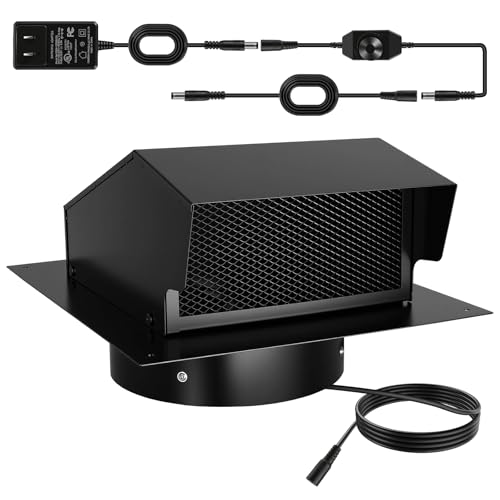
Best for versatile small-to-medium spaces like greenhouses, sheds, or garages that need strong airflow without heavy mounting complexity. This model features a 12W copper-core brushless DC motor delivering 2500 CFM, offering quick heat and moisture removal. It is designed for durability with weather-resistant exterior and a quiet operation. A limitation is that at higher CFM, installation may require careful routing of ducting and mounting hardware.
Why it’s selected
- High airflow in a compact form factor
- Brushless DC motor for longevity and quiet operation
- Weather-resistant exterior suitable for outdoor installations
Best for
- Small to medium outdoor structures needing rapid venting
Buying Guide: Key Purchase Considerations
Airflow needs vary by space size and use case. Consider these questions when choosing a roof tile extractor fan:
- What is the attic or space area (square feet) to determine CFM requirements?
- Do you prefer solar power with potential AC backup or a fully wired electric model?
- Is noise a concern for living spaces below or near work areas?
- What mounting constraints exist on your roof or gable?
- Is weather resistance critical for your climate (rain, hail, salt air)?
Airflow vs. Space Size
Higher CFM generally suits larger spaces, but oversized fans can waste energy if the space vents effectively with smaller units. When in doubt, match the fan’s CFM to about 1.0–1.5 times the attic area in thousands of square feet for residential spaces.
Power Source Options
Solar options offer energy savings but may require backup power in low-sun conditions. Electric fans provide consistent performance but depend on your electrical setup and wiring. Hybrid models blend both approaches for reliability.
Durability and Materials
Galvanized steel, spun aluminum housings, and copper motors indicate different levels of durability. Copper motors can offer longevity but may incur higher maintenance costs. Weatherproofing is essential for rooftop installations.
Installation Considerations
Ridge, gable, or direct-vent configurations affect mounting ease and seal integrity. Professional installation may be needed to ensure proper sealing, flashing, and electrical connections, especially for high-CFM units.
Frequently Asked Questions
- What is a roof tile extractor fan used for? – It vents hot air, moisture, and odors from attic and roof spaces to improve comfort and energy efficiency.
- How do I choose the right CFM for my attic? – Measure attic volume (length × width × height) and select an airflow that cycles the air every few minutes; larger spaces require higher CFM.
- Are solar attic fans effective year-round? – Solar fans work when sunlight is available, and many models include AC backup for continuous operation during cloudy days.
- Can I install these myself? – Some models are DIY-friendly, but electrical connections and roof flashing may require a professional.
- What maintenance is needed? – Check for debris, inspect wiring seals, and clean any dust from blades or grills to maintain efficiency.
- Is noise a concern with high-CFM fans? – Many models advertise low-noise operation; verify decibel ratings if quiet performance is important.