When choosing a blower for water damage restoration, look for high airflow, portability, and durable construction. This guide features five top centrifugal air movers ideal for homes, offices, and service crews. Best for contractors and DIYers seeking fast surface drying, these models cover tight spaces, carpets, floors, and walls. Below you’ll find concise comparisons, who each product is best for, and practical buying tips. A quick summary table of the selected products is included for fast reference.
Summary Table Of Chosen Products
- XPOWER P-230AT Mini Mighty — Best for fast surface drying in tight areas (up to 925 CFM).
- XPOWER P-80A Mini Mighty — Best value option with solid 600 CFM.
- Airzentti 1/4 HP — Best for heavy-duty industrial use with high 1100 CFM.
- XPOWER P-130A Mini Mighty — Best for compact, portable drying with 800 CFM.
- B-Air Grizzly Gp-1 — Best for versatile airflow with multiple angles and ETL cert.
XPOWER P-230AT Mini Mighty 1/4 HP 925 CFM Air Mover
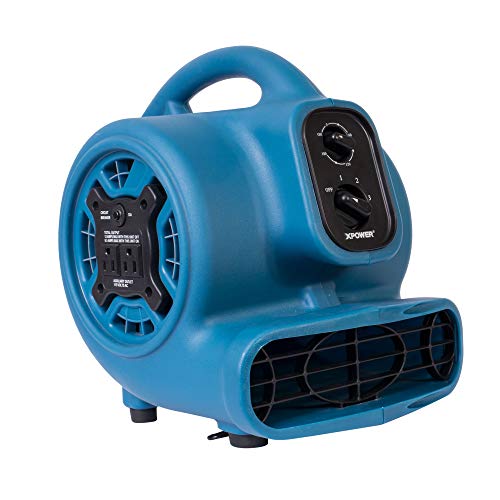
The P-230AT delivers up to 925 CFM with a compact 10.7″ x 12.4″ x 13.3″ footprint and a 2.3 Amp motor. Its centrifugal air mover design concentrates air for faster surface drying of carpets, floors, furniture, and walls. The daisy-chain capability enables cascading multiple units for larger spaces. Best for: small to medium rooms, tight corners, and restoration crews needing portable, power-efficient drying.
Who it’s best for: homeowners and janitorial teams handling quick-dry tasks in confined areas. Why selected: strong airflow in a compact form, easy storage, and stackable design. Limitation: may require multiple units to cover very large rooms.
XPOWER P-80A Mini Mighty 138 W 600 CFM
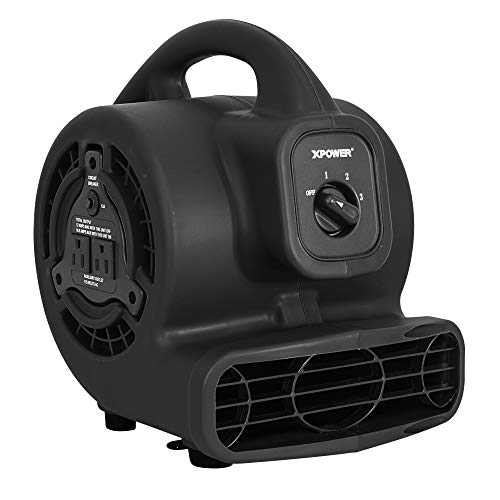
The P-80A provides up to 600 CFM with a 138 W motor and a light 7.9-pound build. It features a 10-foot cord and a daisy-chain option for scalable drying. Its compact dimensions (11.5″ x 9.3″ x 12.3″) and stackable frame make it ideal for quick jobs in bedrooms, offices, or small closets. Best for: budget-conscious users who still need reliable airflow in tighter spaces. Limitation: lower airflow compared to larger units, so may need more units for wide areas.
Airzentti 1/4 HP 1100 CFM Air Mover

This industrial-grade air mover runs at 1100 CFM with a 1/4 HP bronze winding motor. It offers three speeds (600/800/1100 CFM) and three tilt angles (0°/45°/90°) plus a built-in 3-hour timer. Built for heavy usage in basements, warehouses, and garages, it’s well-suited for larger restoration tasks. Best for: heavy-duty restoration sites that require precise airflow and unattended operation. Limitation: larger footprint and heavier than consumer models.
XPOWER P-130A Mini Mighty 1/5 HP 800 CFM
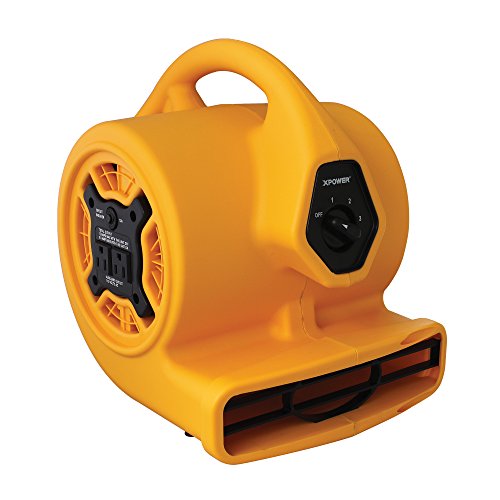
The P-130A offers 800 CFM with a 1/5 HP motor in a compact, 9–10 pound package. It features a 10-foot cord, daisy-chain option, and sturdy PP housing. Best for: mid-sized rooms and corridors where portability matters without sacrificing airflow. Limitation: airflow may be less than higher-CFM units for large open areas.
B-Air Grizzly Gp-1 1 HP Air Mover
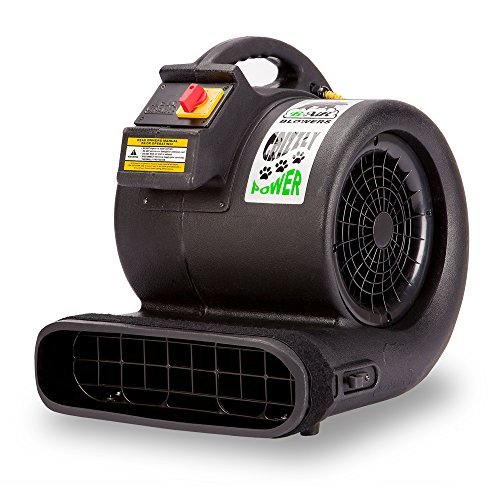
The Grizzly Gp-1 combines 3550 CFM with three airflow angles (horizontal, vertical, 45°) plus an optional swing-out kickstand. It has three speeds and an ETL certification for safety. Best for: larger spaces and demanding restorations where maximum airflow is needed. Limitation: heavier and more expensive than smaller models, which may be overkill for small rooms.
Buying Guide: Key Considerations For Water Damage Drying
What matters most for effective drying is balancing airflow, portability, and durability. Consider the following:
- Airflow (CFM): Higher CFM dries faster but can mean heavier units. For small rooms, 600–800 CFM is often sufficient; for large spaces, 1000+ CFM is advantageous.
- Motor Type And Power: Look for efficient motors (opposed to high wattage alone) and a design that minimizes heat buildup during extended use.
- Portability: Weight and handles matter when you need to move units around to target damp areas.
- Durability: Rotomolded housings and metal components improve longevity in harsh job-site conditions.
- Daisy-Chain Capability: The ability to connect multiple units for larger areas reduces cable clutter and increases coverage.
- Safety Features: Timer functions, overheat protection, and ETL certification add reliability in unattended operations.
- Space Requirements: Consider the room layout; compact units work well in closets, hallways, or under stairs, while larger units cover open areas.
- Cost and Labor Considerations: While higher-CFM units cost more, they may reduce drying time and labor in the long run.
Frequently Asked Questions
- What is CFM and why does it matter for water damage drying?
CFM stands for cubic feet per minute and measures airflow. Higher CFM speeds up evaporation and surface drying, especially in wet carpets and floors.
- Should I use multiple smaller units or one big unit?
For tight spaces and per-area targeting, multiple smaller units can provide flexible coverage. Large open areas may benefit from a single high-CFM unit or a combination.
- Is a timer important on an air mover?
Yes, a built-in timer helps automate shut-off for unattended drying sessions, improving safety and energy use.
- Can these units handle continuous industrial use?
Industrial-grade models with rugged housings and dual outlets are designed for heavy-duty tasks, but always follow manufacturer guidelines for continuous operation.
- What safety features should I look for?
ETL certification, thermal protection, and sturdy casings reduce risk; daisy-chain outlets help reduce trip hazards from extension cords.
- Do these units require professional setup?
Most are plug-and-play, but large or commercial restorations may benefit from professional assessment to optimize airflow patterns and coverage.