Answering the need for hands‑free water control, foot pedal water valves let you turn faucets on and off with your foot. They’re ideal for kitchens, medical facilities, laboratories, and public restrooms where sanitation and convenience matter. The following picks are well-suited for homes, offices, and light commercial use, offering durable construction, easy installation, and reliable touchless operation. The top picks vary by use case: heavy‑duty, hospital‑grade units; compact residential models; and multi‑valve systems for temperature control.
| Product | |||
|---|---|---|---|
| QWORK Foot Pedal Valve | Single pedal, floor mounted | Residential and light commercial basins | 1/2″ insert, copper construction |
| sepaitek Advance Single Pedal | Single pedal, commercial grade | Kitchens, labs, and public restrooms | Mixing capability; adjustable temperature |
| LukLoy Floor Mount Single Pedal | Single pedal, polished chrome | Home kitchens and small offices | Brass, chrome plated |
| Tomotato Foot Pedal Valve | Stainless steel, floor mounted | Hospitals, schools, airports | No touch operation; easy installation |
| Phivan Foot Operated Faucet Valve | Single pedal, brass | Restaurants, clinics, labs | Three‑eight inch thread; durable construction |
QWORK Foot Pedal Valve for Faucet

Best for: small offices or home basins seeking a simple, hygienic flow control. The unit uses a 1/2″ insert compatible with many water systems. Its copper body with multi‑layer electroplating resists rust, and installation is straightforward. The pedal provides a touchless way to control water using a foot, aiding cleanliness in kitchen or bathroom sinks.
Why selected: durable metal construction and corrosion resistance suit frequent use. The dual advantage of ease of installation and hands‑free operation makes it a practical primary choice for low to mid‑demand applications.
Caution: verify your faucet inlet threads match 1/2″ and ensure pedal reach fits your sink area to avoid leg discomfort during use.
sepaitek Double Pedal Valve for Commercial Use

Best for: high‑traffic kitchens, labs, or public restrooms needing fully hands‑free operation and robust durability. This model features a commercial‑grade solid brass valve with chrome plating to resist rust and corrosion. It uses a knee‑operated, touch‑free design for hygienic use where sanitation is critical.
Why selected: 100% touch‑free operation reduces contact‑associated contamination. The self‑returning button and leak‑resistant brass core support reliable performance in demanding environments.
Caution: heavier duty parts may require more careful mounting and space planning to ensure comfortable knee actuation in busy spaces.
LukLoy Floor Mount Single Pedal Valve
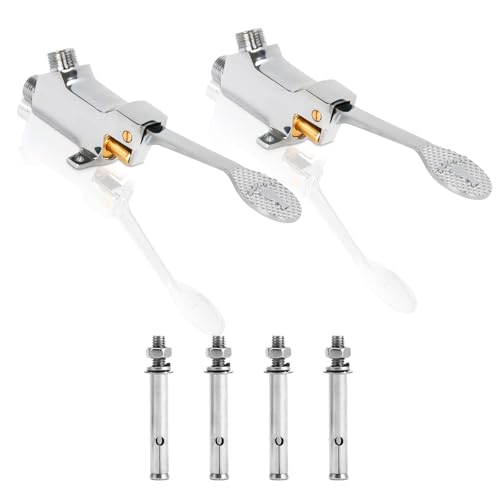
Best for: households and small offices seeking an economical, sanitary faucet control. The unit uses brass with chrome plating and features a 1/2‑inch NPT inlet. Its simple, single‑pedal operation makes it a practical upgrade for basins that see daily use.
Why selected: reliable metal construction and straightforward installation. It’s a lighter alternative to industrial models while still offering durable, hands‑free operation.
Caution: ensure your sink spacing provides enough clearance for a foot pedal in front of the faucet to avoid accidental kicks or splashes.
Tomotato Foot Pedal Valve for Faucet

Best for: hospitals, schools, or public facilities needing stainless steel durability and a no‑touch control solution. The valve uses stainless steel, offering rust resistance and long service life. It is floor mounted and easy to install with expansion screws.
Why selected: stainless steel construction provides high durability in high‑use environments. The no‑touch operation supports improved hygiene standards and cleaner facilities.
Caution: verify that the stainless steel valve size and thread type match your plumbing to avoid compatibility issues during installation.
Buying Guide
What should I consider when choosing a foot pedal valve?
Material and corrosion resistance are critical for long‑term performance. Brass and stainless steel offer durability, while copper components may require extra care in humid environments. Consider the environment: hospitals and labs demand higher hygiene standards and robust construction.
Single pedal vs. dual pedal or mixing capabilities
Single pedal systems are simplest and usually sufficient for turning water on/off. Dual or mixing valves allow temperature control, which is useful for sinks that require warm water without manual mixing. For commercial kitchens or clinics, consider models with programmable or adjustable mix settings.
Thread sizes and inlet/outlet compatibility
Most models use 1/2″ NPT or 3/8″ threads. Check your faucet inlets and plumbing lines to ensure compatibility. Some units are designed for universal fittings, but confirm the exact thread type before purchasing.
Installation and maintenance considerations
Look for easy installation with clear mounting hardware. Some units include expansion screws and simple mounting plates. Regular inspection of the pedal linkage and valve core helps prevent leaks and ensures consistent operation.
Hygiene and usage scenarios
In food prep, healthcare, or public facilities, pedal valves reduce hand contact and contamination. For households, a compact unit may fit better under sinks with limited counter space.
Price and lifecycle expectations
Higher‑duty models with brass or stainless steel bodies generally offer longer lifespans in demanding environments. Balance initial cost with expected usage and required longevity to choose the best value.
FAQ
- Are foot pedal valves compatible with all faucet types?
Most models are designed for standard 1/2″ or 3/8″ connections and are compatible with common basins. Always verify thread type and inlet size against your existing plumbing.
- Do foot pedals require electricity?
No, most are purely mechanical and do not need electricity. They operate by foot pressure to open or close the valve.
- Is there a risk of leaks with foot pedal valves?
Leak risks come from poor installation or worn valve cores. Choose durable brass or stainless steel models and follow installation instructions carefully to minimize leaks.
- Which model is best for high-traffic facilities?
Commercial‑grade brass or stainless steel units with robust valve cores and self‑return mechanisms are better for high‑traffic environments since they resist wear and maintain reliability.
- Do mixing pedal valves require extra maintenance?
Yes, they may need occasional adjustment to maintain the desired temperature and prevent drift in flow balance. Regular checks help sustain stable performance.