If you’re seeking cleaner indoor air while saving energy, a fresh air heat recovery ventilation (HRV) system is a strong choice. These units bring in filtered outdoor air and exhaust stale indoor air, while recovering heat and moisture to reduce heating and cooling costs. This guide highlights five well-suited options for American homes, from compact, ductless models to whole-house systems. It helps buyers identify who each product is best for, plus practical cautions to consider before you buy.
Summary table of selected products:
| Product | Best For | Key Benefit | Notes |
|---|---|---|---|
| VENTS-US Frigate ERV 150 | Small to mid-sized homes | Balanced ventilation with heat and moisture recovery | Slim 9.6″ depth, corrosion-resistant housing |
| VENTS-US Frigate ERV 150 EC | Balanced comfort with smart motors | EC motors for efficient operation | Automatic frost protection |
| VENTS-US Micra 100 (FreshBox) HRV WiFi Kit | Smart homes, tech enthusiasts | WiFi control and dual filtration | Smart scheduling via smartphone |
| DCZPWKMLX Fresh Air Recuperator | Large spaces with inline fan setups | Inline fan compatibility and adjustable airflow | Simple duct filter box design |
| GROWNEER 6-Inch Inline System | DIYers needing flexible installation | Two modes and multi-stage filtration | Flexible mounting options |
VENTS-US Frigate ERV 150 Ventilation System
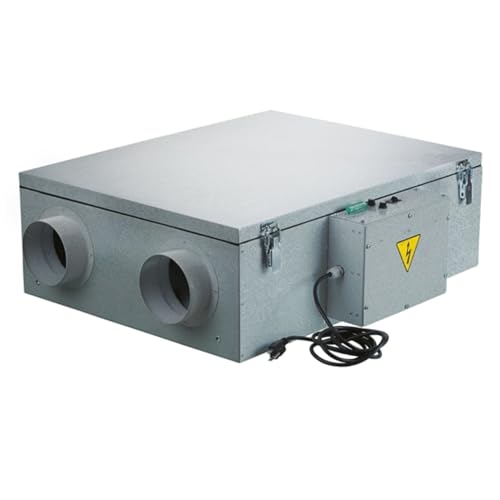
The Frigate ERV 150 provides balanced ventilation for small to mid-sized homes. It uses an enthalpy core to recover heat and moisture from exhaust air, improving year-round comfort while reducing energy use. Best for homes seeking steady indoor air quality with moderate airflow—roughly 150 CFM total capacity. It suits tight installations due to its slim, corrosion-resistant steel housing, which fits into limited spaces.
Who it’s best for: homeowners needing efficient, space-conscious ERV with reliable moisture management. Why chosen: compact footprint and heat-moisture recovery support stable indoor humidity and comfort.
Potential limitation: installation requires appropriate ducting and a stable outdoor air source; verify space for intake and exhaust routing.
VENTS-US Frigate ERV 150 EC Ventilation System

This model emphasizes energy efficiency with EC motors and an enthalpic core that captures heat and moisture for year-round comfort. Automatic frost protection helps maintain performance in cold conditions. Best for homeowners who want smarter control and reliable comfort with lower operating costs. Choose this if you value automatic protection features and quieter operation.
Limitation: EC motor systems can have higher upfront costs; ensure compatibility with existing ductwork and control systems.
VENTS-US Micra 100 (FreshBox) HRV WiFi Kit

The Micra 100 HRV kit pairs compact, ductless operation with smart control. It includes two filtration stages (MERV8 and MERV14) for improved indoor air quality and a WiFi interface for Android/iOS. Best for tech-forward homes or rooms without extensive ductwork, offering year-round balanced ventilation with remote management.
Who it’s best for: smart-home enthusiasts who want remote monitoring and filtration. Why chosen: combines filtration, controllability, and compact form. Caution: ensure your space supports WiFi-enabled device setup and consistent network access.
DCZPWKMLX Heat Recovery Fresh Air House Recuperator

This recuperator focuses on large air-volume needs with a duct-filter box design. It keeps incoming and outgoing air clean and allows adjustable airflow, making it suitable for bigger homes or spaces requiring flexible air changes. Best for users who want to integrate with existing inline fans and customize airflow intensity. Choose this if you need adjustable performance in sizable living spaces.
Caution: installation complexity increases with larger duct runs; verify compatibility with current HVAC layout.
GROWNEER 6 Inch Inline System

The GROWNEER system combines dual-mode operation with multi-stage filtration: Pre-filter, Activated Carbon, and a MERV 12 HEPA filter. It supports both air purification and rapid exhaust, making it versatile for bathrooms, attics, garages, and other spaces needing quick moisture or odor removal. Best for homeowners who want a two-in-one solution with strong filtration.
Limitations: higher filtration levels may require periodic maintenance; ensure filter replacements align with your maintenance plan.
Buying Guide: Key Considerations For Fresh Air HRV Systems
- Heat and moisture recovery: Look for an enthalpy core or similar heat/moisture exchange technology to maximize energy savings and comfort.
- Ventilation rate: Compare CFM ratings and duct configuration to ensure the unit can handle the square footage and airflow needs of your home.
- Filtration: Consider MERV ratings and the presence of pre-filters or carbon filters to improve indoor air quality.
- Controls and connectivity: Decide if you prefer basic manual operation, smart WiFi control, or motor efficiency features like ECM or EC motors.
- Installation footprint: Check depth, housing material, and mounting options to fit tight spaces or retrofits.
- Frost protection: For cold climates, frost protection features help maintain performance during freezing conditions.
- Maintenance: Look for accessible filters and easy cleaning to minimize upkeep and ensure consistent performance.
- Compatibility: Verify compatibility with existing ductwork, inline fans, and building codes in your area.
Frequently Asked Questions
- What is an HRV and how does it save energy?
An HRV exchanges stale indoor air with fresh outdoor air while recovering heat, reducing the energy needed to heat or cool incoming air. - Who should install a home HRV?
Homeowners with tight houses, high humidity issues, or indoor air concerns benefit; professional installation is recommended for complex systems. - What maintenance does an HRV require?
Regular filter changes, cleaning of dust trays, and periodic duct inspections help maintain efficiency and air quality. - Can I control an HRV with a smartphone?
Some models offer WiFi control and scheduling through mobile apps; verify compatibility with your devices. - Is an HRV suitable for all climates?
HRVs are beneficial in moderate to cold climates where heat recovery reduces energy loss; in very humid climates, a humidistat may be helpful. - What is the difference between an HRV and an ERV?
An ERV (enthalpy recovery ventilator) also exchanges moisture, which can help balance humidity in environments with varying indoor humidity.