Finding a garage heater that vents vertically can simplify installation and improve safety in spaces with ceiling or roof venting. The following selections emphasize gas-powered units compatible with vertical venting, reliability, and steady performance for American garages and workshop spaces. Each product section highlights key features to compare at a glance, followed by a detailed overview.
| Product | Brand | Vent Type | BTU / Coverage | Key Benefit |
|---|---|---|---|---|
| Mr. Heater F102848 | Mr. Heater | Vertical Vent Kit | — | Flexibility with vertical vent installation |
| Mr. Heater MHU50NG | Mr. Heater | Vertical/Horizontal | 50,000 | Balanced performance for mid-size spaces |
| Mr. Heater MHU80NG | Mr. Heater | Vertical/Horizontal | 80,000 | High output for large garages |
| Reznor UDXC-100 | 1HVAC | Vertical Cat 1 B-Vent Kit | 105,000 | High efficiency for commercial spaces |
| Reznor UDXC-60 | 1HVAC | Vertical Cat 1 B-Vent Kit | 60,000 | Reliable mid-range option |
The following five items address vertical venting needs with robust construction, accessible maintenance, and clear venting options. Each product summary notes suitability for typical garage applications and top considerations for installation and operation.
Mr. Heater F102848 Vertical Vent Kit for Big Maxx MHU80LP and MHU80NG

The F102848 kit includes an adjustable roof flashing and a 3″ to 4″ adapter, enabling vertical venting for certain Big Maxx models. When paired with compatible MHU80NG/LP units, it supports vertical exhaust routing while maintaining safe vent distances. This kit is designed to simplify rooftop or ceiling vent configurations and to integrate with existing venting plans for larger spaces.
Mr. Heater F260550 Big Maxx MHU50NG Natural Gas Unit Heater
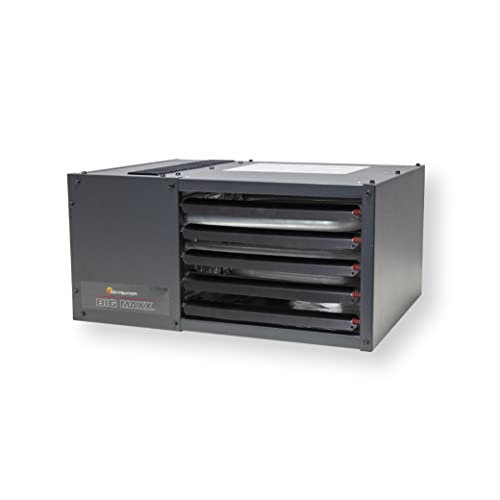
This 50,000 BTU unit provides robust heating for garages up to substantial areas. It features powered exhaust that enables vertical or horizontal venting, a practical option for various ceiling configurations. The design prioritizes accessible outside access to thermostat, A/C terminals, and gas connections, facilitating service and adjustments without disturbing interior setups. Overall, suited for medium to larger garages that require dependable, continuous heat.
Mr. Heater F260560 Big Maxx MHU80NG Natural Gas Unit Heater
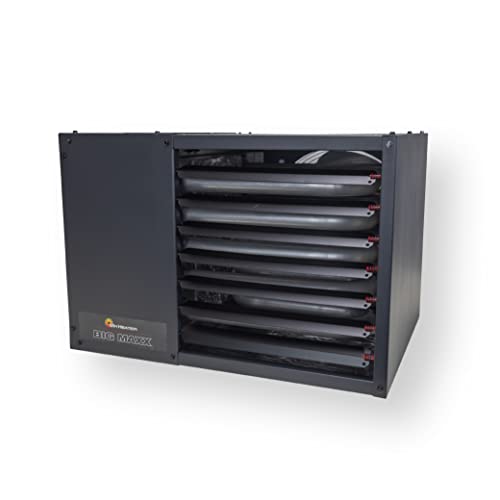
With 80,000 BTU output, this model covers expansive garage spaces and supports vertical venting configurations. Included is a two-angle bracket kit and a natural gas connection kit, while thermostat and regulator accessories are sold separately. The unit’s dimensions and performance specifications emphasize reliable heat delivery with room for expansion in larger workshop environments.
Reznor UDXC-100 Gas Unit For Vertical Venting

This 105,000 BTU unit is designed for indoor use in commercial and industrial settings, with a vertical Cat 1 B-Vent kit. It targets garages, workshops, and warehouses requiring high-capacity heat. The unit supports ceiling mount or wall configurations using compatible brackets (mounting sold separately). Efficiency and high output make it suitable for larger spaces or colder climates where consistent warmth is essential.
Reznor UDXC-60 Gas Unit For Vertical Venting
This 60,000 BTU model delivers solid performance for mid-size garages and workshops seeking reliable vertical venting. It features a ceiling-mount friendly design and a robust heat output suitable for spaces that require quick warming cycles. As with other Reznor units, mounting options and installation components are often sold separately, so planning for brackets and supports is important.
Buying Guide: Vertical Venting Garage Heaters
Vent configuration is a primary consideration when selecting a vertical venting heater. Gas units with vertical venting are common in garages and workshops due to their ability to exhaust directly through a roof or high ceiling, reducing indoor vent clutter and improving air quality. Key purchase considerations include:
- BTU and Space Coverage: Match BTU output to the garage size. Over- or under-heating can lead to inefficiency and discomfort. Larger spaces often require high-output units with reliable venting paths.
- Vent Compatibility: Ensure the unit supports vertical venting through the included kit or with an approved vertical venting system. Check local building codes for venting requirements and clearances.
- Installation Access: Consider thermostat location, gas line access, and ease of service. Units with easily accessible controls and service points simplify maintenance.
- Venting Material and Durability: Vertical vent kits should be constructed for durability in garage environments, with corrosion resistance and secure mounting options.
- Safety and Efficiency: Look for high thermal efficiency ratings and safe operation features, such as automatic shutoffs and proper flame sensing. Outdoor-rated components aid longevity in garage conditions.
- Noise and Comfort: Some gas units operate quietly; evaluate decibel levels if the garage is near living spaces or work areas requiring concentration.
- Budget and Availability of Accessories: Account for mounting brackets, conversion kits, and thermostat compatibility as part of the total installed cost.
When comparing units, consider the balance between heat output, space layout, and venting practicality. For larger garages or commercial spaces, higher BTU units with robust vertical venting options provide more consistent warmth. For smaller garages, mid-range options with flexible venting can offer adequate comfort without excessive energy use.