Finding a garage heater that balances warmth, safety, and portability is essential for workshops and construction spaces. The following selections spotlight propane and electric options designed for garages, sheds, and large work areas. Each product includes key features, safety notes, and suitability for ventilated spaces.
| Product | Brand | Heat Output (BTU) | Coverage | Power |
|---|---|---|---|---|
| Gasland MHA18BN Propane Radiant Heater | GASLAND | 18,000 | Up to 450 sq ft | Propane |
| TEMPWARE Electric Garage Heater | TEMPWARE | 25,590 (max) | Up to 1,250 sq ft | 240V, Hardwired |
| Gasland MHA18R Propane Patio Heater | GASLAND | 18,000 | Up to 450 sq ft | Propane |
| Mr. Heater F260550 Big Maxx MHU50NG | Mr. Heater | 50,000 | Up to 1,250 sq ft | Natural Gas |
| Habitio 125,000 BTU Propane Heater | Habitio | 75,000–125,000 | Up to 3,125 sq ft | Propane |
Note: The list emphasizes options suitable for garages and workspaces, covering propane and electric variants to accommodate different power setups and safety considerations.
Gasland MHA18BN Propane Radiant Heater

The Gasland MHA18BN is a portable propane radiant heater designed for ventilated garages and workshops. It requires no electricity, relying on a 20 lb propane cylinder for operation. Safety features include tip-over and low-oxygen shut-off to automatically halt operation if conditions become unsafe. Built for mobility, it rides on a compact cabinet with an integrated LP cylinder housing, keeping the unit tidy while warming up spaces efficiently.
Key considerations: ideal for power outages and remote sites, straightforward setup, and a focus on safe shut-off mechanisms in case of tipping or low oxygen. Limited to well-ventilated areas and propane supply, it complements backup heat plans for non-electrical environments.
TEMPWARE Electric Garage Heater
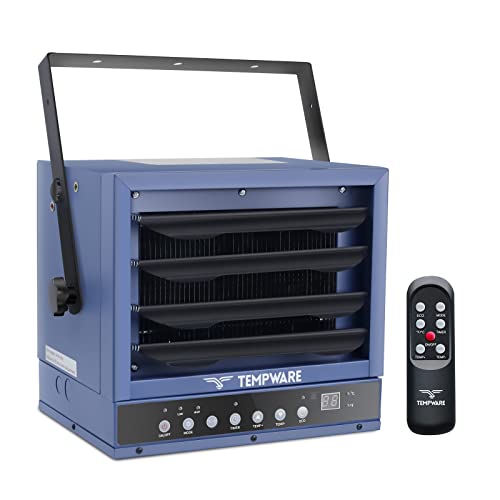
The TEMPWARE electric heater offers ceiling-mounted versatility with 2 heat settings and ECO mode. Its 25,590 BTU rating (effective electric output) can heat large spaces up to 1,250 square feet. Features include adjustable louvers, thermostat control (45°F–95°F), an auto-off timer (1–12 hours), and overheat protection. This unit is wired for 240V hardwiring and includes a full-function remote for convenient operation from within a workshop or garage.
Considerations: minimal emissions and simple installation, but requires electrical infrastructure and proper mounting. ECO mode promotes energy efficiency by adjusting heating based on ambient temperature.
Gasland MHA18R Propane Patio Heater
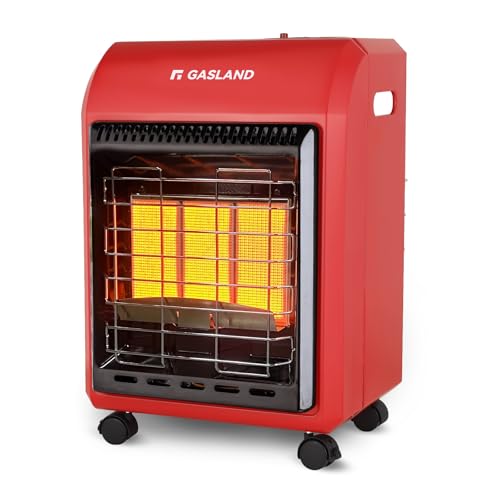
This Gasland model mirrors the MHA18BN in heating capability and safety design, with three heating modes (high, medium, low) for adjustable warmth up to 18,000 BTU. It operates on a 20 lb propane cylinder, offering independence from electricity. It is designed for portable use in garages, workshops, and outdoor work areas, with a focus on safety shut-offs in case of tipping or low oxygen levels.
Key considerations: strong portability and consistent radiant heat, suitable for mixed indoor/outdoor setups where ventilation is available and propane sourcing is straightforward.
Mr. Heater F260550 Big Maxx MHU50NG
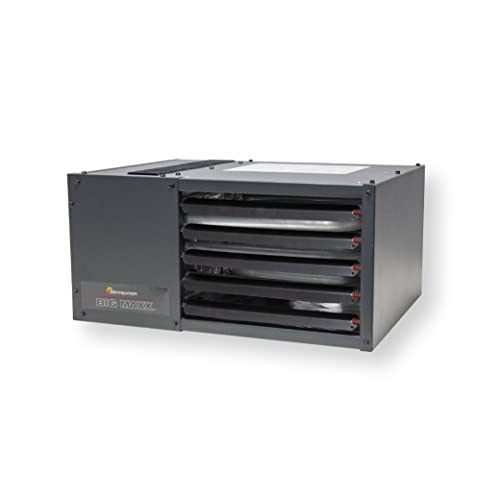
The Mr. Heater Big Maxx MHU50NG is a natural gas unit heater designed for larger spaces, featuring up to 50,000 BTU per hour and options for vertical or horizontal venting. It provides accessible external thermostat and gas connections, with powered exhaust facilitating safer venting in enclosed areas. This unit targets bigger garages, workshops, or spaces requiring robust heat delivery without reliance on electricity.
Considerations: high heat output for large areas, needs proper gas line installation and venting; ensure adequate ventilation in confined spaces and compliance with local codes.
Habitio 125,000 BTU Propane Heater
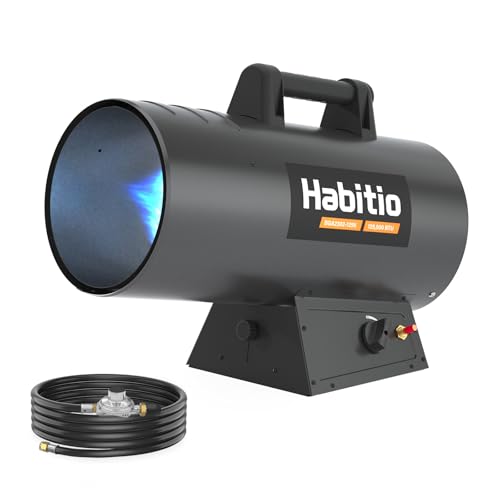
The Habitio unit is a heavy-hitting propane heater rated up to 125,000 BTU, with a typical effective range up to 3,125 sq ft. It is designed for job sites, garages, and construction spaces that demand rapid space warming. The product includes a 10 ft hose with regulator for safer fuel delivery and features CSA certification for safety compliance. Users should note instruction details on gas connections and startup procedures to minimize leaks and ensure proper operation.
Considerations: best for larger areas and frequent use; ensure appropriate clearance, ventilation, and a stable mounting or placement to maximize safety and efficiency.
Buying Guide: Key Considerations For Choosing A Garage Heater
- Fuel Type And Availability: Propane units offer portability and independent operation during power outages, while natural gas and electric heaters rely on existing utility connections or electrical circuits. Consider the most accessible fuel source for your space.
- Heat Output And Coverage: Larger spaces require higher BTUs and proper air distribution. Match the heater’s BTU rating to your garage size, height, and insulation level to avoid overheating or underheating.
- Ventilation And Safety: Propane and kerosene heaters require adequate ventilation to avoid buildup of combustion byproducts. Look for safety features such as tip-over shut-off, oxygen depletion shut-off, and CSA or UL certifications for gas models.
- Electrical Requirements: Electric garage heaters need appropriate 240V circuits and circuit breakers. Check wiring capacity and ensure a dedicated circuit if using high-wattage models with ECO or timer features.
- Installation And Mobility: Ceiling-mounted or wall-mounted electric heaters save floor space, while portable propane models offer flexibility for different work zones. Consider how you’ll move heat between areas and how access to fuel or power will work.
- Control And Convenience: Directional louvers, thermostats, timers, and remotes improve comfort and energy efficiency. ECO modes help reduce energy use by adjusting output based on ambient temperature.
- Maintenance And Longevity: Gas models require checks for gas lines, regulator integrity, and venting if applicable. Electric units benefit from clean filters (where applicable) and safe mounting to prevent overheating.
- Cost of Operation: Consider fuel or electricity costs over time, as well as potential maintenance expenses. Higher BTU units may deliver faster Warm-up but could incur higher running costs if used extensively.