Gas-driven air compressors provide off-grid power, mobility, and prolonged run times for outdoor jobs and remote work sites. This guide highlights five strong options, explaining who each is best for and why it stands out. The top picks are ideal for builders, outdoor contractors, and DIY enthusiasts who need reliable air flow without relying on electricity.
Summary of selected products:
| Product | Tank Size | Max PSI | Best For |
|---|---|---|---|
| VEVOR 9 Gallon Twin-Tank Gas Powered Air Compressor | 9 gallons | 115 PSI | Outdoor tire inflation, two-tool operation |
| Albott 13HP Gas Air Compressor 30 Gallon | 30 gallons | 180 PSI | Longer runtime with heavy use |
| VEVOR 13.2 Gallon Gas Powered Air Compressor | 13.2 gallons | 115 PSI | Workshop projects with dual outlets |
| Metabo HPT Gas Powered 8 Gallon | 8 gallons | 145 PSI | Professional-grade versatility |
| Albott 6.5HP Gas Powered 8 Gallon | 8 gallons | 115 PSI | Compact, dual-outlet workflow |
VEVOR 9 Gallon Twin-Tank Gas Powered Air Compressor

The VEVOR 9 Gallon Twin-Tank unit combines two tanks with a 9 CFM airflow and a 115 PSI max. It is designed for tire inflation and light shop tasks, and it supports two air outlets for simultaneous tool use. The unit is mobile with wheels and a push handle for outdoor tasks where electricity is unavailable.
Best for: Outdoor workers and DIYers who need a portable, dual-outlet setup without relying on power outlets. The twin-tank design helps maintain stable air flow during longer sessions.
Limitation: With a single gasoline engine, high-demand continuous use may require monitoring fuel levels and maintenance to sustain peak performance.
Albott 13HP Gas Air Compressor 30 Gallon
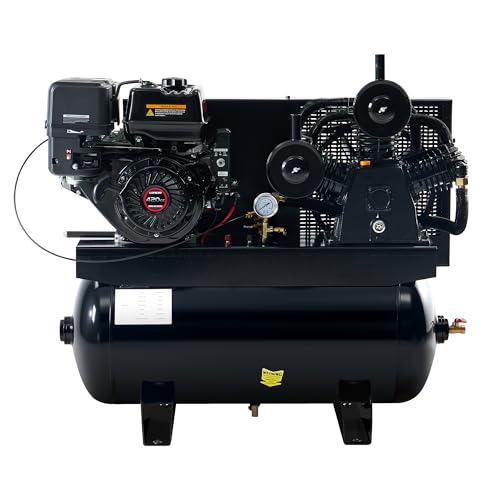
This model provides a large 30-gallon tank and a robust 13 HP gas engine, delivering up to 180 PSI and 18 CFM at 90 PSI. The combination of a heavy-duty cast-iron pump and ASME-certified tank supports steady, long-running air supply for demanding jobs such as spray painting and framing.
Best for: Pros or serious DIYers who require long runtimes and higher PSI for heavy-duty tasks. The large tank reduces frequent cycling and the cast-iron construction enhances durability.
Caution: Higher capacity units can be harder to move without assistance; ensure proper handling and safety during transport.
VEVOR 13.2 Gallon Gas Powered Air Compressor

With 7 HP and a 13.2-gallon tank, this gas-powered compressor delivers up to 9 CFM at 115 PSI. Its dual outlets enable simultaneous use of two tools, and the four-wheeled mobility supports easy relocation on job sites. The unit emphasizes stable air delivery to avoid frequent restarts.
Best for: Workshops and contractors needing a balance of portability and ample air supply. The dual outlets support two-tool workflows in parallel.
Limitation: While versatile, it may be heavier than smaller portable units, so plan for transport on-site.
Metabo HPT Gas Powered 8 Gallon

The Metabo HPT unit uses a Honda GX engine and an 8-gallon tank, delivering 116–145 PSI with solid durability thanks to a cast-iron cylinder. It is built for professional-grade versatility, supporting siding, roofing nailers, and other pneumatic tools while maintaining consistent performance.
Best for: Pros seeking reliability and consistent compression for varied pneumatic tools. The Honda engine is a well-regarded choice for endurance on tough sites.
Caution: The unit’s power requires careful handling; ensure adequate fuel availability and secure mounting to prevent tipping on uneven surfaces.
Albott 6.5HP Gas Powered 8 Gallon
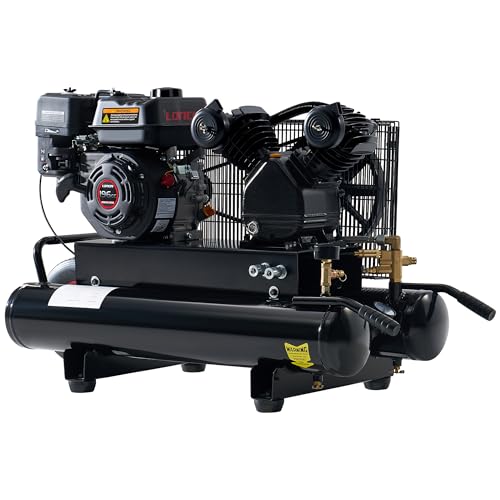
This compact option uses a 6.5 HP gas engine with an 8-gallon tank and dual outlets (1/4″ NPT). The two-outlet design supports simultaneous tool use, while the cast-iron pump setup strengthens wear resistance for longer life under heavy operation.
Best for: Small shops or mobile crews that need two-tool capability without a large machine. The compact size eases transportation and storage.
Limitation: Slightly lower horsepower compared to larger units may affect performance on heavy-duty, prolonged tasks.
Buying Guide: Gas-Powered Air Compressors
What should I consider when choosing a gas-powered compressor?
Tank size and PSI determine how long air is available between cycles and how much pressure you can deliver to tools. Larger tanks and higher PSI suit heavy-duty work, but weigh more and cost more to run.
Do I need dual outlets?
Dual outlets support two tools at once, reducing waiting time between tool changes. This is beneficial for continuous workflow on job sites with multiple pneumatic devices.
How important is portability?
Wheels and carrying handles improve maneuverability on varied terrain. Heavier units may require assistance for transport.
Which engine should I pick?
Honda and other reputable engines are known for reliability and smoother operation. Higher HP engines generally deliver faster air compression, but fuel consumption and weight increase.
Where will I use it most?
Outdoor settings and remote sites benefit from gas power to avoid electric line limitations. For indoor workshops, a larger unit with stable air delivery is advantageous for continuous use.
Maintenance and safety tips
Check oil levels regularly, inspect gas lines for leaks, and ensure tanks are ASME-certified where applicable. Follow manufacturer guidelines for safe fueling, startup, and shutdown to avoid damage and injuries.
Summary of practical choices
- Best for outdoor, two-tool operation: VEVOR 9 Gallon Twin-Tank
- Best for long runtimes and heavy use: Albott 13HP 30 Gallon
- Best for balanced shop work: VEVOR 13.2 Gallon
- Best for professional-grade versatility: Metabo HPT 8 Gallon
- Best for compact two-tool operation: Albott 6.5HP 8 Gallon
FAQ
- What is the advantage of a gas-powered compressor over electric? Answer: Gas-powered units do not require electrical outlets and are suitable for outdoor or remote sites where power is unavailable.
- How do I decide on tank size? Answer: Larger tanks provide steadier airflow and longer runs between fills, but are heavier and less portable.
- Can I use two tools at the same time? Answer: If the unit has dual outlets, yes, you can operate two tools simultaneously, reducing downtime.
- Is 115 PSI enough for most air tools? Answer: Yes, many common air tools operate well at 90–115 PSI, but high-demand tools may require higher PSI tolerances.
- What maintenance is essential for gas compressors? Answer: Regular oil checks (where applicable), valve and filter inspections, and ensuring the fuel and air lines are in good condition.
- How should I move a heavy unit safely? Answer: Use the built-in wheels and handles; seek assistance when lifting or loading to prevent injury.