Gas-fired heaters deliver reliable warmth for workshops, garages, and well-insulated spaces. The selections below highlight top natural gas and propane units from trusted brands, including big-capacity models and compact designs suitable for different spaces. Each option combines efficiency, venting versatility, and straightforward installation features to help you compare performance and long-term value.
Summary of selected products
| Product | Brand | BTU (Max) | Venting | Notes |
|---|---|---|---|---|
| Big Maxx MHU80NG Natural Gas Unit Heater | Mr. Heater | 80,000 | Vertical/Horizontal | |
| Hot Dawg 75,000 BTU Unit Heater | Modine | 75,000 | Power Vented | |
| Big Maxx MHU50NG Natural Gas Unit Heater | Mr. Heater | 50,000 | Vertical/Horizontal | |
| Hot Dawg 125,000 BTU Unit Heater | Modine | 125,000 | Power Vented | |
| ProCom MN300TBA-B Ventless Natural Gas Heater | ProCom | 30,000 | Ventless |
Mr. Heater Big Maxx MHU80NG Natural Gas Unit Heater
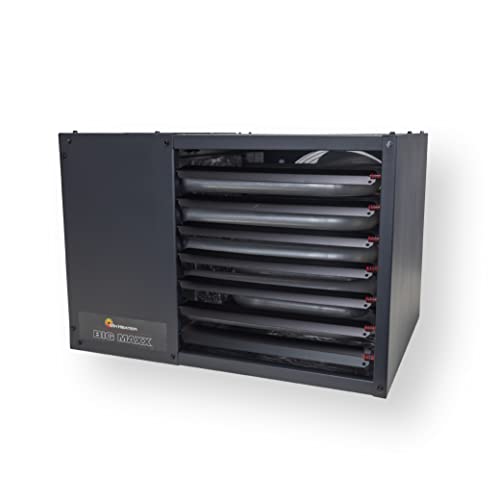
The Big Maxx MHU80NG provides 80,000 BTU for up to 2,000 square feet, making it suitable for larger garages and shop spaces. It supports natural gas with vertical or horizontal venting options, and operates at 120 V with a low current draw. Basic installation includes two angle brackets and a liquid propane conversion kit; thermostat, hose, and regulator are not included. When locating this unit, ensure proper clearances and venting compatibility to maximize efficiency and safety.
Modine Hot Dawg 75,000 BTU Unit Heater

Modine’s Hot Dawg line is known for efficient natural gas heating with power-vented operation. The 75,000 BTU model delivers robust performance suitable for garages and light commercial spaces. It is designed for easy mounting and reliable operation, with standard 80% efficiency and a configuration that supports vertical venting. This unit balances performance and value for spaces that require steady, high-output heat.
Mr. Heater Big Maxx MHU50NG Natural Gas Unit Heater
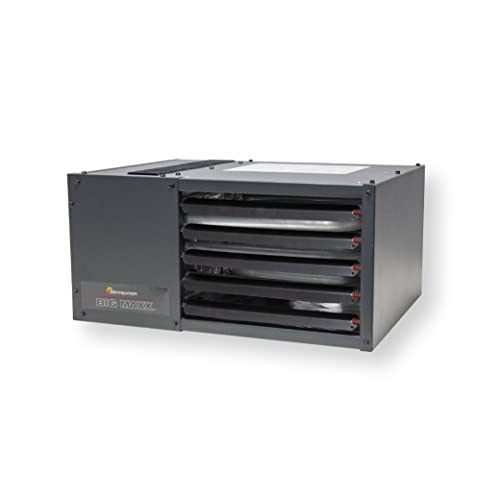
The 50,000 BTU Big Maxx model heats up to about 1,250 square feet and offers flexible venting options, including vertical and horizontal configurations. This unit emphasizes straightforward external thermostat access and gas connections, making installation convenient in spaces where wall access is limited. It is well-suited for mid-sized garages and workshops looking for dependable warmth during cold seasons.
Modine Hot Dawg 125,000 BTU Unit Heater

With 125,000 BTU, this high-capacity Modine Hot Dawg unit is designed for larger commercial or residential spaces that demand substantial heat output. It features power-vented operation and a slim profile that keeps ceiling clutter to a minimum. The design is intended for installations just below ceilings in multi-space environments, where quiet operation and consistent warming are essential.
ProCom MN300TBA-B Ventless Natural Gas Heater

The ProCom MN300TBA-B offers 30,000 BTU of natural gas heat without the need for electricity, making it a versatile option for areas with unstable power or where electrical access is limited. It uses a piezo ignition with manual control across three heat settings. This ventless model is suitable for spaces up to about 1,400 square feet and includes safety features such as an oxygen depletion sensor for automatic shut-off.
Buying Guide: Key Considerations For Gas-Fired Heaters
Choosing the right gas-fired heater depends on space size, venting capability, and installation constraints. Consider the following perspectives to compare models effectively:
- Space size and BTU requirements: Larger spaces typically need higher BTU units (e.g., 75,000–125,000 BTU), while smaller garages can be well-served by 30,000–50,000 BTU models. Also account for insulation levels and window losses.
- Venting and installation: Vertical, horizontal, or ventless options affect where you can install the unit. Ventless models offer easier installation but require safe indoor air management and may have higher ongoing safety considerations.
- Fuel type and efficiency: Natural gas and propane units differ in efficiency and maintenance. Look for models with energy-efficient operation (high AFUE equivalents) and robust warranty terms.
- Ventilation requirements: Power-vented units push exhaust outside and generally require ducting compatibility. Ensure proper clearances, especially near walls, ceilings, and combustibles.
- Maintenance and parts availability: Choose brands with readily available replacement parts, simple annual maintenance checks, and accessible customer support.
- Noise and vibration: Whisper-quiet operation is beneficial in workspaces. Look for vibration-dampening features and properly mounted configurations.
- Safety features: Oxygen Depletion Sensor (ODS) and automatic shut-off are important, particularly for ventless units. Check for proper ventilation and CO monitoring requirements in your area.
When evaluating multiple models, compare BTU output against space size, venting flexibility, and installation ease. For garages and workshops, prioritize robust heat output and reliable venting options. In living areas or offices, ventless options may simplify installation while requiring careful odor and gas management. Always follow local code requirements and consult a licensed professional for installation if needed.