Gas powered garage heaters are a reliable option for quickly warming up workspaces like garages, barns, and workshops. This guide highlights five well-suited models, explaining who each is best for and why. Whether you need rapid heat for a large space or a compact unit for a small stall, these selections balance power, efficiency, and practical use. The buyer is typically looking for strong BTU output, reliable venting options, and compatibility with common thermostats.
Summary table of selected products
| Product | BTU / Capacity | Best For | |
|---|---|---|---|
| Mr. Heater 50,000 BTU Forced-Air Unit Heater | 50,000 BTU | Medium to large garages; standard 24V thermostats | Ceiling-mounted; suitable for up to ~1,667 sq ft |
| Mr. Heater 80,000 BTU Forced-Air Unit Heater | 80,000 BTU | Larger garages and workshops | Higher heat for bigger spaces; color varies |
| Mr. Heater 125,000 BTU Forced-Air Unit Heater | 125,000 BTU | Very large spaces; high heat demand | Electronic ignition and powered exhaust |
| Modine Hot Dawg 125,000 BTU | 125,000 BTU | Residential or light commercial installations | Low profile; quiet operation |
| Modine HD45AS0111 Natural Gas Hot Dawg 45,000 BTU | 45,000 BTU | Smaller garages or tight spaces | Low profile, high efficiency, quiet operation |
Mr. Heater 50,000 BTU Forced-Air Unit Heater

Features: Ceiling-mounted forced air unit heater; heats up to 1,667 sq ft; compatible with standard 24-volt or new Wi-Fi enabled thermostats (sold separately).
Best for: Medium garages and workshops where a reliable heat source is needed without excessive footprint. It pairs well with existing thermostats for automated control. Caution: Ensure proper clearance and venting per local codes.
Mr. Heater 80,000 BTU Forced-Air Unit Heater
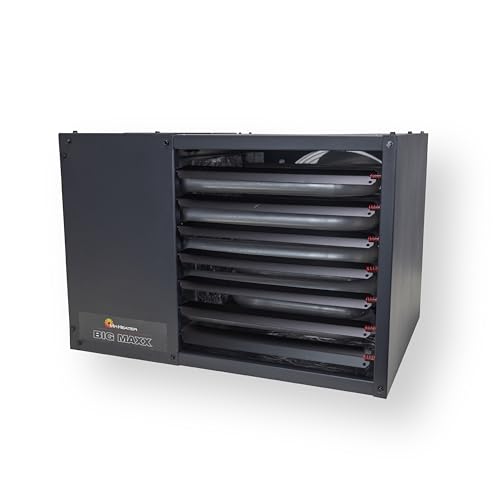
Features: Ceiling mounted forced air propane unit heater; heats up to 2,667 sq ft; color may vary between grey and tan.
Best for: Larger spaces that require robust heating capacity. Pick this when the space regularly exceeds 2,000 sq ft. Limitation: Color variation may affect aesthetic consistency in exposed installs.
Mr. Heater 125,000 BTU Forced-Air Unit Heater
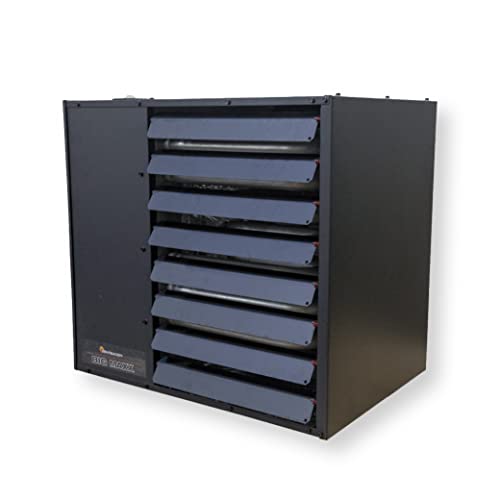
Features: Electronic ignition; Powered exhaust; Liquid propane conversion included.
Best for: Large professional or industrial spaces where high heat output is essential. Consider when planning for potential propane conversion and advanced ignition features. Limitation: Higher energy use and installation attention required.
Modine Direct Vent Hot Dawg 45K LP Gas

Features: MODINE HOT DAWG 45K BTU LP GAS; direct venting option for more flexible installations.
Best for: Smaller garages or tight spaces where a compact, high-efficiency unit is preferred. Limitation: Lower BTU compared to larger models may require longer warm-up times for big spaces.
Modine Hot Dawg, Gas Fired Unit Heater, 125000 BTU

Features: Modine Hot Dawg power vented, gas-fired; suitable for residential or commercial installations; low-profile design; whisper quiet operation.
Best for: Attics, garages, or spaces where ceiling clearance is limited and quiet operation matters. Limitation: Requires proper venting and professional installation guidance.
Mr. Heater 30,000 BTU Vent Free Blue Flame Natural Gas Heater

Features: Emits 30,000 BTU/hr; heats up to 1,000 sq ft; battery operated electronic ignition.
Best for: Small garages or as a supplementary heater where venting is constrained. Limitation: Vent-free operation may impact air quality considerations in tightly sealed spaces.
Buying Guide
How to choose the right BTU for your space
Calculate the square footage of the space you want to heat and multiply by a target heat load per square foot. Larger spaces typically need higher BTU units or multiple heaters. In garages, factoring ceiling height, insulation level, and climate is essential for accurate sizing.
Fuel type and venting considerations
Most popular options are propane and natural gas. Consider venting requirements: direct vent and powered exhaust units can offer safer venting in sealed garages, while vent-free units are common for smaller spaces but require ventilation planning.
Thermostat compatibility and control
Many gas heaters support standard 24-volt thermostats; some offer Wi-Fi or advanced controls. Confirm compatibility with your existing smart home setup if automation matters to you.
Installation and safety considerations
Ceiling-mounted or low-profile designs save floor space. Ensure adequate clearance from combustibles and proper combustion air. Electrical and gas line connections typically require a licensed professional.
Durability, noise, and maintenance
Look for units with robust metal construction and quiet operation, especially in workshops where sound can be a distraction. Regular inspection of gas lines and ignition components helps prevent performance issues.
Space planning and future needs
If you expect space to expand or require heat for multiple zones, plan for multi-heater setups or units with compatible zoning options. Consider future thermostat upgrades for better efficiency.
Practical quick tips
- Place heaters higher on the wall or ceiling when possible to maximize air distribution.
- Check clearance requirements on installation manuals and local codes.
- Pair a heater with good insulation for faster, more efficient warming.
FAQ
- What size garage heater do I need?
Answer: It depends on space square footage, insulation, and climate; bigger garages usually require higher BTU units or multiple heaters. - Are gas garage heaters safe for indoor use?
Answer: Yes, when vented properly and installed according to the manufacturer’s instructions and local codes. - Do I need a professional to install a gas garage heater?
Answer: For most models, professional installation is recommended to ensure safe venting, connections, and compliance. - Can I use a thermostat with a gas heater?
Answer: Many models support standard 24-volt thermostats or smart controls; verify compatibility before purchasing. - What is the difference between direct vent and vent-free heaters?
Answer: Direct vent units exhaust combustion by a dedicated vent; vent-free units do not require a vent but need adequate indoor ventilation. - Is it better to choose a higher BTU unit for future warming needs?
Answer: If you anticipate larger spaces or colder climates, a higher BTU unit offers flexibility, but oversizing can waste energy.