Gas spa heaters offer rapid heating and consistent performance for in-ground pools and spas, even in cooler climates. This guide highlights top natural gas pool and spa heaters that deliver durable build quality, efficient operation, and reliable service. We compare units from leading brands, covering capacity, efficiency features, and installation considerations to help you choose the right heater for your space and budget.
| Product | BTU (Gas) | Type |
|---|---|---|
| Hayward W3H250FDN Universal H-Series | 250,000 | Natural Gas Pool/Spa Heater |
| Hayward W3H150FDN Universal H-Series | 150,000 | Natural Gas Pool/Spa Heater |
| Hayward W3H400FDN Universal H-Series | 400,000 | Natural Gas Pool/Spa Heater |
| Master Temp Gas Pool Heater | 250,000 | Natural Gas Pool/Spa Heater |
| Raypak 105,000 BTU Heater | 105,000 | Natural Gas Pool/ Spa Heater |
When selecting a gas spa heater, consider pool size, desired heating speed, installation space, and maintenance requirements. The models below are among the most relevant options currently available, emphasizing a balance of heating performance, durability, and efficiency that American homeowners expect from trusted brands.
Hayward Universal H-Series 250,000 BTU Heater

The Hayward Universal H-Series 250,000 BTU natural gas heater is designed for robust performance in in-ground pool environments. Its cupro-nickel heat exchanger provides excellent corrosion resistance and long service life, helping protect against water chemistry imbalances. The model’s hydraulic design is engineered to minimize circulation pump run time, resulting in meaningful energy savings while maintaining rapid heating capability. This heater suits larger residential pools and spa combinations where fast warm-up is a priority.
Hayward Universal H-Series 150,000 BTU Heater

This 150,000 BTU unit provides premium heating performance with a durable cupro-nickel heat exchanger for corrosion resistance. It is built with an industry-leading hydraulic design to reduce pump runtime and energy use, making it a suitable choice for mid-size pools and spas. The heater’s compact footprint and reliable ignition system contribute to dependable year-round operation in a wide range of climates.
Hayward Universal H-Series 400,000 BTU Heater

The 400,000 BTU model is designed for larger or more demanding pool and spa setups, delivering rapid heating with high-capacity output. The durable copper-nickel heat exchanger stands up to challenging water chemistry and provides extended life. Its hydraulic design emphasizes efficient flow, helping to minimize pump running time and reduce energy costs while delivering consistent heating performance even in cooler seasons.
Master Temp Gas Pool Heater, 250,000 BTU

The Master Temp series offers a compact, space-saving design with a rotating digital display for flexible installation and easy temperature monitoring. Its 250,000 BTU natural gas configuration is optimized for efficient pool and spa heating in residential settings, featuring pre-mixed gas combustion technology to ensure stable flame operation and good fuel efficiency. The unit’s enclosure is designed for outdoor installation and straightforward access to controls and connections.
Raypak 105,000 BTU Natural Gas Heater
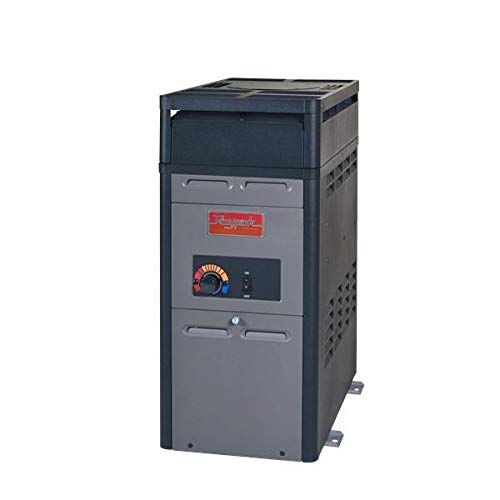
Raypak’s 105,000 BTU heater is a compact option designed for easier installation on smaller above-ground pools or in-ground spas. Its straightforward thermostat dial provides intuitive temperature control, and the unit can be wired for 120V or converted to 220V, offering installation flexibility. This model is well-suited to moderate heating needs where space or budget constraints are present while still delivering reliable gas-fired heating performance.
Buying a gas spa heater involves balancing heating capacity, installation compatibility, and long-term operating costs. Consider the following factors to guide a sound decision.
Buying Guide
Pool size, climate, and heating speed
larger pools or spa combinations require higher BTU ratings (for example, 250,000–400,000 BTU) to achieve warm water quickly. In cooler climates or for year-round use, higher-capacity units reduce heating time and provide consistent performance. For smaller setups, 105,000–150,000 BTU heaters may suffice, especially when paired with efficient heat exchangers and hydraulic design.
Efficiency features and reliability
look for durable heat exchangers made of cupro-nickel or copper-nickel alloys to resist corrosion from chlorine and saltwater. A well-engineered hydraulic design lowers pump runtime, saving energy. Pre-mixed gas combustion technology can improve fuel efficiency and stable flame characteristics, contributing to lower operating costs over time.
Installation considerations
verify available space, venting requirements, and clearances for outdoor installation. Some units offer flexible installation options, such as 120V/220V configurations or in-line connections, which can simplify setup. Access to service panels and ease of routine maintenance should factor into the decision, along with compatibility with existing pool equipment.
Maintenance and service
choose models with robust support networks and readily available replacement parts. Regular inspection of venting, gas connections, and water chemistry is essential to maintain performance and safety. A model with a good warranty and accessible customer support can minimize downtime and repair costs.
Cost of ownership
gas heaters typically incur higher upfront costs but can deliver lower long-term energy use when heating demands are high. Consider heat-up time, cycle frequency, and the impact of seasonal usage on fuel consumption. In some cases, pairing a gas heater with a solar or heat pump backup can optimize annual operating costs.
In summary, the Hayward Universal H-Series line provides a broad range of capacities and reliable performance for different pool sizes, while the Master Temp and Raypak models offer compact designs or lower-capacity options for smaller installations. When selecting a gas spa heater, align capacity with your pool or spa’s heating needs, account for installation constraints, and prioritize durable components and efficient operation to ensure long-term value.