Finding the right thermostat involves balancing ease of use, compatibility, and energy savings. This guide highlights five popular options suited for common single-stage systems and DIY installations. Expect clear scheduling, smart features, and straightforward controls. Ideal buyers include DIY enthusiasts, homeowners upgrading older systems, and renters seeking simple, reliable temperature management.
The following quick reference helps compare capabilities at a glance. Each product is selected for practical compatibility with 1 Heat/1 Cool setups or straightforward single-stage configurations, with emphasis on ease of installation, clear displays, and energy-conscious features.
| Product | ||
|---|---|---|
| Honeywell RTH20B | Users needing simple 5-2 day scheduling | Clear display and straightforward scheduling |
| Suuwer Non-Programmable | Budget installs on conventional single-stage systems | Low-cost, basic control without programming |
| Sensi ST55 | Smart, energy-conscious DIY homeowners | Energy saving with easy setup; broad HVAC compatibility |
| Amazon Smart Thermostat | Alexa-enabled homes seeking voice control | Voice assistance and simple energy management |
| Honeywell RTH7600D | Users wanting a larger touchscreen and 7-day programming | Flexible scheduling and easy holds |
Honeywell Home RTH20B Programmable Thermostat

The Honeywell RTH20B is a 1 heat/1 cool programmable model designed to replace older stat units. It supports 5-2 day scheduling and offers a large display with clear font for easy daily use. This makes it a solid pick for households seeking predictable daily routines and straightforward changes to temperature settings without advanced smart features. Best for: homeowners who want reliable programming without learning complex apps.
Best for: Those upgrading a basic wired thermostat to a more organized schedule. Why: clear display, direct replacement compatibility, and familiar Honeywell controls. Caution: programming options may not match more advanced smart systems, so expect simpler automated routines.
Suuwer Non-Programmable Thermostat for 1H/1C

The Suuwer model is a non-programmable option for conventional single-stage systems. It includes a blue backlight and is targeted at users who prefer simple temperature control without scheduling. Best for: renters or owners who want a budget-friendly, easy-to-use thermostat. Caution: not suitable for multistage systems or heat pumps; verify that your wiring and base support 2–5 wires.
Sensi Smart Thermostat (ST55)

The Sensi ST55 is a Wi-Fi smart thermostat that emphasizes privacy and DIY installation. It works with most HVAC equipment and often doesn’t require a common wire (c-wire). It offers remote access and usage reports to help monitor energy use. Best for: tech-minded homeowners who want straightforward smart features without a hub. Caution: privacy protections are highlighted, but some advanced integrations may require additional setup.
Honeywell Home RTH9585WF1004 Color Thermostat
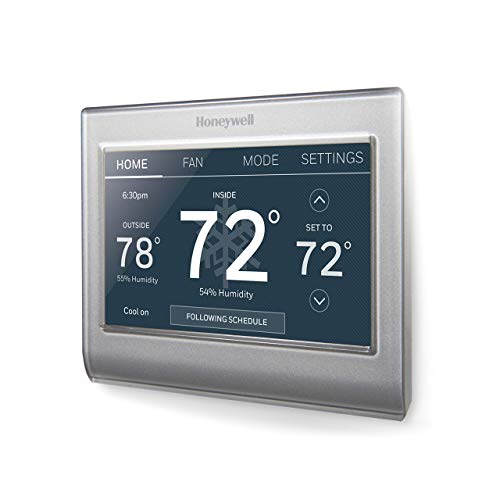
The RTH9585WF1004 adds a color touchscreen and 7-day programming with energy-saving options and potential utility rebates. It supports demand response programs, which can adjust settings during peak energy demand with permission. Best for: households seeking extensive custom schedules and potential rebates. Caution: advanced energy programs depend on local utility availability and participation rules.
Amazon Smart Thermostat

The Amazon Smart Thermostat integrates with Alexa and Ring ecosystems, enabling voice control and presence-based adjustments. It is positioned as an energy-saving option with simple setup and room-by-room comfort. Best for: homes already using Alexa-enabled devices or Ring, seeking easy voice-enabled control. Caution: features may require compatible devices and stable Wi-Fi for remote operations.
Honeywell Home RTH7600D 7-Day Thermostat

The RTH7600D offers a larger touchscreen and 7-day programming with four periods per day. This model is well-suited for households that want detailed daily control and the ability to tailor heating and cooling across the week. Best for: users who prefer an intuitive UI and a more granular schedule. Caution: larger display means a bigger unit footprint; ensure installation space is suitable.
Honeywell Home CT31A1003 Non-Programmable Thermostat

The CT31A1003 is a beige non-programmable thermostat designed for simple control of basic heating and cooling. It uses a snap-action switch and a mercury-free sensor for reliability. Best for: those who want a durable, no-frills thermostat with straightforward operation. Caution: lacks programming or smart features, so energy optimization relies on user discipline.
NonProgrammable Thermostat, Blue Backlight

The NonProgrammable Thermostat by Miuputake supports single-stage systems with a digital display and blue backlight. It emphasizes careful installation and compatibility checks, and it lists several system types it can control. Best for: users who want a budget, easy-to-install option with clear visibility at night. Caution: not suitable for multistage or heat pump configurations; verify wiring and base compatibility.
Buying Guide
Key considerations for choosing a heat and AC thermostat include system compatibility, ease of installation, and the balance between traditional controls and smart features. The following questions help buyers tailor a choice to their needs.
- What kind of system do I have? If you only have single-stage heating and cooling, most of these options will work, but confirm 1H/1C compatibility.
- Do I want a programmable schedule or smart features? Programmable models provide routine control; smart thermostats add remote access, energy reports, and potential rebates.
- Is a backlit or large touchscreen important for visibility? Larger displays improve readability, especially in low-light conditions.
- Will I use voice assistants? Models like the Amazon and Sensi thermostats integrate with Alexa, Ring, or other ecosystems for hands-free control.
- Are energy rebates or demand response programs available in my area? Some models offer utility-based incentives that can reduce overall costs.
Practical installation tips
- Turn off power before handling wiring to avoid shocks or damage.
- Verify base compatibility and wire count (typically 2–5 wires for basic models).
- Use the included diagrams and app tutorials to ensure correct wiring and configuration.
- If in doubt, consult a professional installer, especially for older homes with nonstandard wiring.
FAQ
- What is the difference between programmable and smart thermostats?
Programmable models follow a set schedule, while smart thermostats offer remote control, learning features, and integration with home networks. - Do I need a C-wire for installation?
Many smart thermostats require a C-wire, but several models work with a common wire not required in all setups. - Can I keep my existing heating system with a new thermostat?
Most single-stage systems are compatible, but verify specific model compatibility with your furnace or AC unit. - Are rebates available for installing a new thermostat?
Some utility providers offer rebates for energy-saving thermostats; check your local programs. - Which thermostat is easiest for a first-time DIY installer?
Non-programmable or basic programmable models with clear wiring diagrams typically offer the simplest setup. - Will voice assistants control my thermostat automatically?
Yes, if you choose an Alexa-compatible model or a thermostat integrated with your smart home ecosystem.