Answering the common buyer question: which heat-resistant spray foams best block fire and seal gaps around windows, doors, pipes, and HVAC penetrations? This guide highlights five top options, suited for different project needs—from light residential gaps to more demanding fire-rated applications. The selections emphasize clear visibility, reliable expansion, and safety certifications to help you compare options quickly. The following summary table shows each product’s primary use and the buyer it’s best for.
| Product | Best For | Notes |
|---|---|---|
| Kraken Bond Extreme Orange Fire Block Foam | Fire-rated gaps; high expansion | Bright orange improves visibility |
| Stanley F952 Fire Block Foam | General fire-blocking around openings | 2-pack durability |
| 3M Fire Block Foam FB-Foam | Residential fire blocking; ready-to-use | Orange; expands up to 200% |
| Loctite Tite Foam Big Gaps | Gaps up to 3 inches; high density | Flexible; durable seal |
| DAP FireBreak Flame Resistant Foam | HVAC, plumbing penetrations; draft sealing | Paintable after cure |
Kraken Bond Extreme Orange Fire Block Foam
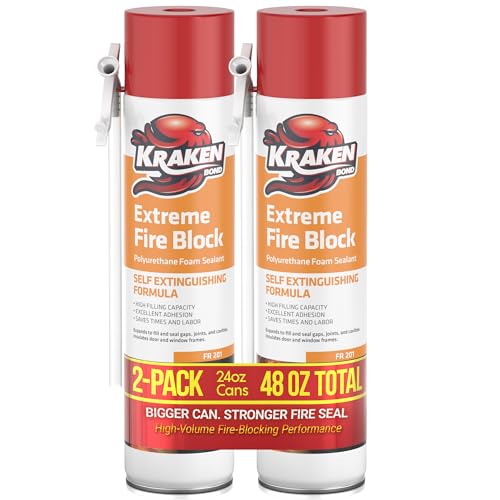
Features: CLASS A FIRE RATED FOAM SEALANT; ASTM E84-20 and UL Classified certification; HIGH-EXPANSION formula for filling gaps around windows, doors, pipes, and other openings; ORANGE VISIBILITY helps ensure clear placement and coverage tracking.
Best for: Projects where fire-rated performance matters and high visibility is helpful for precise application. Suitable for gaps in walls, around window and door frames, and penetrations where fire safety is prioritized.
Why chosen: It combines fire-rated certification with high expansion and visible orange color, making fire-blocking work more efficient and auditable.
Caution/limitation: Ensure proper ventilation and follow canister temperature recommendations; the bright color may show through lighter finishes in some installations.
Stanley F952 Fire Block Foam

Features: FIRE BLOCK SPRAY FOAM for safety; multi-application insulation for windows, doors, walls, pipes; temperature-optimized performance with specified workable ambient range.
Best for: General fire-blocking in both renovation and new construction, indoors or outdoors, where flexible positioning and reliable seal are needed.
Why chosen: A well-rounded option with broad compatibility and a focus on safety, making it a solid choice for many residential and light commercial jobs.
Caution/limitation: Temperature tolerance requires attention to can temperature (68°F) for best results; extreme site conditions may affect cure times.
3M Fire Block Foam FB-Foam

Features: TESTED PERFORMANCE; ASTM E84 (modified) Type V Residential Fireblock; HEAT RESISTANCE up to 240°F (115°C); Expands up to 200% to seal openings quickly.
Best for: Residential fire-blocking where certified performance and rapid expansion are priorities, such as sealing around studs and penetrations in walls.
Why chosen: A trusted brand with explicit fire-block performance and high expansion, resulting in faster, more reliable sealing of openings.
Caution/limitation: Ensure proper surface preparation and cure conditions; avoid excessive curing times in cool environments.
Loctite Tite Foam Big Gaps

Features: EXPANDS TO FILL gaps up to 3 inches; HIGH DENSITY foam for durability; SUPERIOR FLEXIBILITY to withstand building movement without losing seal.
Best for: Large gaps and overhead or vertical applications where movement is likely, such as joist bays or around exterior penetrations.
Why chosen: Its large-gap capability and durable seal make it a strong option for challenging remodeling or new-build tasks.
Caution/limitation: Use in well-ventilated areas and watch for over-expansion in tight spaces; cutting and finishing may be needed after cure for aesthetics.
DAP FireBreak Flame Resistant Foam

Features: HIGH-PERFORMANCE FIRE-RETARDANT foam that is self-extinguishing; blocks drafts around HVAC, plumbing, electrical penetrations; dries tack-free in 10 minutes and cures in 1 hour; paintable and sandable after full cure.
Best for: Draft sealing in commercial or residential spaces where quick tack-free time and paintability matter, such as exposed interiors or shared walls.
Why chosen: Quick handling characteristics, combined with paintability, support both performance and finish-quality needs in many projects.
Caution/limitation: Outdoor use may require additional weatherproofing; follow outdoor-use guidelines to avoid discoloration when painting.
Buying Guide: How To Choose Heat-Resistant Fire Block Foam
- Fire-rating and certifications: Look for ASTM E84 or UL classifications when fire safety matters. Certifications indicate tested performance in block/spread scenarios.
- Expansion and fill capability: Higher expansion helps seal larger gaps but may require more cleanup. Match expansion to gap size and cavity depth.
- Color and visibility: Bright colors (like orange) improve placement accuracy, especially for complex penetrations.
- Application environment: Indoor vs outdoor use affects cure times, weather resistance, and paintability. Temperature guidelines influence performance.
- Finishability: If the area will be painted or finished, choose products labeled paintable or with compatible cure characteristics.
- Flexibility and movement: Gaps around windows and doors move with building settling. Flexible foams maintain seals over time.
- Cure time and handles: Quick tack-free times help with busy schedules, but complete cures affect final strength and odor.
Frequently Asked Questions
- What is heat resistant spray foam used for? It is used to seal gaps, joints, and penetrations around openings where fire safety and insulation are important, slowing fire spread and reducing drafts.
- Is orange foam easier to see during application? Yes, bright orange foams improve visibility to ensure complete coverage and reduce missed areas.
- Can fire-block foams be painted? Many are paintable after cure; verify paint compatibility on the product label.
- What temperature is best for applying these foams? Most products have an optimal ambient range around 60–86°F (some specify 68°F), but always follow the can instructions for best results.
- Are these foams safe for indoor use? When used as directed, they provide fire-blocking alongside insulation; ensure adequate ventilation during application.
- Do I need professional help for fire-rated foam? For complex or high-risk applications, consulting a qualified contractor is prudent, especially for large or code-sensitive installations.