Finding a heater that runs on batteries can be challenging, but several compact options deliver warm comfort without constant electrical access. This guide highlights five devices that either run directly from battery-powered systems or are designed for battery-powered use in mobility contexts like golf carts and small work areas. Each option focuses on safety, efficiency, and portability to help you compare performance across environments.
| Product | Power Source | Approx. Use |
|---|---|---|
| 2-Second Fast Heating 48V Electric Golf Cart Heater | 48V Battery | Golf carts, utility carts |
| Nkiy Quen Silicone Battery Pad | Battery-heating pad (battery tray) | Automotive batteries, cold starts |
| BEYOND HEAT Milkhouse Space Heater | AC powered (not battery) | Home, garage, workshop |
| 450W Mini Space Heater With Temperature Detection | AC powered (not battery) | Office, RV, small spaces |
| 18,000 BTU Big Buddy PRO Series Heater | Propane (not battery) | Large spaces, garages (requires fuel) |
2-Second Fast Heating 48V Electric Golf Cart Heater

This 48V electric heater is designed for golf carts and similar battery-powered vehicles. It delivers fast warmth directly from the vehicle’s 48V battery, making it suitable for cold rounds or early-morning outings. The unit’s carbon-fiber heating elements provide efficient heat with minimal power draw, supporting longer battery life during play. The compact design allows flexible placement, and it integrates with standard cup-holder mounting for stability on uneven terrain. It emphasizes instant warmth with 360° heating coverage, helping both driver and passenger stay comfortable on long courses or work trips.
Nkiy Quen Silicone Battery Pad
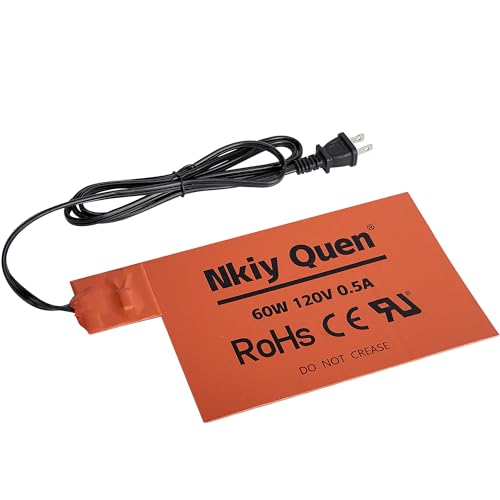
This silicone battery heater pad is designed to sit under a vehicle battery tray, providing targeted warming to prevent cold-weather start issues. It is controlled by a thermostat that automatically cuts power around 122°F to prevent overheating. The ultra-thin pad is easy to install without modifying the existing setup and works with a variety of battery compartments. Its design focuses on protecting battery performance in cold climates while maintaining safety through secondary insulation and automatic shutoffs when needed.
BEYOND HEAT Milkhouse Space Heater

The Milkhouse space heater offers three heat settings (including a thermostat-controlled mode) and a safety-focused design featuring a tip-over switch and automatic overheat protection. While it is primarily marketed for indoor use with standard electrical outlets, its compact footprint and adjustable power levels make it a practical option for personal heating in small spaces where a direct battery connection is not available. It emphasizes reliability and safety for regular use in home or workshop environments.
450W Mini Space Heater With Temperature Detection

This compact electric heater includes a temperature sensor, remote control, timer, and an LED display. It is designed for low-wattage operation, enabling safer use in spaces like offices or small RV interiors with controllable heat output. While it runs on standard AC power, its low energy footprint and smart features make it convenient for temporary heating in battery-powered environments where a stable AC source is accessible or where supplemental heat is desirable without high energy consumption.
18,000 BTU Big Buddy PRO Series Heater
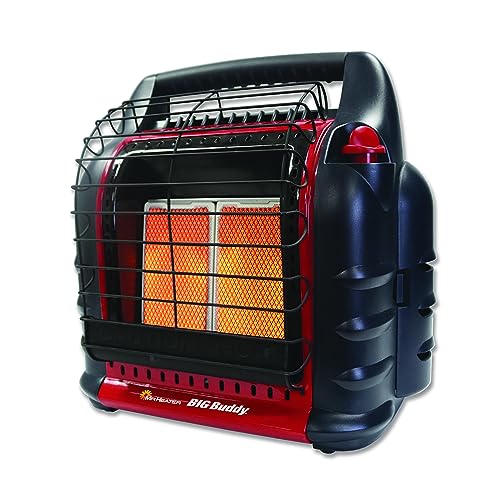
The Big Buddy PRO is a high-output radiant heater powered by propane, suitable for larger spaces such as garages or workshops. While not battery-operated, it is a common choice for portable heating where electrical access is limited. It offers wide-room coverage and robust heat output, with safety features like auto shut-off if tipped or oxygen levels drop. This option is relevant for users who need mobility and independent heat in environments where carrying a propane source is feasible.
Heat Hog 9,000 BTU Portable Propane Radiant Space Heater

Designed for versatility in garages, camping, and outdoor spaces, the Heat Hog uses propane to deliver 9,000 BTU of radiant heat without electricity. Its tiltable design directs warmth where needed and its low-emission operation makes it a practical option for temporary heating in remote areas. Propane operation provides mobility in environments where running a cord is impractical, though it does require fuel supply and ventilation considerations.
Buying Guide: Key Considerations for Battery-Powered Heating
- Power source compatibility: Confirm whether the heater truly runs on a battery (e.g., integrated battery, cart battery, or battery pad) or relies on an external electrical supply. Battery-capable units often trade heat output for longer run times.
- Voltage and amperage: For cart or vehicle installations, verify the voltage (e.g., 12V, 24V, 48V) and amperage limits to prevent overloading the power system and to maximize runtime.
- Heat output vs. efficiency: Compare BTU or watts against expected run-time on a single charge. Higher output may drain a battery faster; look for devices with energy-saving modes or thermostatic control.
- Portability and mounting: Assess mounting options (cup-holder bases, brackets, or adhesives) and overall weight. A secure setup is essential for movement on bumpy terrains or in vehicles.
- Safety features: Prioritize tip-over protection, overheating protection, and automatic shut-offs. For battery-related devices, consider thermal protection and insulation to prevent damage to the battery system.
- Maintenance and durability: Look for rugged enclosures, weather resistance where applicable, and ease of replacement parts such as cartridges or heating elements.
- Operational environment: Battery-powered heaters are best for small, well-ventilated spaces or vehicle interiors. For larger rooms, propane or electric options with direct AC power may be more practical.
- Cost of ownership: Include potential battery wear, fuel costs for propane options, and potential need for additional adapters or power management accessories.
Choosing a heater that can operate from a battery source involves balancing heat needs with battery capacity and safety. For true mobility, prioritize compact units designed for automotive or cart integration. If you require more substantial warmth, consider models that run on alternative fuels or that can be used with portable power stations in controlled environments.