Answering the needs of woodworkers and hobbyists, this guide highlights HEPA-filter dust collectors and related systems that deliver strong suction, reliable filtration, and easy maintenance. The top picks target different buyers: professionals needing durable, high-capacity extractors; DIYers seeking automatic filter cleaning; and shop owners prioritizing portable, tool-actuated units. Below, each product section explains who it’s best for and why it’s a solid choice, followed by a concise buying guide and a practical FAQ.
| Product | Use Case | Best For |
|---|---|---|
| Festool CT 15 Dust Extractor | Professional-grade, high-capacity | Pros needing robust build and long warranty |
| DEWALT DWV010 HEPA Dust Extractor | Automatic filter cleaning | Users wanting continuous operation with auto-clean |
| Bosch VAC090AH | Compact, portable with tool activation | Smaller shops needing easy integration |
| DEWALT DWXAF101 Air Filtration System | Ceiling-mounted filtration | Shop with ceiling-space and remote control needs |
| WEN DC1300-AF1 Canister Filter Cartridge | Accessory filter upgrade | Owners of WEN dust collectors seeking finer filtration |
Festool CT 15 Dust Extractor – HEPA Filter

The Festool CT 15 combines HEPA-level filtration with a high-performance turbine and a generous 3.96 gallon (15 L) container. It features automatic tool start and a reliable AutoClean system to maintain suction without interruption. The unit’s robust steel-axle chassis and compact footprint suit professional shops where durability and mobility matter. Best for contractors and workshop professionals who need steady, long-lasting dust control and easy maintenance.
Best for: professionals who prioritize a long service life, minimal downtime, and strong filtration. Caution: heavier overall weight may challenge very small spaces; ensure you have room for the chassis and storage within reach of your work zone.
DEWALT DWV010 HEPA Dust Extractor
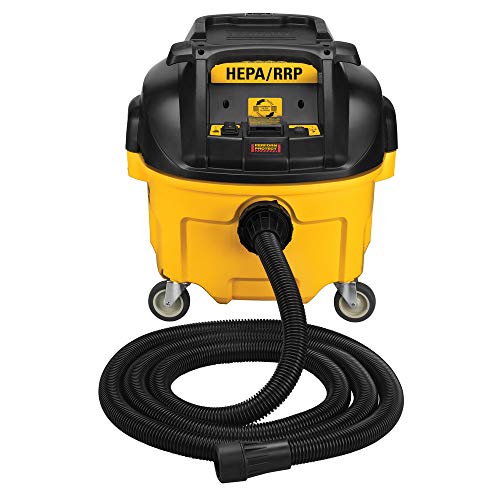
This DEWALT model offers automatic filter cleaning every 30 seconds, delivering uninterrupted operation. With a 15-amp motor and 150 CFM airflow, it balances power and efficiency for typical woodworking tasks. Power Tool Actuation controls simplify vacuum operation in tandem with tools, making it a practical choice for workshops that rely on power-tool workflows. Best for: users who want hands-off filter maintenance and tool-driven control. Caution: some users may prefer larger capacity for extended sanding sessions.
ECOMAX Dust Extractor (HEPA), 8 Gallon

ECOMAX offers a semi-auto filter cleaning option with a HEPA filter and an 8-gallon stainless steel tank. Its dual-mode operation allows standard vacuuming or specialized dust-extractor mode for woodworking hookups. This model suits mid-sized shops seeking a versatile, semi-automatic cleaning experience without complex controls. Best for: wood shops needing a flexible system that can adapt to various tasks. Caution: ensure compatibility with your existing dust-collection layout for seamless tool connections.
DEWALT Dust Separator DXVCS002

The DEWALT dust separator uses a 6-gallon poly tank and a cyclone design to reduce suction loss by pre-separating chips before they reach the main vacuum. With 1-7/8″ or 2-1/2″ ports, it is compatible with a wide range of vacuums and dust collectors. Best for: workshop setups needing to protect the main vacuum from clogging and extend filter life. Caution: the cyclone unit adds setup steps and requires adequate space for stable placement.
WEN 1-Micron Canister Filter Cartridge

The WEN 1-micron canister filter cartridge upgrades single-stage dust collectors like the DC1300. Its polyester filter targets fine dust, offering improved filtration when paired with compatible suction units. Best for: owners of single-stage dust collectors seeking finer filtration to reduce fine dust exposure. Caution: compatibility depends on your specific model’s filter housing size and mounting method.
Buying Guide
What size dust collector do I need?
Consider the volume of dust you generate and the number of connected tools. Higher CFM and larger bags or canisters reduce emptying frequency in busy shops. For compact spaces, choose units with a smaller footprint and easy mobility while maintaining HEPA filtration.
Is HEPA filtration necessary for wood dust?
Wood dust can contain fine particles that pose respiratory risk. HEPA filtration captures 99.97% of particles at 0.3 microns, making it a strong standard for workshop air quality. Look for HEPA-certified seals and proper maintenance access.
Automatic vs. manual filter cleaning
Automatic cleaning reduces downtime in busy shops but can add cost and complexity. Manual or semi-automatic options offer lower ongoing costs and simpler maintenance for casual use. Balance your workflow with the need for consistent suction.
Tool activation and system integration
Power tool actuation lets the vacuum start when a tool does, improving workflow and safety. If your setup includes several value-added tools, this feature helps maintain clean air without extra manual steps.
Portability vs. permanent installation
Portable units are ideal for small shops or renters, while ceiling-mounted or fixed units suit larger spaces. Choose a mounting option that minimizes clutter and maximizes accessibility to the dust source.
Maintenance considerations
Look for easy access to filters, straightforward replacement parts, and clear filter-life indicators. Durable casings, reliable seals, and straightforward drainage or bag-emptying procedures reduce downtime and ensure consistent performance.
Summary: Quick product-fit snapshot
- Festool CT 15: Best for pro-grade reliability and long warranty; large, heavy-duty footprint.
- DEWALT DWV010: Best for continuous operation with automatic cleaning; great for tool-heavy studios.
- Bosch VAC090AH: Best for compact spaces requiring strong suction and portability.
- DEWALT DWXAF101: Best for ceiling-space filtration with remote control convenience.
- WEN DC1300-AF1 (filter cartridge): Best for upgrading filtration in compatible systems to target 1-micron dust.
Frequently asked questions
- What is considered a true HEPA filter for dust collectors? A true HEPA filter captures 99.97% of particles 0.3 microns in size, meeting strict filtration standards for fine dust.
- Do I need a separator with a HEPA dust extractor? Separators reduce load on the main filter by pre-separating chips, extending filter life and maintaining suction.
- Can I use a HEPA filter with a non-HEPA system? Yes, many HEPA cartridges and housings are compatible with standard dust collectors, but check the manufacturer’s compatibility guide.
- How often should I replace HEPA filters? Replacement frequency depends on usage, dust type, and filter life indicators. Follow manufacturer guidelines and inspect filters for clogs.
- What’s the advantage of tool-activated dust extractors? Tool activation synchronizes suction with tool use, improving efficiency and reducing exposure to dust during operation.
- Are ceiling-mounted filtration systems worth it? They save floor space and can offer centralized filtration for larger shops, but require proper installation and power access.