When you need strong airflow, these high-capacity air vents and fans are designed to move large volumes of air efficiently in homes, attics, rooms, and utility spaces. This guide highlights top options for different spaces and needs, from attic ventilation to room-to-room transfer. It’s ideal for homeowners, builders, and HVAC enthusiasts seeking reliable, high-capacity performance.
| Product | Best For | Approximate Airflow | Notes |
|---|---|---|---|
| Master Flow GAF 1000 CFM | Attics up to 1,600 sq ft | Up to 1,000 CFM | High airflow, energy-efficient for attic ventilation |
| Fauvip 4×12 Floor Register | Floor vents with high airflow | Up to 50% higher airflow than standard | Durable, low-profile floor installation |
| Zepoty 12” X 18″ Gable Vent | Exterior wall or shed ventilation | Enhanced general airflow | Durable aluminum, stylish design |
| Voltset 4 Inch Inline Duct Fan | Bathrooms, kitchens, grow tents | Up to 280 CFM | High efficiency, low noise |
| SUPROCKY RTR140 Room-To-Room Fan | Inter-room air transfer | Up to 200 CFM | Smart modes, quiet operation |
Master Flow GAF 1000 CFM Black Power Roof Mount Attic Vent

Best for large attic spaces needing rapid air exchange. This high-capacity roof vent delivers up to 1,000 CFM, suitable for attics up to 1,600 square feet. It is designed to quickly remove hot, humid air, reducing cooling loads and improving overall attic comfort. Choose this for homes with expansive attic spaces where constant airflow is a priority.
Who it’s best for: Homeowners with large attics or retrofit projects seeking substantial airflow with energy efficiency.
Why selected: It combines high airflow with attic-specific design features that help lower cooling costs and improve ventilation rate compared to passive vents.
Limitation: Installation may require roof access and compatible mounting hardware; verify fit for your roof pitch and louvers.
Fauvip 4×12 Floor Register, Heavy Duty

Best for floor-level airflow with a streamlined, flush appearance. This floor register offers up to 50% higher airflow than standard registers due to a patented trapezoid tray and built-in dampers for discreet flow control. It’s built from heavy-duty steel, supporting high-traffic areas with a durable powder-coated finish.
Who it’s best for: Spaces needing improved floor-level ventilation without a bulky or obtrusive vent cover.
Why selected: Combines high airflow with robust construction and adjustable airflow control for practical, everyday use.
Limitation: Requires floor installation and a compatible duct layout; not ideal for ceiling or wall mounting unless adapted.
Zepoty 12” X 18″ Aluminum Gable Vent
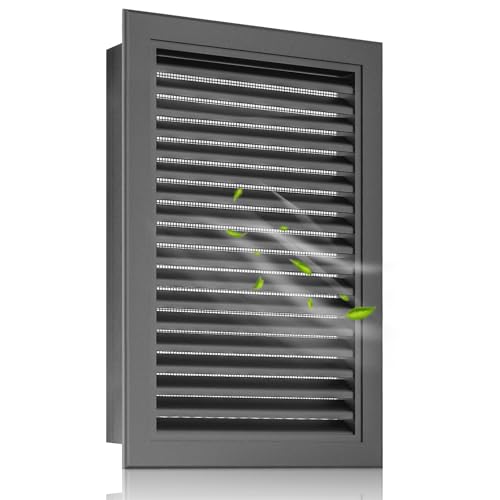
Best for exterior ventilation with enhanced airflow to attics, sheds, or garages. The Zepoty gable vent uses durable aluminum alloy and screens to ensure longevity while promoting air exchange year-round. It also helps minimize heat buildup and supports energy efficiency by enabling easier moisture removal.
Who it’s best for: Homeowners improving exterior venting for tool sheds, crawl spaces, or garages where consistent airflow is needed.
Why selected: Combines durable construction with practical design to boost natural airflow without electrical components.
Limitation: Primarily passive ventilation; may require additional fans for higher airflow targets in enclosed spaces.
Voltset 4 Inch Inline Duct Fan

Best for compact, high-efficiency inline ventilation in bathrooms, kitchens, grow tents, and small utility spaces. This 4-inch duct fan delivers up to 280 CFM with a quiet 30 dB operation and copper motor technology for durability and heat dissipation. It’s a practical choice when you need robust airflow without sacrificing quiet performance.
Who it’s best for: Spaces where discreet, reliable inline ventilation is required, such as bathrooms, kitchens, or small grow spaces.
Why selected: Strong airflow for its size with low noise and solid construction; suitable for retrofit or new installs.
Limitation: May not meet high-CFM needs in large rooms or attic spaces without multiple units.
SUPROCKY RTR140 Room-To-Room Vent Fan

Best for transferring air between rooms with smart control modes. The RTR140 offers up to 200 CFM with three control modes (cooling, heating, continuous) and a temperature sensor for automatic adjustments. It emphasizes quiet operation and privacy by preventing light and noise transfer between spaces.
Who it’s best for: Homes needing controlled, programmable inter-room ventilation with moderate airflow.
Why selected: Enables targeted room-by-room air exchange while maintaining comfort and noise control.
Limitation: Lower maximum CFM compared to attic or floor-vent solutions; best paired with other high-capacity vents for comprehensive coverage.
Buying Guide: High Capacity Air Vent Considerations
- Airflow needs by space: Attics typically require higher CFM for effective heat removal; interior rooms may benefit from transfer fans with quieter operation.
- Installation type: Roof-mount, wall vents, floor registers, and inline duct fans each suit different layouts. Confirm duct size, mounting surface, and clearance.
- Energy efficiency: Look for models designed to move more air with less power, and consider dampers or smart controls to fine-tune performance.
- Noise and vibration: For bedrooms or nurseries, prioritize low-noise units or products with vibration-reduction features.
- Durability and materials: Aluminum and steel builds resist corrosion and daily wear, especially in exposed exterior installations.
- Maintenance: Choose easily accessible components and cleanable grills or screens to maintain airflow over time.
Frequently Asked Questions
- What is a high-capacity air vent? An air vent or fan designed to move large volumes of air quickly, typically measured in CFM, suitable for attics, large rooms, or spaces requiring rapid ventilation.
- How do I choose the right CFM for a space? Match CFM to room or attic size and desired air changes per hour; larger spaces and attic zones usually need higher CFM values.
- Are inline duct fans quieter than attic vents? Inline duct fans can be very quiet when properly sized and installed, but noise depends on motor quality, mounting, and duct design.
- Can I mix passive vents with high-capacity fans? Yes, combining passive and active ventilation can optimize overall airflow, but ensure proper balance to avoid unwanted air leakage or backdrafts.
- Do high-capacity vents save energy? Yes, by improving air exchange, they can reduce cooling loads and humidity-related inefficiencies in conditioned spaces.
- What maintenance is required? Regularly inspect grills or screens, clean dust buildup, and verify that dampers and sensors function correctly.