Looking for high efficiency electric baseboard heat that quietly and evenly warms spaces? This guide highlights five top options designed for reliability, energy-conscious comfort, and easy integration with room thermostats. Best for different spaces and needs, these models cover medium to larger rooms, compact bedrooms, and office environments. Each entry includes why it’s a good fit, plus practical cautions to consider before purchase. A quick buyer’s table follows to help compare core specs at a glance.
| Product | Best For | Wattage Range | Voltage |
|---|---|---|---|
| Stelpro Brava AB51252W | Medium rooms, quiet operation | 1250W | 240V |
| Stelpro Prima ASPRL1501W | Larger spaces, open layouts | 1500W | 120V |
| Cadet 3F750W | Budget-friendly, simple install | 750W | 240/208V |
| Stelpro Brava AB61502W | Open floor plans, offices | 1500W | 240V |
| Stelpro Prima ASPRM1252W | Medium rooms, 240V setups | 1250W | 240V |
Stelpro Brava Electric Baseboard Heater – 1250W / 240V

Best for steady, quiet convection in medium rooms up to about 125 sq ft. This hardwired model uses full-length thermal protection with automatic reset, and a one-piece no-end-cap cabinet for durability and clean aesthetics. It requires wall thermostat control, with optional built-in thermostat kits available. Avoid this if you need plug-in flexibility or a built-in on-unit display; data indicates it is not a plug-in unit.
Who it’s best for: Homeowners seeking reliable, quiet heat in living rooms or bedrooms with a dedicated thermostat setup.
Why chosen: High performance convection delivers even warmth without moving parts, ideal for energy-conscious heating in a mid-size space.
One caution: Requires hardwired installation and a separate thermostat, which adds installation steps and wiring considerations.
Stelpro Prima Electric Baseboard Heater, 1500W / 120V
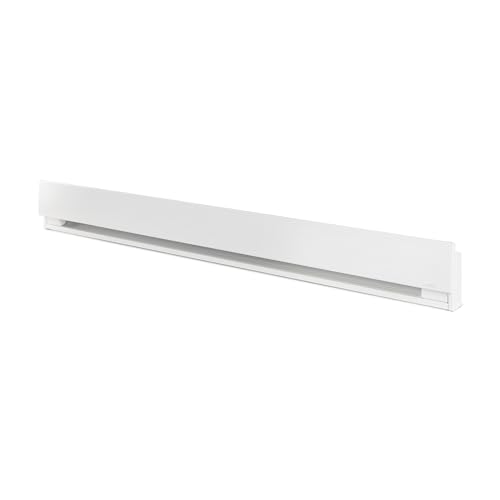
Best for larger rooms or open spaces up to roughly 150 sq ft at 120V. It offers fast, even, quiet heat with a stainless steel sheathed element and aluminum fins, along with full-length thermal protection. Optional built-in thermostats are available. Choose this if you need strong, consistent convection in a bigger area; note that it is hardwired and not a plug-in unit.
Who it’s best for: Larger bedrooms, living areas, or open-concept spaces where steady warmth is desired without noise.
Why chosen: High heat output supports faster warming of medium-to-large spaces while maintaining quiet operation.
One caution: Installation requires a wall thermostat or on-unit thermostat kit for temperature control.
Stelpro Brava Electric Baseboard Heater – 1500W / 240V

Best for large rooms or office spaces that require robust convection in a hardwired setup. It uses full-length thermal protection with automatic reset and a one-piece cabinet design to reduce expansion noise. It pairs with separate thermostats for room-by-room control. Avoid if plug-in flexibility is a must or if a very small space needs only modest heat output.
Who it’s best for: Office suites or living areas needing substantial baseline warmth without fans or moving parts.
Why chosen: High wattage ensures rapid, even heat across bigger layouts, with durable construction for long-term use.
One caution: Requires thermostat integration for optimal control; not a plug-in solution.
Stelpro Prima Electric Baseboard Heater, 1250W / 240V

Best for mid-sized rooms requiring robust 240V heat with a compact footprint. This unit provides 1250W of warmth suitable for spaces up to about 125 sq ft and offers similar control options as other Stelpro bases, including wall thermostat compatibility and optional built-in electronic thermostats. Consider this if you want reliable 240V performance in a modestly sized space.
Who it’s best for: Medium bedrooms or small living areas where 240V heat is preferred and space is limited.
Why chosen: Combines compact design with solid convection performance and adjustable thermostat compatibility.
One caution: Requires proper wall thermostat or on-unit thermostat kit for temperature control.
Buying Guide: Key Considerations For Electric Baseboard Heat
- Room size and heater wattage: Match heater wattage to room square footage. Larger spaces typically benefit from higher wattage models (1000W+), while smaller rooms can be efficiently warmed by 750–1000W units.
- Voltage compatibility: Most home bases operate at 120V or 240V. In multi-room layouts, 240V units may offer faster heating for larger areas; confirm your electrical panel supports the chosen model.
- Hardwired vs plug-in: Many baseboard models are designed to be hardwired and require a thermostat. If plug-in flexibility is essential, confirm product specifications or choose a unit labeled as plug-in-compatible.
- Thermostat integration: Decide between wall thermostats or on-unit electronic thermostats. Built-in options provide on-dash control but may add installation steps.
- Noise and construction: Look for one-piece or no-end-cap designs to minimize expansion noise and improve durability. Stainless steel elements and aluminum fins improve heat distribution and longevity.
- Safety features: Full-length thermal protection with automatic reset improves reliability. Ensure the model includes this feature and verify clearance requirements for safe operation.
- Installation considerations: Consider clearances from furniture and walls, as baseboards require space for air to circulate. Some models are longer and better suited for open hallway or room layouts.
Frequently Asked Questions
- What thickness should a baseboard heater have for efficient warming? – Baseboard heaters are designed with slim profiles to fit along baseboard lines while delivering convection heat; thickness is less critical than wattage and air flow design.
- Do baseboard heaters require a thermostat? – Most high-efficiency models are designed to be controlled by a separate wall thermostat or an optional on-unit thermostat kit for precise temperature control.
- Is 240V better than 120V for baseboards? – For larger spaces, 240V models deliver more heat across bigger areas and can be more efficient in maintaining consistent temperatures in open layouts.
- Can these heaters be used in bathrooms or kitchens? – Baseboard heaters are typically designed for living spaces and dry environments; check product specifications for humidity rating and installation guidelines.
- How do I choose the right wattage for a room? – A general rule is 10 watts per square foot for well-insulated spaces; consider higher wattage for rooms with poor insulation or drafts.
- Are these units noisy during operation? – Most modern baseboard heaters are designed for quiet operation, with noise primarily from expansion; models with no-end-cap designs often reduce this effect.