If you’re shopping for a high efficiency gas tankless water heater, you want models that deliver steady hot water, energy savings, and practical features for real homes. This guide highlights five top options suitable for mid-to-large households, including units with smart controls, high flow rates, and durable construction. Ideal buyers include households seeking whole-home hot water, app-enabled control, and outdoor or indoor installation flexibility. The table below compares key features to help you decide which is best for your household needs.
| Product | Best For | Key Benefit | Notes |
|---|---|---|---|
| Westinghouse Smart Tankless Water Heater | Tech-savvy homes | Smart WiFi app control with precise temp stability | 3–5 fixtures support; non-condensing |
| Rinnai RX199iN Condensing | Indoors or outdoors | Versa Vent, high flow up to 11.1 GPM | Propane or natural gas; compact |
| Rheem RTGH-95DVLN-3 | Two bathrooms plus | 9.5 GPM, reliable indoor unit | High efficiency non-condensing |
| Rheem RTG-84XLN-3 | Outdoor installs | 8.4 GPM, robust 180,000 BTU | Outdoor cabinet; install by pro |
| ThermoMate CZ480NG | Energy-conscious households | 0.86 UEF, dual heat exchangers | Condensing; strong efficiency claims |
Westinghouse Smart Tankless Water Heater

The Westinghouse model provides up to 7.9 GPM and 180,000 BTU, suitable for a 3–5 fixture setup. It features smart WiFi app control for temperature adjustments and status monitoring. This unit is best for homeowners who want remote management and a reliable whole-home hot water supply.
Best for: Tech-forward homes needing app-based control and stable flow for multiple fixtures. Caution: It is non-condensing, which can affect efficiency in some climates.
NEW Rinnai RX199iN Condensing Tankless

Rinnai RX199iN is a versatile option rated up to 11.1 GPM, suitable for larger households or busy households with multiple simultaneous uses. Its Versa Vent compatibility allows flexible indoor or outdoor installation, and it can run on propane or natural gas with a modern control system. This is a strong pick for homes needing high flow and installation flexibility.
Best for: Large households that require high simultaneous hot water and indoor/outdoor installation flexibility. Caution: Outdoor use may require an appropriate vent cap (RX-OVC) for outdoor installation.
Rheem RTGH-95DVLN-3
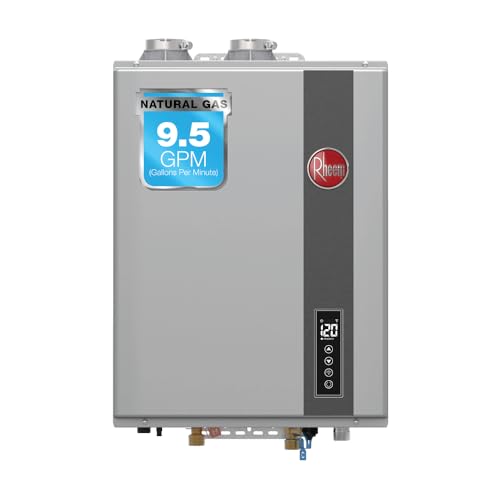
This indoor model delivers up to 9.5 GPM and 199,900 BTU, making it a solid choice for medium to larger homes that prioritize steady hot water and compact indoor installation. It uses electric ignition and offers high-temperature settings for comfortable showers. Best for: Homes needing a dependable, medium-to-high flow indoor unit. Caution: Non-condensing design may be less efficient in colder climates.
Rheem RTG-84XLN-3 High Efficiency
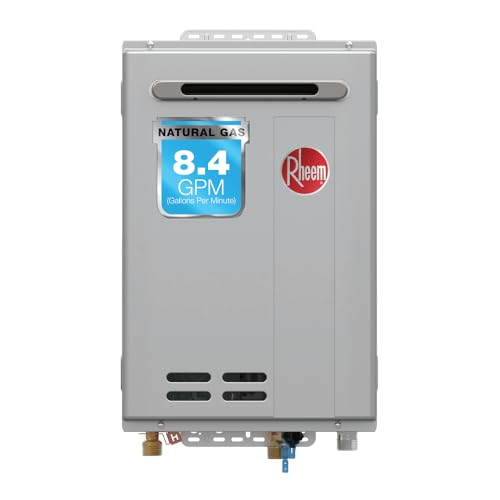
Rheem’s outdoor RTG-84XLN-3 provides 8.4 GPM with 180,000 BTU, ideal for homes with 2–3 bathrooms and outdoor installation. The unit is designed for rugged outdoor use and simple wall mounting by a professional installer. Best for: Outdoor installations in moderate climates with multiple hot water needs. Caution: Outdoor units require weatherproof clearance and proper mounting.
ThermoMate CZ480NG Condensing

The ThermoMate CZ480NG is a condensing unit with a 0.86 UEF and 5.28 GPM capacity. It uses dual heat exchangers to reclaim waste heat, offering high efficiency with practical flow for households with modest to moderate demand. Best for: Energy-conscious homes seeking high efficiency with compact indoor installation. Caution: Flow rate is lower than some 9–11 GPM units, which may affect simultaneous fixtures.
Buying Guide: Practical Considerations For Your Tankless Gas Water Heater
How do you pick the right capacity? Start with peak simultaneous hot water needs. Count showers, laundry, and dishwashing loads to estimate GPM requirements. Aim for a unit that exceeds the maximum expected demand by 1–2 GPM to allow temperature stability during peak use.
Where should you install it?
Indoor units save space and require venting and gas line considerations. Outdoor models simplify venting but need weatherproof housing and protection from the elements. Ensure proper clearances and professional installation for safety and performance.
Condensing vs non-condensing
Condensing models are typically more energy efficient, reclaiming heat from exhaust. Non-condensing units can be sufficient in milder climates or smaller homes but may have higher operating costs in cold weather.
Controls and smart features
Smart WiFi control helps maintain comfort and monitor efficiency. Consider app compatibility, ease of use, and how it fits with your home automation ecosystem.
Maintenance needs
Regular descaling and periodic professional service extend life and keep efficiency high. Look for units with accessible flush ports, clear service intervals, and robust safety protections such as freeze protection and flame-out safeguards.
Safety and installation considerations
Always hire a licensed professional for venting, gas connections, and electrical integration. Verify warranty requirements and ensure the unit matches your gas type (natural gas or propane) and venting needs.
Summary of top picks
- Best for high demand: Rinnai RX199iN (up to 11.1 GPM, indoor/outdoor flexibility)
- Best for app control: Westinghouse Smart Tankless (WiFi app, stable temp)
- Best indoor efficiency: Rheem RTGH-95DVLN-3 (9.5 GPM, compact indoor)
- Best outdoor option: Rheem RTG-84XLN-3 (8.4 GPM, outdoor cabinet)
- Best overall condensing option: ThermoMate CZ480NG (0.86 UEF, dual exchangers)
Frequently Asked Questions
- What size tankless water heater do I need for a family of four? Aim for 8–11 GPM depending on shower and faucet usage and climate.
- Do tankless gas heaters require venting? Yes, they require appropriate venting, either indoor venting for certain models or outdoor venting with proper caps and clearances.
- Can I install these indoors by myself? No; installation must follow local codes and typically requires a licensed professional for gas, venting, and electrical connections.
- What is UEF, and why does it matter? UEF measures energy efficiency; higher values indicate better efficiency and potential energy savings.
- Are condensing models worth it in cold climates? Generally yes, they’re more efficient, but ensure proper venting and installation for optimal performance.
- Can I use propane and natural gas interchangeably? Some models support both with appropriate venting and regulator configurations; check the product specs.