When safety and reliability matter, a high-quality temperature and pressure relief (TPR) valve is essential for hot water heaters. This guide highlights five top choices that fit common RV and residential setups, explaining who benefits most from each and why. Ideal buyers include RV owners seeking reliable protection during travel, homeowners upgrading an aging valve, and those needing a direct-fit replacement for popular brands. The following table compares key points to help you decide at a glance.
| Product | Best For | Thread/Size | Max PSI | Notes |
|---|---|---|---|---|
| Lrichy Upgrade 3/4″ NPT | RV water heaters and tanks requiring extended probe | 3/4″ NPT | 150 | Brass body, extended epoxy probe |
| GASHER 1/2″ NPT | RV or home tanks with 210°F capability | 1/2″ NPT | 150 | Epoxy-coated probe |
| Acedee 3/4″ NPT | Residential and RV water systems seeking universal fit | 3/4″ NPT | 150 | Brass body, stainless spring |
| UJHUHIJ Upgraded 3/4″ | Direct RV and home water heater compatibility | 3/4″ NPT | 150 | Extended probe option; reliable safety |
| GASHER 3/4″ NPT | RV or home tanks needing epoxy-coated probe | 3/4″ NPT | 150 | Robust brass body |
Lrichy Upgrade 3/4″ NPT TPR Valve
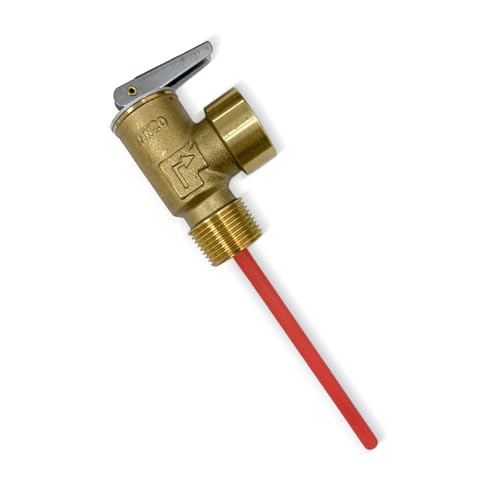
Best For: RV water heaters and storage tanks that need robust protection against excessive temperature and pressure. This valve uses a brass body with a stainless steel spring and an extended probe for reliable long-term operation. It fits a wide range of RV models and outdoor heaters, making it a solid choice for travelers and campers who require dependable safety that doesn’t require aftermarket modification.
Why selected: The extended probe helps prevent false triggers in tight spaces and under vibration, which is common in RV installations. The all-brass body with a corrosion-resistant coating supports durability in harsher environments. The valve targets both temperature and pressure relief, guarding against overheating and high-pressure scenarios. A potential limitation is the extended probe length; verify your tank clearance before purchase.
GASHER 1/2″ NPT RV TPR Valve

Best For: RV or home water heaters needing a compact TPR valve with epoxy-coated probe. It features a reinforced brass body and a stainless steel pressure spring, with a temperature limit of 210°F and a maximum of 150 PSI. It’s a good match for compact RV systems or smaller residential heaters where space is at a premium and a standard 1/2″ connection is required.
Why selected: The epoxy-coated probe reduces corrosion risk over time, helping to preserve accuracy and longevity. A caveat is that compatibility should be confirmed with your specific model, as some older units may require different probe lengths or configurations.
Acedee 3/4″ NPT TPR Valve

Best For: Residential and RV water systems needing a universal 3/4″ NPT relief valve. The brass body and stainless steel spring ensure a durable, long-lasting build that handles frequent pressure fluctuations. It’s ideal for upgrades or replacements in standard home heaters and various RV models.
Why selected: It emphasizes dependable system protection by releasing excess pressure and heat, guarding against unsafe operating conditions. A limitation is that, like all valves, it should be matched to the exact heater’s rated PSI to avoid under- or over-relief situations.
UJHUHIJ Upgraded 3/4″ TPR Valve

Best For: RV and home water heaters needing a precise fit with a 3/4″ NPT thread. This valve is designed to compensate for high-usage environments and provides automatic safety protection against dangerous temperature and pressure elevations. It’s well-suited for both travel setups and fixed-location residences.
Why selected: The valve’s construction focuses on long-lasting performance under high-pressure conditions, with a direct-fit design that reduces installation complexity. Caution: ensure the extended probe, if present, clears surrounding components in tight installations.
GASHER 3/4″ NPT TPR Valve

Best For: RV or home tanks needing a robust 3/4″ NPT relief valve with an epoxy-coated probe. The combination of a reinforced brass body and a stainless steel spring supports dependable relief performance, particularly when heaters operate near their maximum temperature or pressure. This is a strong option for larger residential systems or frequent-use RV setups.
Why selected: It mirrors the 210°F/150 PSI safety profile common across high-use units. A note: verify thread alignment and clearance around the valve during installation to avoid interference with hoses or cabinets.
Buying Guide: Key Purchase Considerations
What size should I choose? The most common sizes are 1/2″ and 3/4″ NPT. Select the size that matches your heater’s inlet/outlet connections and the manufacturer’s recommendations.
What’s the right PSI and temperature rating? Most residential and RV heaters use 150 PSI and 210°F as safe operating limits. Choose valves with these ratings to ensure proper relief during overpressure or overheating.
Do I need an epoxy-coated probe? An epoxy-coated probe improves corrosion resistance, especially in damp environments or areas with mineral buildup. It’s a good fit for RV installations or older tanks prone to mineral deposits.
Is compatibility important? Some valves are marketed as universal RV replacements, while others target specific brands or models. Always confirm the valve’s thread size, probe length, and mounting orientation with your heater’s instructions.
What about installation considerations? Look for valves with straightforward mounting, clear labeling, and secure connection options. In RV setups, ensure the valve placement won’t interfere with storage compartments, wiring, or other components.
FAQ
- What does a TPR valve do? It automatically relieves excess temperature and pressure to prevent tank rupture or overheating.
- Can I replace a TPR valve myself? Yes, with proper shutoff procedures, accessible fittings, and adherence to manufacturer guidelines.
- What PSI rating is typical? Most commonly 150 PSI, with a temperature rating around 210°F.
- Is an epoxy-coated probe necessary? It helps resist corrosion and mineral buildup, extending valve life in challenging environments.
- Should I choose RV-specific or universal valves? RV-specific valves may simplify installation; universal valves fit many residential heaters as well. Verify compatibility with your model.
- How do I know if the valve is the correct size? Check your heater’s manual or the existing valve’s thread size (1/2″ or 3/4″ NPT) and match accordingly.