Answering the need for reliable duct insulation boards, this guide highlights five practical options optimized for sheet metal duct systems and related HVAC applications. The featured products balance thermal performance, moisture resistance, and installation flexibility, helping installers and homeowners choose wisely. Best for professional ductwork projects, best for acoustic control in duct runs, and best for multi-application installations are all covered. Below is a quick summary table of the selected products to compare key points at a glance.
| Product | Thickness | Format | Approx. R-Value | Best For |
|---|---|---|---|---|
| F&L Johns Manville Duct Insulation Panels – 1.5″ (1-1/2″) | 1.5 in | 24×48 in | R6.5 | Sheet metal duct systems |
| F&L Johns Manville Duct Insulation Panels – 2″ | 2 in | 24×48 in | R6.5 | Rigid ductboard insulation |
| F&L Johns Manville Duct Insulation Panels – 1.5″ (1-1/2″) | 1.5 in | 24×24 in | R6.5 | Compact duct sections |
| F&L R6 Fiberglass Board Acoustic Insulation | 1.5 in | 24×48 in | — | Acoustic control in walls and ducts |
| F&L R8 Fiberglass Board Acoustic Insulation | 2 in | 24×48 in | — | Higher sound dampening in ducts |
F&L Johns Manville Duct Insulation Panels – 1.5″ Thick (Ductboard)

These 1.5-inch thick fiberglass panels fit standard sheet metal duct systems. They provide an approximate R-value of 6.5 to help reduce heat loss. The 3 lb density fiberglass offers durability for rigid duct applications, while the Foil Scrim Kraft Facing (FSK) adds moisture resistance and code-friendly performance.
Best for: professional duct runs where a balance of thermal performance and rigidity is needed. Choose this if you need solid R6.5 insulation in either 24×48-inch panels for larger sections or 24×24-inch panels for tight spots. A caution: ensure facing orientation aligns with moisture exposure in the install area.
F&L Johns Manville Duct Insulation Panels – 2″ Thick
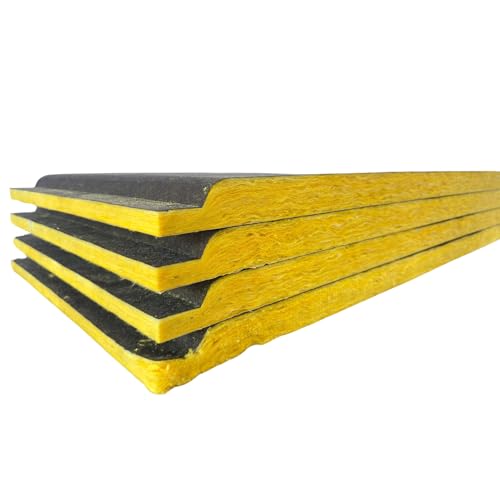
This product line offers a 2-inch thickness option with the same durable fiberglass construction and moisture-resistant foil facing. The higher thickness enhances thermal resistance for longer duct runs and higher ambient temperatures.
Best for: projects needing extra insulation depth or retrofits in tight ducts where maximum heat retention is desired. Better for: installations requiring thicker panels on standard 24×48-inch sheets. Limitation: slightly heavier panels may increase handling effort during installation.
F&L Johns Manville Duct Insulation Panels – 1.5″ 24×24

This 1.5-inch variant in a 24×24 format suits compact duct sections or smaller branch runs. The same R6.5 performance and foil facing benefit are retained, promoting moisture resistance and durable performance in rigid ductboard installations.
Best for: small-diameter ducts or tight installations where panel size matters. Choose this if space constraints prevent larger sheets. Limitation: smaller panels may increase the number of seams to seal on longer runs.
F&L R6 Fiberglass Board Acoustic Insulation (1.5″)
Designed primarily for acoustic control, these mid-frequency boards reduce echo and noise transfer while providing multi-layer thermal protection. They come in convenient 24×24 or 24×48 inch formats in 1.5-inch thickness for flexible installation across walls, ceilings, studios, and HVAC ducts.
Best for: environments where sound dampening is as important as heat retention, such as concealed ducts or studio spaces. Limitation: acoustic focus means slightly less emphasis on maximum moisture resistance compared to dedicated duct facing.
F&L R8 Fiberglass Board Acoustic Insulation (2″)
The 2-inch R8 panel offers enhanced thermal resistance and strong mid- to high-frequency sound absorption for louder duct runs or rooms with higher noise levels. Available in 24×24 and 24×48 formats, it supports flexible duct installation and improved acoustic privacy.
Best for: ducts near living spaces or equipment rooms where vibration and noise reduction are priorities. Avoid this if the primary goal is maximum moisture resistance, as the product focuses more on acoustics and thermal performance.
F&L R4 Fiberglass Board Acoustic Insulation (1″)

This 1-inch acoustic panel line offers straightforward installation in environments prioritizing sound control along with basic thermal management. The 24×24 and 24×48-inch formats help accommodate various duct layouts and wall cavities.
Best for: installations where space-saving panels are required and extreme moisture resistance is less critical. Limitation: lower thickness reduces potential R-value and overall thermal resistance compared to thicker panels.
Buying Guide
What matters most when choosing HVAC duct insulation boards?
- Thermal performance: Look for R-value per inch and total thickness to match duct run length and climate. Panels with foil facing offer moisture resistance and code-friendly installation.
- Panel size and format: Larger sheets reduce seams on long runs; smaller panels fit tight bends or restricted spaces. Verify availability in 24×24 and 24×48 formats.
- Acoustic performance: If noise control is a priority, consider boards specifically designed for mid- to high-frequency absorption. Acoustic boards can complement thermal insulation in living spaces.
- Durability and rigidity: Higher density fiberglass (e.g., 3 lb) provides better rigidity for rigid ductboard applications and longer-term stability.
- Moisture resistance: Foil Scrim Kraft Facing and moisture barriers help maintain performance in humid or condensating environments.
- Installation considerations: Note facing orientation, seam sealing needs, and compatibility with existing duct materials. Heavier panels may require more handling.
Frequently Asked Questions
- What is the typical R-value for these duct insulation panels?
Most 1.5″ to 2″ panels deliver around R6.5, depending on thickness and formulation. - Are foil-faced panels necessary for duct systems?
Foil facing (FSK) improves moisture resistance and code compliance in many installations. - Can I use acoustic panels for duct insulation?
Yes, acoustic boards can dampen noise in addition to thermal performance, but check moisture handling and thickness. - Which panel size is best for long duct runs?
Large panels (24×48″) reduce seam counts, easing installation on straight runs. - Do these panels require special sealants?
Seam sealing and proper edge finishing are recommended to minimize heat loss and air leakage at joints. - Is there a risk of excessive weight during installation?
Some panels are heavier; plan for assistance or mechanical handling in larger installations.