Answer: This guide showcases five top HVAC louvers and grilles that balance durability, airflow, and easy installation. Ideal for homeowners, small offices, and workshop spaces seeking reliable vent covers with strong protection and clean looks. The listed products cover square and round designs, metal and aluminum options, and different mounting contexts to fit ducts, soffits, walls, or ceilings.
| Product | Type | Best For |
|---|---|---|
| Metal Vent Cover 8″ x 8″ (Black) — Single | Square, Metal with Mesh | Budget-conscious spaces needing durable steel with built-in mesh |
| Howeall 12″ x 12″ Return Air Grille — White | Rectangular, Steel with Louvers | Medium to large rooms requiring efficient airflow and quiet operation |
| Metal Vent Cover 8″ x 8″ (Black) — Two Pack | Square, Metal with Mesh | Multi-vent installations needing consistent style and protection |
| Byson 14″x14″ Aluminum Gable Vent | Square exterior, Aluminum with Mesh | Exterior or attic vents requiring weatherproofing and heavy duty build |
| PATIKIL 10″ Round Air Vent | Round, Aluminum | Ceiling or wall vents needing rain protection and rounded aesthetics |
Metal Vent Cover 8″ x 8″ Square Soffit — Single
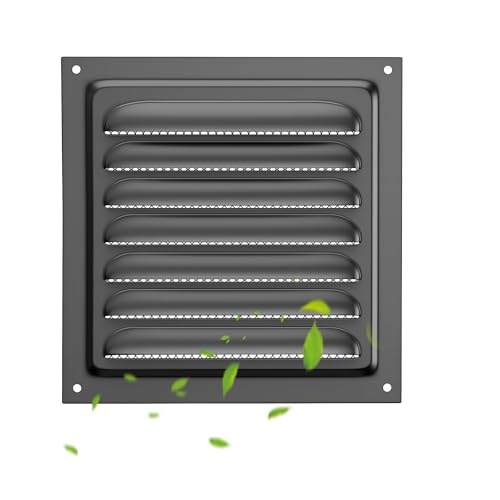
This square metal vent cover is built from galvanised steel with an epoxy finish for corrosion resistance. It includes a built-in mesh to restrict debris, sand, and pests from entering rooms. The front panel features downward louvers with a rounded edge for safe handling during installation. Best for budget-friendly interior spaces needing a simple, durable grille.
Best for: small kitchens, bathrooms, or home offices where a straightforward, durable replacement is needed. Limitation: the single-pack design may require extra purchasing for larger installations or duplicates.
Howeall 12″W x 12″H Return Air Grille
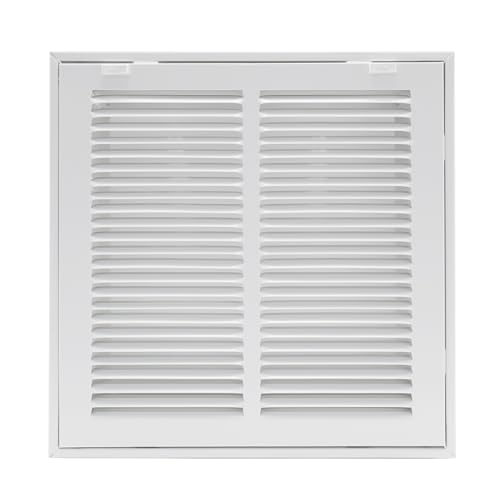
This heavy-duty stamped steel grille is designed for long-lasting strength with a matte white finish. It features 53-degree fixed louvers to optimize airflow while reducing resistance. The construction minimizes rattling and uses smooth edges to prevent injuries. Best for residential or light commercial spaces that demand reliable airflow and quiet performance.
Best for: bedrooms, offices, or quiet areas where the HVAC system needs improved efficiency without noise. Caution: ensure proper sizing for the duct opening, as outer dimensions are larger than the duct cutout.
Metal Vent Cover 8″ x 8″ Square — Two Pack

A twin-pack option sharing the same durable galvanised steel with a built-in mesh. The front louvers are designed to direct airflow downward, with a softened edge to avoid finger injuries during installation. Best for buyers who need multiple matching grilles for a cohesive look across several rooms.
Best for: multi-room renovations or new builds where uniform vent styling is desired. Limitation: 8″ x 8″ size may not fit larger ducts without replacement or adaptation.
Byson 14″x14″ Aluminum Gable Vent

This 14×14 exterior vent uses anodized aluminum with a galvanized steel mesh for weather protection and debris blocking. The louvers are deep and steeply angled to keep out rain and wind, making it well-suited for attics, sheds, or exterior mounting. Best for harsh climates or outdoor installations that require durable, weatherproof venting.
Best for: exterior walls, attics, or sheds where weather resistance is critical. Caution: aluminum framing is robust but may require larger mounting openings and careful sealant use during installation.
PATIKIL 10″ Round Aluminum Soffit Vent

This round vent uses a thickened aluminum alloy with a smooth edge and rust resistance. It is designed for soffits, ceilings, walls, and kitchens where rain protection and steady airflow are needed. The round design helps blend into many architectural styles while providing effective ventilation.
Best for: soffits or ceilings in homes needing rain protection and efficient ventilation. Limitation: round shape may require different mounting hardware or cutouts than square grilles.
Buying Guide: Key Considerations When Choosing HVAC Louvers And Grilles
- Size and fit: Measure duct openings or wall/ceiling cutouts before selecting a grille. Outer dimensions often differ from duct opening measurements.
- Material and finish: Steel and aluminum are common. Aluminum offers lighter weight and corrosion resistance; steel can be more robust and budget-friendly. Consider indoor vs. outdoor placements.
- Airflow design: Louvers angles, number of slots, and fixed vs. adjustable dampers influence airflow efficiency and noise. 53-degree louvers are common for improved circulation.
- Durability features: Built-in meshes prevent debris ingress, while smooth edges reduce injury risk during installation.
- Installation context: Interior walls, ceilings, soffits, attics, or exterior walls each have different mounting needs and weather considerations.
- Maintenance: Welded mesh and corrosion-resistant coatings simplify cleaning and longevity, especially in kitchens, bathrooms, or damp spaces.
- Aesthetic fit: Color and finish (black, white, or metallic) should harmonize with room decor and surrounding trim.
Frequently Asked Questions
- What is the difference between a vent cover and a grille?
– A vent cover typically covers a duct opening and provides protection, while a grille emphasizes airflow direction and decorative or architectural considerations. - Can I install a larger grille than my duct opening?
– Outer dimensions may exceed the opening; you may need to adjust mounting or use transition pieces. Always match to the duct opening for best performance. - Are metal grilles suitable for bathrooms and kitchens?
– Yes, metal grilles with built-in mesh protect against debris and moisture, but ensure corrosion resistance for high-humidity areas. - Which material is best for exterior vents?
– Aluminum with protective coatings is typically best for exterior use due to corrosion resistance and weather durability. - Do louver angles affect noise levels?
– Yes. Deeper or poorly aligned louvers can increase vibrating, causing noise. Look for well-constructed edges and tight tolerances. - What maintenance is required for vent grilles?
– Regularly remove dust and debris, inspect for corrosion or damage, and replace if the mesh or louvers show wear.