Answering the common buyer question: which HVAC UV light kit provides reliable disinfection for ducted systems without ozone concerns? This guide highlights five top options designed for different installation needs and power levels, helping you choose the right kit for residential or light commercial use. Best for centralized duct runs, best for easy magnetic installation, and best overall value are considered. The quick comparison table below summarizes key points to help you decide at a glance.
| Product | Best For | Notes |
|---|---|---|
| TURBRO AC 100-240V 36W UV Light Kit | Ducted AC systems, high-output disinfection | ETL listed, CARB certified |
| TURBRO AC 120V 36W UV Light Kit | Standard ducted AC setups, easy wiring | Installation template included |
| BioShieldUV 18W 24V UV Light (Mammoth) | In-duct, continuous operation | Fire-safe certification, low ozone output |
| REKO Lighting R2000 UV Light | Whole-house duct installations | UV-C 253.7 nm |
| R600 24V HVAC UV Light Coil Cleaner | Coil-focused UV disinfection | Magnetic bracket, 24V hardwire |
TURBRO AC 100-240V 36W UV Light Kit

Best for high-output disinfection in ducted systems, this 36W UV light kit emits 253.7 nm UV-C to sterilize air within HVAC ducts. It is ETL listed and CARB certified, with ozone levels kept at or near zero when used as intended. The ballast connects to the HVAC wiring terminal for seamless power integration, and mounting can be secured with screws or foam tape. Best for homeowners seeking robust disinfecting power in larger or busier HVAC runs; avoid if you need a low-profile, minimal-install kit.
TURBRO AC 120V 36W UV Light Kit

Better for standard ducted setups requiring similar power to the 100-240V model, this 36W kit is positioned for straightforward wiring and a clean install. It mirrors the high-output UV approach with a similar 253.7 nm wavelength and ozone-safe performance. Choose this when you want an identical disinfection capacity but with a different voltage requirement or installation template. Best for typical mid-sized HVAC ducts; consider the 100-240V variant if you need broader input compatibility.
REKO Lighting R2000 UV Light
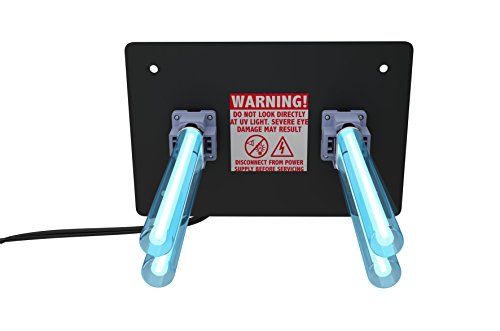
Designed for whole-house duct installations, the REKO R2000 uses UV-C with 253.7 nm output to target airborne contaminants. It emphasizes European-bred bulbs and a compact form factor suitable for duct placement. Best for those requiring a compact, European-designed UV-C solution in central ductwork. Limitations include the need for proper fitment within your duct dimensions and ensuring compatibility with your ballast and wiring plan.
R600 24V HVAC UV Light Coil Cleaner

Specialized for coil-focused sanitation, the R600 operates at 24V and is designed to be added with a dedicated HVAC transformer. It uses a 253.7 nm UV-C output to address microbial buildup on coils, providing a targeted approach to improve airflow efficiency. Best for users who want to protect coil surfaces within a 24V system; best to confirm transformer availability and duct space before ordering.
BioShieldUV 18W Magnetic UV Light (Mammoth)

This 18W magnetic UV lamp is designed for easy installation without drilling. It connects to an external power source and is built to operate with residential HVAC units and air handlers. It emphasizes zero ozone emission or very low ozone by-product, addressing concerns about ozone safety. Best for renters or homeowners who want a simple, drill-free installation; consider higher-wattage models if you need stronger air treatment in larger systems.
Buying Guide
What should I check before buying an HVAC UV light kit?
- Wattage and wavelength: Look for 253.7 nm UV-C and wattage that suits your duct size and airflow needs.
- Installation requirements: Ballast compatibility, wiring, and mounting options influence ease of setup.
- Ozone considerations: Ensure models are ozone-safe or ozone-free if you have sensitivity concerns or indoor air quality standards to meet.
- Voltage and power supply: Match the kit’s voltage (120V, 240V, or 24V) with your system wiring.
How do I decide between whole-house vs. coil-focused UV kits?
- Whole-house UV kits like the R2000 are designed for central ductwork and larger airflow, offering broad coverage.
- Coil-focused kits target surfaces within coils and plenum areas, potentially improving heat exchange efficiency by reducing microbial buildup.
What installation considerations matter?
- Mounting method: Magnetic, screw mounting, or template-guided installation each affect ease and permanence.
- Wiring: Some units connect directly to HVAC wiring; others require external power or transformers. Plan for safe routing and accessibility for maintenance.
Safety and maintenance questions
- Is ozone produced by the lamp? Prefer ozone-free or CARB-certified models if ozone is a concern.
- How often should the lamp be replaced? UV-C lamps have a finite lifespan; check the manufacturer’s guidance for replacement intervals.
Summary of key buying considerations
- Power and coverage area: More wattage generally offers stronger disinfection but requires proper ventilation and space.
- Certification and safety: ETL, CARB, and ozone measurements indicate safer operation.
- Installation flexibility: Magnetic vs. screw mounting and template availability influence ease of setup.
Frequently Asked Questions
- Can UV light kits be used in all HVAC systems? Most standard ducted systems support UV-C kits, but verify duct size and ballast compatibility before purchase.
- Do UV light kits produce ozone? Some may; choose ozone-safe products to minimize by-products and meet local air quality guidelines.
- What maintenance do UV kits require? Regular inspection of the lamp and ballast, plus periodic replacement per manufacturer recommendations.
- Are UV kits effective for mold remediation? UV-C can reduce surface mold and airborne microbes but should be part of a broader air quality plan.
- Is professional installation recommended? For wired or high-wattage installations, a licensed technician is advised to ensure safe wiring and mounting.