If you need reliable one-way flow control, an in-line check valve is a straightforward solution. These valves prevent backflow, protect pumps, and help maintain stable pressure in fuel, water, and air lines. This guide highlights five practical options, describing who each valve is best for and why it fits specific setups. The selections emphasize corrosion resistance, temperature tolerance, and ease of installation to suit both hobbyists and professional crews.
| Product | Brand |
|---|---|
| EVIL ENERGY 3/8″ Fuel Check Valve | EVIL ENERGY |
| EVIL ENERGY 1/4″ Fuel Check Valve | EVIL ENERGY |
| Zoeller Inline Check Valve | Zoeller |
| Uenede Brass 1/2″ NPT Inline Check Valve | Uenede |
| Blulu 6 Pieces 3/8″ Inline Check Valves (ABS) | Blulu |
EVIL ENERGY 3/8″ Fuel Check Valve One Way Inline
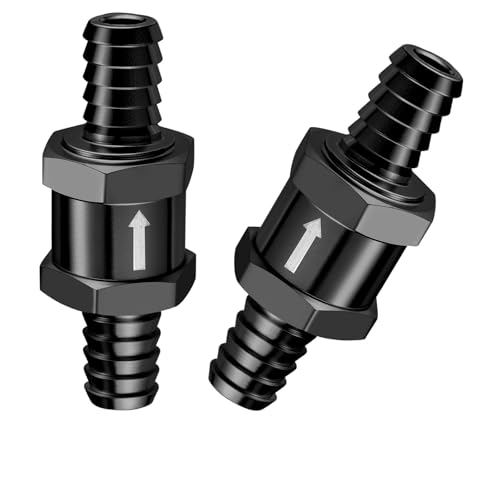
Best for lightweight automotive or small-engine fuel lines. This valve uses a stainless steel spring to allow one-way flow and prevent backflow, helping stabilize system pressure in compact setups. It is made from 6061-T6 aluminum with black anodizing for corrosion and wear resistance, and supports a wide operating temperature range. Suitable for diesel and gasoline lines in tightened spaces where a compact 3/8 inch OD valve is needed.
- Best for: Small engines, portable fuel lines, and tight installations.
- Why selected: Combines durable aluminum with a stainless steel spring for reliable one-way flow.
- Caution: Ensure upstream pressure stays within the working range to avoid valve stall or flutter.
EVIL ENERGY 3/4 inch Check Valve For Boats

Best for marine bilge or larger-diameter lines where a 3/4 inch valve is appropriate. This inline check valve is designed to prevent backflow and is often paired with bilge pump hoses. It comes with stainless steel hose clamps and is suited for boat installations requiring dependable one-way flow control. Best for larger marine plumbing tasks or fuel lines where a stronger clamp setup is needed.
- Best for: Marine bilge, larger fuel or water lines on boats.
- Why selected: Robust construction with included clamps eases installation in marine environments.
- Caution: Verify compatibility with the hose ID and clamp sizes used on your vessel.
1/4″ One Way Inline Check Valve (2 Pcs)

Best for compact fuel, oil, or water lines in constrained spaces. This PVDF plastic valve is ozone-resistant and built to withstand moderate temperature ranges. It features a pagoda-shaped groove nozzle for good air tightness and is suitable for systems that must stop countercurrent liquid. Choose this if you need a chemical-resistant inline check valve in a tight installation.
- Best for: Small, chemical-exposed lines where ozonol resistance is important.
- Why selected: PVDF body and silicone diaphragm offer chemical compatibility and safety.
- Caution: Check compatibility with fluids that require higher pressure ratings than the unit’s stated range.
Zoeller Inline Check Valve, Small

Best for pump discharge lines and general water flow control in residential and small commercial settings. The valve couples to rubber lines with stainless steel clamps and threads into discharge fittings, featuring a pre-drilled weep hole for leak detection. It is a straightforward, durable choice for preventing backflow in water systems where simple installation matters.
- Best for: Water pump discharge lines and small-scale plumbing projects.
- Why selected: Simple installation with a weep hole for early leak indication.
- Caution: May require compatible clamps and adapters depending on your piping layout.
Uenede Brass 1/2 Inch Inline Check Valve

Best for long-term brass reliability in higher-pressure lines. This 1/2 inch NPT valve uses solid brass construction with a stainless steel spring for dependable one-way flow. It handles up to 200 PSI and a wide temperature range, making it suitable for fuel, water, or air lines in more demanding environments. Choose this if you prioritize durability and robust threading for a semi-permanent installation.
- Best for: Higher-pressure lines and systems needing durable metal construction.
- Why selected: Solid brass body resists corrosion and provides strong sealing threads.
- Caution: Brass may be heavier and require proper torque to avoid thread damage during installation.
Buying Guide
Key purchase considerations help you select the right inline check valve for your setup:
- Pipe Size and Connection Type: Match the valve OD or NPT size to your hose or pipe ID. If in doubt, measure the inner diameter and consider adapters.
- Material and Fluid Compatibility: Metal valves (brass or aluminum) offer durability for fuels and water. Plastic valves (PVDF or ABS) provide corrosion resistance and lighter weight, suitable for non-corrosive fluids.
- Pressure and Temperature Range: Ensure the valve supports your system’s maximum pressure and ambient temperatures. Exceeding ratings can cause backflow or leakage.
- One-Way Operation and Seal Quality: Look for a stainless steel spring or robust diaphragm for reliable one-way flow and minimal leakage.
- Installation Environment: Consider marine applications, automotive spaces, or household plumbing. Some valves include clamps or pre-drilled holes for easier mounting.
- Maintenance and Replacement: Some plastics may wear faster in harsh chemicals; brass and aluminum offer longer service in many conditions.
FAQ
What is an inline check valve best used for?
To prevent backflow in fuel, water, air, or oil lines and protect pumps or components downstream.
Which material is most durable for fuel lines?
Metal valves such as brass or aluminum offer high durability and resistance to impact and heat in many settings.
Do inline check valves require maintenance?
Most require little maintenance, but inspect for leaks and ensure the valve moves freely over time, especially in high-use lines.
Can I install a check valve myself?
Yes, most inline check valves are designed for straightforward installation with basic tools and standard fittings.
What should I avoid when choosing a valve?
Avoid valves with mismatched pipe sizes, unsupported temperature ranges, or materials incompatible with your fluid.
Are multiple inline check valves acceptable in one system?
In some systems, multiple valves can be used, but ensure correct orientation and that pressure loss remains acceptable.