Answering the common question, which in-wall heater is best for a given space, these selections highlight compact, energy-conscious options with built-in thermostats or smart controls. Ideal buyers include quick-heaters for bathrooms, retrofit projects, and spaces where ceiling or floor space is limited. The table below compares five top options by key traits to speed up decision-making.
| Product | Power (W) | Voltage | Smart/Controls | |
|---|---|---|---|---|
| Cadet Energy Plus Wall Heater | 1000–1600 | 120/208/240 | Digital thermostat, simple controls | |
| Heat Storm 1500W In-Wall | 750/1500 | 120/240 | WiFi connected, programmable schedules | |
| Gopper CSC202TW | 2000 | 240 | Built-in thermostat | |
| Broan-NuTone 750/1500W | 750/1500 | 120/240 | Adjustable thermostat | |
| Besilo 2000W CSC202TW Upgrade | 2000 | 240 | Built-in thermostat |
Cadet Energy Plus Wall Heater With Built-In Thermostat
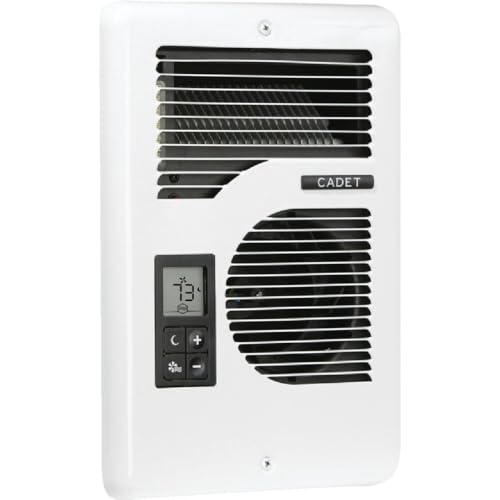
The Cadet Energy Plus unit combines an onboard digital thermostat with straightforward push-button controls and a large display for easy temperature management. A thermal safeguard protects against abnormal temperatures, contributing to safer operation. It is designed to fit existing Cadet Com-Pak wall cans, which minimizes retrofit work and wall patching. Best for homeowners upgrading existing Cadet installations or seeking a simple, reliable heater with a clear digital readout. Caution: ensure proper clearance around the heater for safety and airflow.
Heat Storm 1500 Watt In-Wall Heater With WIFI

Heat Storm offers built-in WiFi for remote control and custom scheduling. It supports 1500 W or 750 W operation, giving flexibility for larger or smaller rooms. A digital thermostat with adjustable LED brightness enhances visibility in dim spaces. Best for tech-savvy users who want control via smartphone or voice-enabled ecosystems. Caution: WiFi functionality requires network compatibility and has a learning curve for new users.
Gopper New Upgrade CSC202TW Electric Wall Heater

This model delivers 2000 W of heating power at 240 V with a built-in thermostat, targeting mid-sized rooms quickly. It’s positioned as a fast, efficient option for bathrooms, bedrooms, home offices, or other spaces needing a warmth boost. Best for spaces that require rapid warm-up and consistent control without external thermostats. Limitation: professional installation is recommended, and wiring must be properly assessed for safety.
Broan-NuTone Wall Heater With Built-In Thermostat

Broan-NuTone provides a dual-voltage setup (120/240V) with a 750/1500 W selectable output and a straightforward front-mounted thermostat. The downflow louvers guide heat toward the floor, supporting warm-room comfort without harsh heat concentration. Best for spaces needing a simple, dependable supplement heater with a durable enclosure. Caution: ensure correct voltage configuration to match your home’s electrical system.
Besilo Upgraded CSC202TW In-Wall Heater
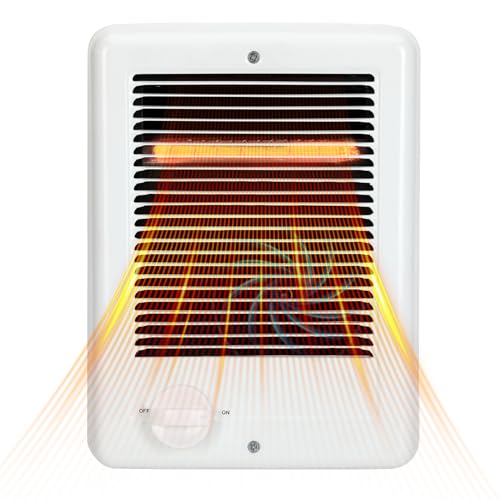
The Besilo upgrade version emphasizes rapid heating with 2000 W and a 6825 BTU rating, suitable for quick warmth in bathrooms or entryways. It includes a built-in thermostat for steady comfort and claims fast heating in under two minutes. Best for spaces that demand swift, consistent warmth with compact installation. Caution: verify electrical capacity before upgrading from lower-wattage models.
Buying Guide
- What room size and heat demand matter: For small bathrooms or bedrooms, 750–1500 W units are typically sufficient. For larger or poorly insulated spaces, 2000 W models can deliver faster, even warmth.
- Thermostat type and controls: Built-in digital or mechanical thermostats simplify operation. WiFi-enabled units offer remote scheduling but require network setup.
- Electrical compatibility: Check voltage (120/208/240 V) and existing wiring. Some models require professional installation, especially higher-wattage units.
- Installation considerations: In-wall heaters should fit existing wall cans when possible to minimize patchwork. Ensure safe clearances and proper ventilation in bathrooms or humid spaces.
- Energy efficiency and safety features: Look for thermal safeguards, auto shutoff, and energy-saving modes to reduce running costs and improve safety in households with children or pets.
Frequently Asked Questions
- Do in-wall heaters require professional installation? Some models can be installed by confident DIYers, but high-wattage units often require a licensed electrician for safe wiring and adherence to local codes.
- Can in-wall heaters be used in bathrooms? Yes, but ensure the unit is rated for damp or wet locations and installed with appropriate clearance and ventilation.
- What is the advantage of a built-in thermostat? Built-in thermostats provide precise room temperature control and help maintain consistent comfort with less energy usage.
- Is WiFi control worth it? WiFi allows remote scheduling and monitoring, which can save energy and increase convenience, especially for multi-room setups.
- How do I choose between 120 V and 240 V units? 120 V units are common for small spaces and easier wiring, while 240 V units provide higher heat output for larger rooms or faster warm-up.
- What safety features should I look for? Thermal safeguards, overheat protection, and child locks enhance safety, particularly in homes with young children or pets.