Directly answering your search, these indirect storage tank and related mini-tank heaters deliver reliable hot water for households, with different capacities and installation styles. This guide helps choose the right unit for small kitchens, baths, or utility rooms, and highlights who each product is best for. The top picks cover 18–8 gallon tanks, compact mini-tanks, and under-sink options, offering options for point-of-use or booster setups. Use the quick comparison table below to narrow your choice before diving into product details.
| Product | Capacity | Best For |
|---|---|---|
| VEVOR Electric Water Heater, 18 Gallon | 18 gallons | Family needs, shared bathroom, moderate storage |
| ThermoMate Tank Water Heater, 18 Gallon | 18 gallons | Small to medium households, point-of-use booster |
| VEVOR Electric Mini-Tank, 4-Gallon | 4 gallons | Under-sink or compact kitchen/bath use |
| VEVOR Electric Mini-Tank, 8-Gallon | 8 gallons | Boosts at smaller apartments or shops |
| KENUOS Under-Sink Instant Hot Water Heater, 2.5 Gallon | 2.5 gallons | RV/kitchen small-space use, rapid hot water near sink |
VEVOR 18-Gallon Electric Water Heater
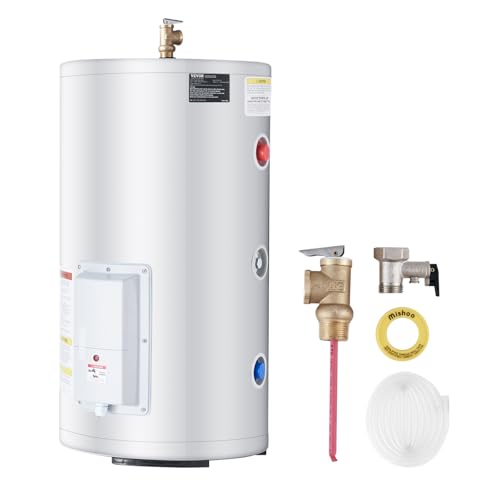
18-gallon storage capacity supports family daily needs, including dishwashing and laundry. The 1600W heater reduces wait time for hot water, and the enamel coating plus safety features provide containment against burns and leaks. Best for households needing a moderate storage heater with quick recovery for regular uses.
Best for: Small to medium households needing reliable hot water at a steady rate. Consider this when you want a storage option with a higher recovery speed than tiny units but without a full-size tank.
Caution: Ensure proper electrical wiring and dedicated circuit to support 1600W operation. Consider ventilation and clearance around the unit for safety.
ThermoMate 18-Gallon Tank Water Heater

18 gallons of point-of-use storage with adjustable thermostat. Factory set at 125°F, with range from 90°F to 150°F. Its INCOLOY-800 heating element offers corrosion resistance and potentially longer life than copper options. Ideal for kitchen sinks, baths, or as a booster in line with a larger supply.
Best for: Homes needing a compact, install-anywhere hot water solution near a sink or shower. Choose this if you want a dedicated point-of-use heater with a simple adjustment range.
Caution: The unit is designed for 120V operation; verify electrical supply matches your setup to avoid overloaded circuits.
VEVOR 4-Gallon Mini-Tank Water Heater

This compact 4-gallon stainless steel unit delivers water at up to 145℉ (62.8°C) with quick heat times. A temperature-pressure safety valve enhances safety, making it suitable for limited spaces like under sinks. Best for: small apartments or as a dedicated hot-water source for a single faucet or appliance.
Best for: Small spaces requiring reliable hot water without taking up much room. Avoid this if you need multiple fixtures hot water at once due to its small capacity.
VEVOR 8-Gallon Mini-Tank Water Heater
With an 8-gallon capacity and 1440W heating, this unit provides two features: fast heating within 8–15 minutes and a durable inner tank with polyurethane insulation for warmth retention. It includes a temperature-pressure safety valve to support safe daily use. Best for: households needing modest recovery with more flexibility than a 4-gallon unit.
Best for: Boosting hot water supply in small homes or commercial settings where limited space is available. Consider this when you want a middle-ground capacity in a compact form.
KENUOS Under-Sink Instant Hot Water Heater

2.5-gallon mini-tank with LED temperature display and 1500W heating. It includes a T&P valve and a 3-way diverter to supply hot water to two sinks. 1/2″ NPT fittings support straightforward installation in compact spaces such as RVs, kitchens, and boats. Best for: instant hot water near a sink with minimal footprint.
Best for: People needing quick hot water at a single or dual sink setup in small spaces. Caution: The unit is designed for 110–120V circuits; ensure circuit capacity meets the load.
Buying Guide: Key Considerations For Indirect Storage Tank Substitutes
- Capacity needs: Choose 2–18 gallons depending on the number of fixtures and peak usage. Larger households benefit from 18-gallon models, while apartments may do well with 4–8 gallons.
- Placement and space: Point-of-use or under-sink units save space but may require additional piping. Wall-mounted or shelf-friendly stands improve accessibility in tight spaces.
- Recovery rate and heating power: Higher wattage reduces wait time between draws of hot water. Balance with electrical capacity and panel capacity in your home.
- Safety features: Look for temperature and pressure safety valves, enamel or corrosion-resistant tanks, and clear installation manuals to ensure safe operation.
- Electrical requirements: Confirm voltage, circuit amperage, and whether a dedicated circuit is needed. Many units require 120V or 240V, depending on model.
- Installation flexibility: Consider whether you want a standalone unit, a booster in-line with a larger source, or a compact under-sink option for near-sink hot water.
FAQ
Q: Do these tanks work with indirect heating methods or a boiler system?
A: Many are direct electric storage options; some compact models can function as point-of-use boosters in systems with a primary hot water source. Check compatibility with your existing boiler or heater layout before installation.
Q: Is a larger tank always better for families?
A: Not necessarily. A larger tank provides more storage, but recovery speed and install location matter. For many homes, a well-mated 18-gallon model with efficient heating is sufficient for daily needs.
Q: Are mini-tanks suitable for showers and dishwashing in busy homes?
A: They can support moderate use when placed near a sink or appliance, but multiple fixtures may require additional storage or a secondary unit to avoid long waits for hot water.
Q: What maintenance is needed for these tanks?
A: Regular inspection of temperature settings, valve safety checks, and periodic descaling where mineral buildup occurs helps maintain performance and safety.