If you’re shopping for a reliable infrared heater to heat spaces up to 1000 sq ft, you want models designed for larger rooms, energy efficiency, and solid safety features. This guide highlights five top options and explains who each is best for. All selections leverage infrared warmth to target people, zones, and living areas efficiently. The following summaries help you compare coverage, controls, and safety at a glance.
Summary Table of Chosen Products
| Product | Best For | Highlights |
|---|---|---|
| DR Infrared Heater DR-968 | Large living rooms; energy-conscious users | Dual heating system; auto energy saver; quiet operation |
| EdenPURE Classic CopperPLUS | Even heat in large spaces; humidity-friendly heat | Copper core technology; zone heating |
| Comfort Glow Infrared QEH1408 | Rooms up to 800 sq ft; simple controls | Four quartz elements; adjustable ECO and high settings |
| Ballu Mica Infrared Space Heater | Smart control lovers; large rooms | WiFi/app control; 180° coverage; durable metal |
| Duraflame Freestanding Stove (Black) | Living rooms needing ambiance with heat | 3D flame effect; 1000 sq ft coverage |
Dr Infrared Heater DR-968 Portable Space Heater
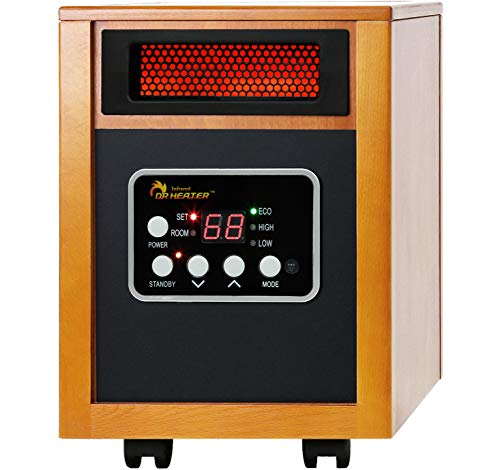
The DR-968 uses a dual heating system with infrared quartz tube plus PTC elements, delivering robust warmth for large rooms. It includes Auto Energy Saving Mode, high and low settings, a 12-hour timer, and dual protections for tip-over and overheating. It’s best for larger living areas where quiet operation and steady heat are priorities. A remote control adds convenience for seating areas. Caution: the unit draws about 12.5 amps, so ensure your outlet can support it and avoid extension cords for safety.
EdenPURE Classic CopperPLUS Infrared Heater

The EdenPURE CopperPLUS heater offers consistent infrared warmth for spaces up to 1000 sq ft with a copper-core surface that enhances heat transfer while supporting comfortable humidity levels. It is designed for zone heating, allowing you to warm the areas you use most and reduce overall energy waste. Best for users who want steady, even heat across a larger living area and a footprint that supports quiet operation. Limitation: performance relies on efficient room layout and insulation to maximize energy savings.
Comfort Glow Indoor Portable Infrared Heater QEH1408

Comfort Glow packs 5,120 BTUs into a compact portable unit designed for indoor use, suitable for large rooms up to about 800 sq ft. It features ECO, 750W, and 1500W settings with a built-in thermostat for steady warmth and energy control. It uses four quartz heating elements to deliver quick heat that mimics natural sunlight. Choose this if you want straightforward operation and clear, rapid heat in a sizeable space. Caution: performance may drop in poorly insulated rooms or spaces with drafts.
Ballu Mica Infrared Space Heater

Ballu Mica Infrared Heater emphasizes premium mica panels and 180° heating coverage with quick heat-up. It supports smart control via remote, digital panel, and app-based scheduling, with compatibility for voice control. Best for tech-enabled homes needing flexible, room-wide warmth and comprehensive control. Limitation: advanced features require compatible devices and a stable Wi-Fi connection for app control.
Duraflame Freestanding Electric Fireplace Stove Heater

This Duraflame model blends ambiance with heat for spaces up to 1,000 sq ft. It features a 3D flame effect and a classic stove design that complements living rooms while offering infrared heating. Best for users who want a heater that doubles as décor and for rooms where a traditional fireplace aesthetic is desirable. Caution: the visual flame effect is separate from heat intensity; rely on the infrared heat setting for warmth rather than visual cues alone.
Buying Guide
What should you consider when choosing an infrared heater for up to 1000 sq ft?
- Heating capacity and coverage: Look for models labeled to heat large rooms up to 1000 sq ft or more and check BTU equivalents to compare warmth quickly.
- Energy efficiency: Features like Auto Energy Saving Mode, zone heating, and copper or mica cores can improve efficiency and reduce energy waste.
- Heat delivery: Infrared heaters with quartz tubes or mica panels heat people and objects directly, which is effective in drafty spaces.
- Controls and convenience: Remotes, digital thermostats, app control, and scheduling help maintain comfortable temperatures with minimal effort.
- Safety features: Look for tip-over protection, overheat protection, cool-to-touch housing, and auto shutoff for extended use.
- Installation and portability: Consider whether you need a portable unit, a freestanding stove-style heater, or a wall-mountable option.
How to compare options at a glance
- Best for large, open living spaces: DR-968 or EdenPURE CopperPLUS for even heat and zone-friendly operation.
- Better for tech-savvy homes: Ballu Mica with WiFi/app control and voice compatibility.
- Choose this if you want simple setup and quick heat: Comfort Glow QEH1408 with straightforward ECO and 1500W settings.
- Avoid this if you require a standalone ambience-only unit: Duraflame’s flame effect is decorative; rely on infrared heat settings for warmth.
FAQ
- What size room can these infrareds typically heat efficiently? Most models listed are designed for spaces up to 800–1000 sq ft with steady warmth when properly insulated.
- Is infrared heating better for energy savings? Infrared heat can be more energy-efficient when used for targeted warming of occupied areas, reducing overall thermostat usage.
- Do these units require special outlets? Some models draw around 12–15 amps; ensure a compatible outlet and avoid daisy-chaining with extension cords for safety.
- Can I control these heaters with a smart home system? Ballu Mica supports app and voice control, while others rely on remotes or built-in thermostats.
- Are infrared heaters safe for children and pets? Look for cool-to-touch housings and tip-over protection to minimize risk in homes with kids and pets.
- Do infrared heaters dry the air? Infrared heating primarily warms objects and people; humidity levels are generally maintained better than with some convection-only heaters, but room humidity still depends on overall ventilation.