When shopping for an infrared electric patio heater, the key is to choose a model that delivers instant warmth, suits your space, and remains safe outdoors. This guide highlights five reliable 1500W options ideal for decks, patios, garages, and sunrooms. Each entry notes who it’s best for, plus practical pros and a potential limitation to watch. Whether you want wall-mount, freestanding, or a multi-function device with extras like music or lighting, there’s a fit here for most outdoor setups.
Buying snapshot table (selected products at a glance):
- Paraheeter Outdoor Electric Infrared Patio Heater, 1500W — Best for versatile mounting and budget-conscious outdoor warmth
- DR. INFRARED HEATER Portable Infrared Indoor/Outdoor — Best for portable warmth with remote control
- NFCCra Outdoor Electric Patio Heater, 42-Inch — Best for broad coverage and tall heat spread
- AEROZY Patio Heater, 32.2″ Infrared — Best for compact, stylish outdoor spaces with reliable heat
- Frivibe 3-in-1 Heater, 1500W — Best for ambiance (sound and light) plus warmth
Paraheeter Outdoor Electric Infrared Patio Heater, 1500W

Best for flexible installation, this unit can be wall or ceiling mounted or used with an adjustable tripod. It uses a carbon infrared element that heats objects and people directly, not the surrounding air, offering low operating costs. A safety grille and a grounded plug reduce electrical risks, and an automatic shut-off feature helps prevent tip-over hazards. Note the foam protective pad must be removed before use to avoid overheating. Best for outdoor spaces where ceiling or wall mounting is feasible or where a tripod needs to be included.
DR. INFRARED HEATER Portable Infrared Indoor/Outdoor Heater

Best for flexible placement, this heater supports freestanding use, wall mounting, or ceiling mounting, helping you conserve floor space. It features a high-efficiency carbon infrared element and a 90% reflective mirror aluminum reflector for targeted warmth. It offers three power levels (900W, 1200W, 1500W) and a programmable timer up to 12 hours for energy savings. Choose this if you want a heater that can adapt to different rooms and layouts without needing a dedicated installation.
Outdoor Electric Patio Heater, 42-Inch 1500W — NFCCra
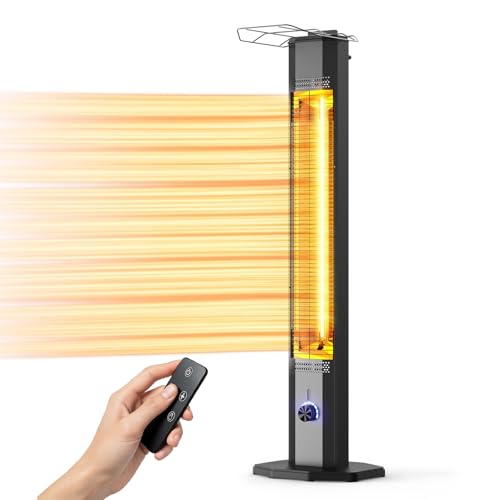
Best for wide coverage on larger patios, this 42″ infrared tower heats instantly and evenly. It offers nine heat levels and a nine-hour timer, and it’s designed for outdoor use with IPX5 protection. A remote is included for easy adjustments from a distance. A potential limitation is taller height may require ensure clearance above low-hanging structures or furniture.
AEROZY Patio Heater for Outdoor Use, 32.2″ Infrared

Best for smaller outdoor spaces or where a lighter, more discreet heater is desired. This 1500W unit features 60-degree oscillation for broader heat coverage, a remote for convenience, and nine heat settings with a nine-hour timer. It’s IP65 rated for weather resistance. Limitations include its lighter footprint which may be less stable in high winds unless properly secured.
Frivibe 3-in-1 Outdoor Infrared Heater with Speaker & RGB Light

Best for ambient outdoor gatherings, this 1500W heater combines warmth, a Bluetooth speaker, and 16-color RGB lighting. It uses infrared heating for quick warmth and is designed with IP65 resistance, a stable base, and tip-over/overheat protections. This is a strong pick if you want an all-in-one device to provide heat, music, and lighting. A consideration is the added electronics require careful outdoor placement away from moisture and direct water spray.
Colliford Outdoor Electric Patio Heater, Portable 1500W

Best for portable use across multiple zones, this heater offers three wattage settings (750W, 1000W, 1500W) with a built-in tip-over shut-off for safety. It’s designed for easy relocation between spaces like a porch, garage, or covered patio. Use this if you need a lightweight, move-anywhere heater that still provides reliable infrared warmth. A caution is that portability may come with a smaller footprint and requires a stable surface for operation.
Buying Guide: Key Considerations for Infrared Electric Patio Heaters
- Heat delivery method: Infrared heaters warm people and objects directly rather than heating the air, which can feel more efficient in outdoor spaces.
- Mounting and placement: Decide between freestanding, wall-mounted, or ceiling-mounted options. Consider wind exposure and mounting height.
- Wattage and heat levels: Most models offer 900–1500W with multiple heat settings. Pick a unit with a timer if you want automatic shut-off to save energy.
- Weather resistance: Look for IP ratings (e.g., IP65) for protection against rain and dust in outdoor environments.
- Safety features: Tip-over switches, auto shut-off, and grille protection help reduce accident risk.
- Additional features: Remote control, oscillation, and extra functions like built-in lights or speakers can influence value depending on use case.
- Space coverage: Taller towers often provide broader warmth; 32–42 inches is common for patios. Ensure your space can accommodate the heater’s footprint.
Frequently Asked Questions
- Q: Do infrared patio heaters warm the space or just the objects? A: They warm people and objects directly, creating a comfortable sensation even when the air remains cooler.
- Q: Are infrared heaters safe for outdoor use? A: Yes, many models are designed for outdoor use with weather resistance and safety features like tip-over protection.
- Q: What’s the advantage of a remote-controlled heater? A: A remote allows you to adjust heat settings from a distance, which is convenient for dining or lounging areas.
- Q: Is a taller heater better for coverage? A: Taller units can offer broader heat distribution, especially when combined with oscillation, but stability and wind exposure matter.
- Q: Should I choose a 1500W model for a small patio? A: If you want rapid warmth and the area is moderate in size, a 1500W unit is typically effective; for very small spaces, a 900–1200W model may suffice.
- Q: Are there safety concerns with leaving these heaters unattended? A: Use units with tip-over and overheat protection, and avoid placing near flammable materials or at ground level where feet can trip on cords.