Answering the common question: which insulated dryer vent hose is best for tight spaces, noisy environments, or high-heat use? This guide highlights five top options and explains who each one is best for. Ideal buyers include homeowners upgrading a duct system, apartment dwellers needing compact runs, and DIY enthusiasts seeking easy installation with strong insulation. The following summary table helps compare key points at a glance.
| Product | ||
|---|---|---|
| TEAIERXY 4 Inch 8FT Dryer Vent Hose | 4 in, 8 ft | Flexible, multi-layer insulation; good for longer runs with minimal deformation |
| MOPHA Dryer Vent Hose 4 Inch, 3FT | 4 in, 3 ft | Compact spaces; strong seals and easy push-on installation |
| Hon&Guan 4” Duct, 16FT | 4 in, 16 ft | Long runs, low-noise with heavy-duty protection |
| LHHXX33 Dryer Vent Hose 4 Inch, 8FT | 4 in, 8 ft | Balanced insulation and ease of cutting for mid-length installs |
| VIVOSUN 4” Insulated Duct, 25 FT | 4 in, 25 ft | Longest runs; durable multi-layer construction for HVAC and dryers |
TEAIERXY 4 Inch 8FT Dryer Vent Hose
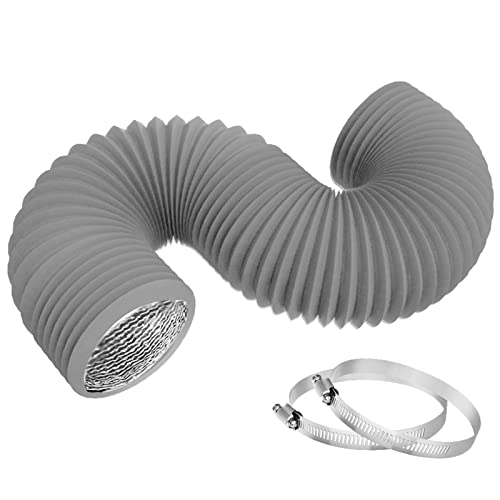
The TEAIERXY vent hose uses six-layer construction with aluminum foil, PET, steel wire, and PVC insulation. The design emphasizes deformation resistance and light-proof insulation, aiming to reduce noise and heat transfer. Best for longer, flexible runs where maintaining shape matters. This option is suitable for users who want a robust, insulated duct that can be cut to length and secured with supplied clamps. A potential limitation is that the hose may require careful shortening to fit a given run.
Best for: homeowners with longer dryer runs who need strong insulation and a flexible 4-inch hose. Choose this if deformation resistance and light-blocking insulation are priorities.
Caution: ensure proper length planning since the hose has shrinkage when extended; cut precisely to avoid sagging or kinking.
MOPHA Dryer Vent Hose 4 Inch, 3FT

The MOPHA hose features a six-layer construction with rubber-seal connectors at ends for easy installation and a tight seal. It provides a 3-foot length, which is ideal for tight spaces where a full-length hose would not fit. The design aims to minimize air leakage and maximize dryer efficiency, though the variable length means this option is best when a short run is needed. The rubber seal connectors eliminate the need for clamps, offering a quick setup.
Best for: small or awkward spaces where a quick, sealed connection is required. Choose this if you value simple installation without traditional clamps.
Caution: verify compatibility with your dryer exhaust fittings, as end fittings rely on rubber seals and may not fit every vent pipe perfectly.
Hon&Guan Dryer Vent Hose, 4” 16FT

This Hon&Guan hose features a three-layer structure with dual aluminum foil, PET, and a steel wire helix. It includes lightproof PVC exterior and two clamps, promoting quiet operation and durability for longer runs. The extended length makes it suitable for applications where the vent cannot be placed directly adjacent to the exterior wall. A potential limitation is that longer hoses can be harder to manage in tight spaces.
Best for: users needing a long, durable run with noise reduction. Choose this if the vent path requires significant distance and you want a robust, flexible duct.
Caution: longer runs may require additional support to prevent sagging and maintain airflow efficiency.
Dryer Vent Hose – 4 Inch, 8ft, Four-Layer

The four-layer design combines aluminum foil, black PVC, and PET film for durability and leak resistance. With an 8-foot length, this hose supports typical mid-length installations. It also notes wide temperature endurance, enabling use across various dryer operating temperatures. Easy cutting and DIY-friendly installation are emphasized, making it a practical choice for homeowners handling a single-run replacement.
Best for: installations requiring a sturdy mid-length hose with reliable leak resistance. Choose this if you want a straightforward, DIY-friendly option with solid insulation.
4 Inch 25 Feet R4.2 Insulated Flexible Duct

This high-density insulation option reduces heat loss and is suitable for both heating and cooling setups. The 25-foot length makes it a strong choice for longer conduit paths. The outer layer offers weather resistance, making it a viable option for outdoor or damp environments. It is designed for flexibility and easy cutting, but longer runs should be properly supported to prevent sagging and maintain airflow.
Best for: long-distance applications where thermal efficiency is crucial. Choose this for a reliable, insulated run in HVAC or dryer setups that span across multiple rooms or walls.
VIVOSUN 4” Flexible Aluminum Duct, 25 FT

VIVOSUN’s 25-foot duct uses multi-layer construction with aluminum foil, PET layer, and a durable outer shell. It includes two clamps for a secure seal and is designed for extensive runs in HVAC and dryer applications. The flame-retardant inner and outer layers add resistance to heat, while the PET layer protects against punctures. This option emphasizes long, reliable airflow with corrosion resistance for sustained use.
Best for: projects requiring a long, durable run with high heat tolerance. Choose this if you need a long duct that stays reliable under continuous use.
Buying Guide
What should you consider when selecting an insulated dryer vent hose?
- Length requirements: Measure the distance from the dryer to the exterior vent. Choose a hose that allows some extra length for routing and avoid excessive slack that can trap lint.
- Insulation and material: Look for multi-layer constructions with aluminum foil, PET, and PVC or glass-wool layers for noise reduction and heat retention. Ensure the hose is rated for temperatures your dryer generates.
- Diameter compatibility: Most residential dryers use 4-inch hoses. Confirm the connector size and compatibility with your vent fittings.
- Installation method: Some hoses include clamps or rubber seals; others rely on slip-on or clamp-free connections. Consider your preferred installation method and tool availability.
- Noise reduction: If your laundry area is near living spaces, prioritize hoses advertised as noise-reducing or with lightproof properties to minimize disruption.
- Durability and deformation resistance: Look for steel wire reinforcements or robust outer layers to prevent kinking and maintain airflow over time.
- Outdoor suitability: For outdoor runs, choose weather-resistant outer jackets and insulation that withstands UV and moisture exposure.
Frequently Asked Questions
- What is the standard dryer vent hose diameter? – Most residential dryers use a 4-inch diameter vent hose.
- Do insulated dryer vent hoses reduce noise? – Yes, many models incorporate noise-dampening layers or silencing features to reduce operational sound.
- Can I cut a dryer vent hose to length? – Some hoses are designed to be cut to fit; always follow manufacturer guidance and seal edges to prevent leaks.
- Is it better to use a longer hose than two sections? – A single, continuous run reduces potential leak points and kinks; avoid overly long lengths without proper support.
- Should I use clamps or rubber seals? – Clamps provide a secure seal; rubber seals can simplify installation but verify compatibility with your vent pipe.
- Are flexible hoses safe for high-heat dryer exhaust? – Choose hoses rated for the temperature range produced by your dryer and install per instructions to prevent deformation and leaks.