The best low-profile RV air conditioners maximize space, minimize roof clearance, and deliver reliable cooling whether you’re off-grid or plugged in. This guide highlights five compact, rooftop units suited for campers, vans, trailers, and small motorhomes. Each option is evaluated for off-grid capability, noise, efficiency, and ease of installation. Ideal buyers include off-grid campers, weekend travelers, and anyone seeking quiet operation in tight roof spaces.
| Product | BTU | Best For |
|---|---|---|
| Xenjum 11,000 BTU Low-Profile | 11,000 | Off-grid campers needing battery-powered cooling |
| TURBRO 13.5K BTU Inverter | 13,500 | RVs needing year-round cooling and heating in a slim unit |
| FOGATTI 16K BTU Low-Profile | 16,000 | Quiet, powerful cooling with heat pump for varied seasons |
| RecPro 13.5K BTU Low-Profile | 13,500 | Quiet operation with durable design for travel trailers |
| OutEquip 10K BTU 12V | 10,000 | Compact rigs prioritizing low weight and off-grid runtime |
Xenjum 11,000 BTU Low-Profile RV AC

Best for off-grid RVs relying on battery power. This 11,000 BTU unit uses 12V DC and features a soft start to reduce power surges, extending battery life. It claims faster cooling with an emphasis on energy efficiency and reduced wear via fewer moving parts. The unit is designed for battery-powered operation, with a stated capability of up to 10 hours of cooling on a 600Ah battery when off-grid.
Who it’s best for: off-grid campers, boondockers, or van dwellers prioritizing battery efficiency and quiet operation. Why selected: high energy efficiency and 12V battery compatibility make it a strong fit for solar-equipped RVs. Limitation: exact compatibility with roof configurations varies—verify mounting and electrical requirements before purchase.
TURBRO Inverter 13.5K BTU RV AC
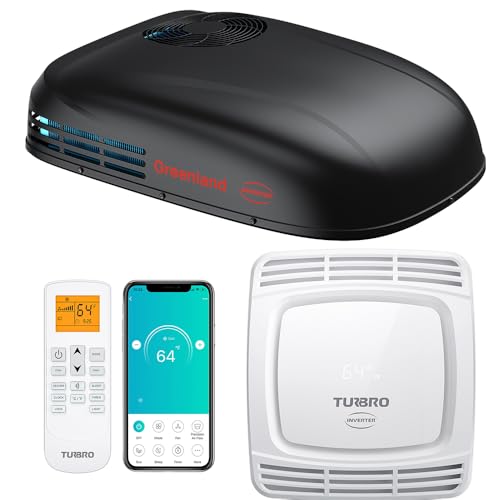
Best for year-round comfort with a slim rooftop profile. This 13.5K BTU unit uses an energy-saving inverter compressor and includes cooling and heat pump functionality, plus fan and dry modes. It’s designed to be thinner than many rivals, reducing air resistance and potentially improving vehicle fuel efficiency. It performs well in a range of temperatures and climates.
Who it’s best for: buyers wanting both cooling and heating without a large roof footprint. Why selected: inverter efficiency and thin profile make it a versatile choice for mid-sized RVs. Caution: check compatibility with your roof cut-out and ensure your electrical system can support the inverter’s demand.
FOGATTI RV AC Unit 16K BTU

Best for strong cooling with quiet operation in a low-profile design. The dual-motor, triple-fan system delivers up to 418 CFM with an EER rating of 11.8, enabling efficient cooling and heating. It features a non-ducted, easy-install design suitable for many RVs and includes WiFi and remote control for convenience.
Who it’s best for: travelers needing robust cooling/heating in a compact footprint with smart controls. Why selected: high efficiency for its class and quiet operation. Caution: required electrical setup and fuse considerations—verify your electrical capacity and that the roof cut-out matches the unit’s footprint.
Gidrox 10K BTU 12V DC RV AC

Better for small RVs or vans where 12V operation and ultra-quiet performance are prioritized. This 10,000 BTU unit focuses on battery-powered cooling with low power consumption and a quiet operation profile. It’s designed for rapid cooling and uses an inverter approach to maintain steady temperatures in hot weather.
Who it’s best for: ultra-compact setups prioritizing battery life and quietness. Why selected: low power draw and quiet mode suit solar-assisted or battery-restricted rigs. Limitation: cooling capacity is lower than higher-BTU options, so it’s best for smaller spaces or milder climates.
TURBRO Inverter 13.5K BTU (WiFi)

Best for tech-friendly setups needing remote control and a slim footprint. This model offers inverter efficiency, heat pump functionality, and a slim rooftop profile. It supports WiFi and remote operation for convenient management from inside the RV. It shares the slim design ethos with other TURBRO units.
Who it’s best for: tech-savvy travelers who want smart control and flexibility. Why selected: compatibility with modern smart homes and quieter operation. Caution: ensure your roof cut-out and mounting hardware match your RV’s roof contour.
Buying Guide: Key Considerations For Low-Profile RV AC
- Roof space and cut-out compatibility: Confirm the unit’s dimensions and mounting flange match your RV’s roof opening. Some units require specific non-ducted configurations.
- BTU and space size: Higher BTU units cool larger spaces but add weight and may consume more power. Choose a model that matches your RV interior square footage and insulation level.
- Power source and off-grid readiness: If you plan to boondock, prioritize 12V DC operation, inverter compatibility, and battery capacity. Solar compatibility helps extend runtime.
- Noise levels: Low-noise operation improves comfort in small living spaces; check dB ratings to balance performance and tranquility.
- Heating capability: If you need year-round comfort, consider heat pump options and a system that provides efficient heating in cool weather.
- Materials and durability: UV-stabilized plastics, weather seals, and corrosion-resistant condensers improve longevity in varying climates.
- Ease of installation: Non-ducted, low-profile models often install quicker but verify roof structure compatibility and required tools or mounting brackets.
- Electrical requirements: Ensure your battery bank, alternator, or shore power can support startup surges and continuous operation. Some inverters handle soft starts to reduce load.
Frequently Asked Questions
- What is a low-profile RV AC unit?
It is a rooftop air conditioner designed with a slim profile to fit roofs with limited clearance while providing cooling for RV interiors.
- Can these units operate off battery power?
Many listed models support 12V DC operation or battery-assisted cooling, though runtime depends on battery capacity and load. Off-grid setups benefit from larger battery banks and solar.
- Do low-profile units require special installation?
Most non-ducted, low-profile units are designed for straightforward rooftop mounting, but verify cut-out dimensions and mounting hardware for your RV model.
- Is heating available in these units?
Several models include heat pump capability or integrated heating, suitable for mild seasons but not a primary heat source in extreme cold.
- Which unit is best for off-grid use?
Units with 12V operation, soft-start features, and high efficiency are typically best for off-grid use, as they minimize battery strain and extend runtime.
- What should I measure before buying?
Measure roof cut-out, current roof height, battery capacity, and intended use (off-grid vs plugged-in). Compare BTU, noise, and energy efficiency to find the right fit.