Mica band heaters are a vital component for maintaining uniform heat in plastic injection processes. This guide highlights five high-quality 110V, 380W mica band heaters, detailing features, compatibility, and installation considerations to help you choose the right option for your equipment. Each product is evaluated based on durability, corrosion resistance, and ease of installation to support reliable process control.
| Product | Brand | Voltage | Power | Size (approx) |
|---|---|---|---|---|
| Saim 110V 380W Injected Mould Heating Element Band Heater | Saim | 110V | 380W | 35 x 35 mm |
| YXQ 110V 380W Injected Mould Heating Element Band Heater | YXQ | 110V | 380W | 35 x 35 mm |
| Nxtop 110V 380W Injected Mould Heating Element Band Heater | Nxtop | 110V | 380W | 35 x 35 mm |
| YXQ 110V 380W Injected Mould Heating Element Band Heater | YXQ | 110V | 380W | 35 x 35 mm |
| Heater Bands 110V 380W Injected Mould Heating Element Band Heater | Saim | 110V | 380W | 35 x 35 mm |
Saim 110V 380W Injected Mould Band Heater
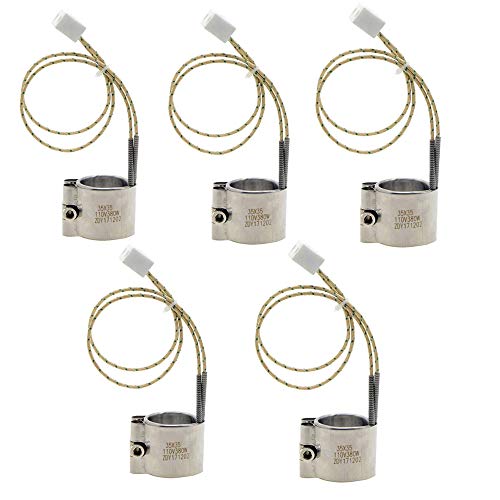
The Saim 110V 380W band heater features a rust-resistant steel sheath and a stainless steel clamp-type lock-up for secure installation. Its notched sleeve allows easy mounting, and the flush-fit design aligns precisely with nozzle hex surfaces. This model operates at 380W and 110V, with a 35 x 35 mm inner diameter. Braid lead length is 31 cm, enabling flexible wiring layouts. Its construction prioritizes durability in high-temperature injection environments.
YXQ 110V 380W Injected Mould Band Heater

YXQ’s 110V 380W band heater features a rust-resistant steel sheath and a stainless steel clamp-type lock-up. The notched sleeve enables straightforward installation, with flush mounting against the nozzle hex. This model is designed for use in plastic injection machine stuffing containers and shares the common 380W/110V rating. It provides reliable heat delivery and robust construction suitable for ongoing production cycles.
Nxtop 110V 380W Injected Mould Band Heater

Nxtop offers a 110V 380W injected mould band heater with a rust-resistant steel sheath. The stainless steel clamp-type lock-up and notched sleeve support straightforward installation and flush mounting with nozzle hexes. Its primary use aligns with plastic injection machine stuffing containers, delivering stable power at 380W for consistent heating control and process reliability.
YXQ 110V 380W Injected Mould Heating Element Band Heater 35x35mm
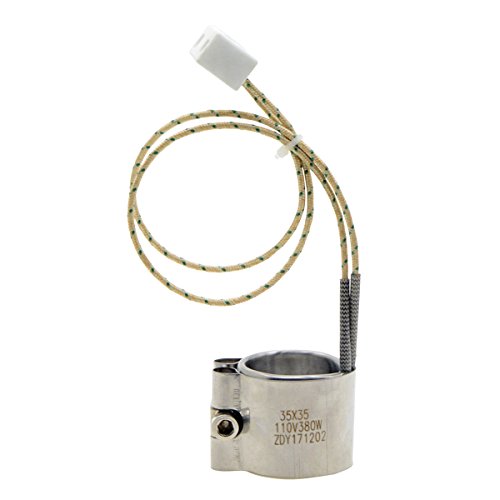
This version from YXQ also features a rust-resistant steel sheath and stainless steel clamp-type lock-up. The notched sleeve enables quick installation with flush alignment to the nozzle. Designed for injection moulding devices, it operates at 380W and 110V, offering dependable heat transfer and durable construction consistent with industrial use.
Saim Heater Band 110V 380W 35x35mm (1PCS)
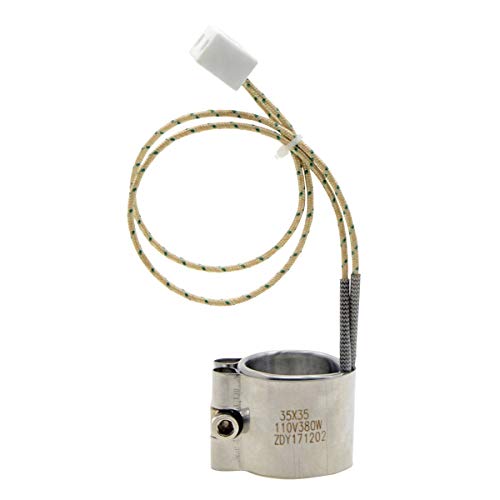
This single-unit Saim mica band heater provides a rust-resistant steel sheath with a stainless steel clamp-type lock-up. Its notched sleeve ensures installation accuracy, and the 35 x 35 mm inner diameter is designed for flush mounting near nozzle hexes. The 380W, 110V rating makes it compatible with a range of plastic injection molds, supporting consistent heat delivery during cycles.
Buying Guide
Key considerations when choosing a mica band heater include compatibility with your mold dimensions, voltage, and power needs. Look for a rust-resistant steel sheath and a stainless steel clamp-lock design for durable mounting. Notched sleeves help with precise alignment, while flush mounting reduces heat loss at the nozzle interface. Lead wire length matters for convenient wiring layouts, especially in tight machine spaces. Ensure the inner diameter matches your mold to avoid over-tightening or gaps that could reduce heating efficiency.
- Inner diameter compatibility: Confirm that the 35 x 35 mm (1.4″ x 1.4″) format fits your nozzle area.
- Voltage and wattage: Ensure the 110V and 380W rating align with your electrical supply and heating requirements.
- Materials and construction: Rust-resistant sheath and clamp-type locks enhance longevity in industrial settings.
- Installation ease: Notched sleeves and flush mounting simplify alignment and reduce installation time.
- Lead wire length: Longer leads offer flexible routing, but ensure they do not exceed safe temperature limits or violate machine specs.
- Maintenance and safety: Look for devices designed for consistent performance under repetitive cycling and consider protective insulation around hot elements.
Compatibility And Installation Considerations
When selecting a mica band heater for a plastic injection system, verify nozzle geometry and space constraints. The 35 x 35 mm footprint is common for 1.4″ by 1.4″ openings, but verify inner dia and clamping clearance. Ensure the heater’s clamp lock is compatible with your existing clamping hardware to prevent slippage. Proper mounting reduces heat loss and improves response time, while corrosion resistance protects against aggressive process conditions. For best results, pair heaters with compatible temperature control systems and monitor thermal performance during initial runs.
Common Applications
Mica band heaters are widely used in plastic injection machines, molds, stuffing containers, and other thermally demanding processes. They provide efficient, even heat distribution essential for uniform plastic melt viscosity. Selecting a heater with robust construction supports longer service life in demanding manufacturing environments, while a compact 35 x 35 mm size fits tightly constrained nozzle pockets without requiring major machine modifications.
Maintenance Tips
- Inspect the heater sheath and clamps regularly for signs of wear or corrosion.
- Ensure tight, flush mounting to minimize heat loss and prevent thermal cycling stress.
- Check lead wires for insulation integrity; replace if damaged.
- Calibrate temperature controls to avoid overheating and material degradation.