Answer: If you’re keeping a mini split or other condensate-producing HVAC units running smoothly, choose a compact, quiet condensate pump with sufficient lift and reliable overflow safeguards. This guide highlights top options suited for residential to light commercial mini splits, focusing on space efficiency, noise levels, and safety features. Best for hidden installations, basements, or ceilings where gravity drainage isn’t feasible.
| Product | Best For | Key Benefit | Approx. Lift |
|---|---|---|---|
| Aquastrong Mini Split Condensate Pump | Small to mid-size spaces | High flow with safety switch | 33 ft |
| Cleartide Mini Split Condensate Pump | Quiet operation in living areas | Low noise, overflow protection | 33 ft |
| GuardFlow Ultra Quiet Mini Split Pump | Bedrooms and offices | Ultra-quiet, adjustable flow | 65 ft |
| WATNOVA Slim Mini Split Condensate Pump | Hidden installations | Floatless probe sensing | 27 ft |
| FUJIWARA 40L Mini Pump | Small to mid residential | Very quiet, low standby power | 33 ft |
Aquastrong Mini Split Condensate Pump
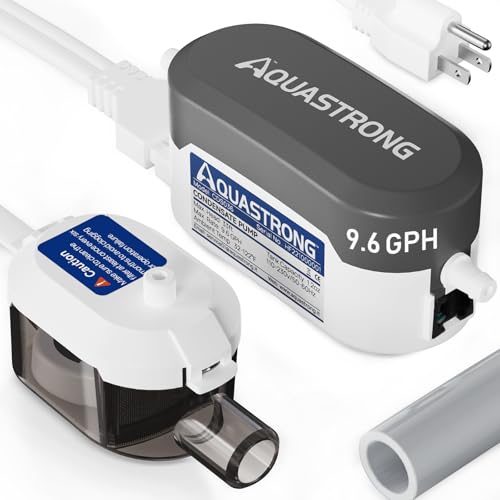
- High flow: 9.6 GPH with max head 33 ft.
- Automatic operation via hall switch for reliable performance.
- Hi-level safety switch can shut off the appliance or trigger an alarm on overflow.
- Compact mini split design with anti-vibration mounting and easy installation.
- Inlet/outlet configurations to fit common line sets and tubing.
Best for: Small to mid-size spaces where a compact, auto-operating pump with a clear overflow safety path is desirable. Choose this if you want a balance of strong drainage and integrated safety features for HVAC applications.
Caution: Ensure compatible tubing sizes and confirm electrical wiring matches your HVAC setup.
Mini 100-240V White Split Condensate Pump
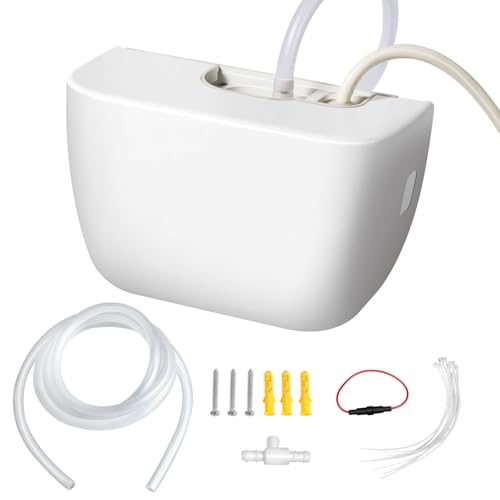
- Independent pump body with water tank and auto drainage.
- Low sound level: under 19 dB(A).
- Includes complete accessories for quick installation (pipes, screws, ties).
- Power: 100-240V AC; Head: up to 20 m; Flow: up to 38 L/h.
Best for: Quiet operation in spaces where a slim, self-contained unit is needed, such as apartments or home offices.
Caution: Check exact head height in your install path to ensure compatibility with your unit’s drain height.
Cleartide Mini Split Condensate Pump
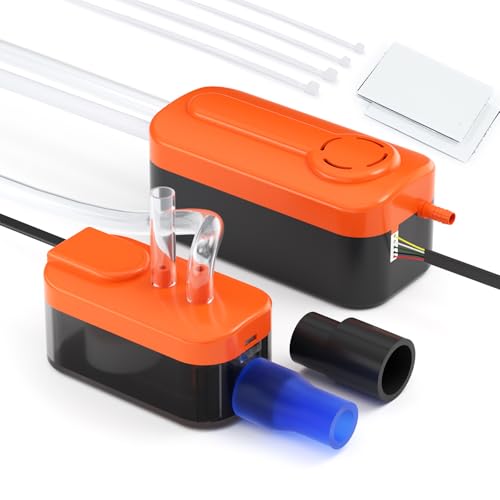
- Max flow 10.6 GPH with 33 ft head capacity.
- Separate reservoir and motor design saves space in ceilings or units.
- Whisper-quiet operation at 23 dB; includes overflow safety switch wire.
- Widely compatible with refrigeration and HVAC equipment for compact installations.
Best for: Small spaces where quiet operation and overflow protection are priorities, such as closets or ceiling voids.
Caution: Verify the included safety switch wiring is compatible with your control system.
GuardFlow Mini Split Condensate Pump Ultra Quiet

- Ultra-quiet operation with adjustable flow and <20 dB(A).
- 65 ft lift for challenging vertical routing; universal 100–240 V power.
- Capacitive-sensor style or calibrated sensor mode for reliability and long life.
- Designed for mini splits, ducted systems, and dehumidifiers in residential or light commercial settings.
Best for: Bedrooms or offices where ultra-low noise is essential and long discharge runs are needed.
Caution: The capacitive sensor model may have a different maintenance profile than float-switch designs; review installation steps carefully.
WATNOVA Slim Mini Split Condensate Pump

- Slim, hidden installation behind wall-mounted ACs; compatible with line-set covers.
- Floatless probe sensor for reduced risk of sticking or failure from moving parts.
- Quiet operation at 19 dB with 4.75 GPH drainage and 27 ft lift.
- Overflow protection via built-in probe sensing that can trigger a NC signal line shutoff.
Best for: Hidden installations in tight spaces where a traditional float switch is impractical.
Caution: Probe-based sensing requires correct wiring to NC control circuits for overflow protection.
FUJIWARA Condensate Mini Pump 40L

- Compact wall-mounted design; 40 L/h flow with 33 ft lift.
- Very quiet operation below 18 dB; low standby power consumption.
- Suitable for HVAC, air conditioners, dehumidifiers, furnaces, and ice makers.
- Easy installation to protect decor while providing reliable drainage.
Best for: Residential setups where space-saving and quiet operation are key, with a preference for simple, quick installation.
Caution: Ensure the unit’s max head is compatible with your install height and drain layout.
Buying Guide: How To Choose The Right Mini Split Drain Pump
- Lift Height (Head): Match the pump’s maximum head to the vertical distance from the unit to the drain line. Higher lifts are essential for ceiling or long drain runs.
- Flow Rate: Consider your expected condensate production. Larger or busier mini splits may need higher flow (GPH) to avoid overflow.
- Noise Level: For bedrooms, living rooms, or offices, choose a pump rated at ≤20 dB(A) for minimal disruption.
- Safety Features: Safety switches or overflow protection help prevent water damage. Decide between float-switch or probe-based sensors based on installation location.
- Installation Type: Hidden behind walls or ceilings requires slim designs; wall-mounted or ceiling-adjacent installs benefit from compact footprints and easy routing.
- Power Requirements: Most models support 100–240V; verify compatibility with existing circuits and fusing.
- Durability and Maintenance: Look for sealed motors or fully potted designs to resist humidity; consider ease of cleaning filters and accessible tanks.
FAQ
- What is a condensate pump used for with mini splits? It removes condensate created by the indoor unit when gravity drainage isn’t possible, helping prevent overflow and water damage.
- Which lift height is typically required for most homes? Many units require 20–33 ft of lift; confirm the vertical distance in your setup.
- Is silent operation important for bedroom installations? Yes. Pumps rated at ≤20 dB(A) are preferred to avoid audible disruption.
- Do condensate pumps need spill protection? Overflow protection is highly recommended to manage potential pump or line failures.
- Can I install a condensate pump myself? Basic DIY installation is possible with proper electrical safety, but follow manufacturer instructions and local codes; consider a professional for complex wiring.
- What maintenance is required? Periodic cleaning of the reservoir and checking tubing connections help maintain efficiency and prevent clogs.