Answer: These insulation foams and sleeves are designed to reduce heat loss, prevent condensation, and protect exposed lines in mini split systems. They’re best for DIY installers, homeowners upgrading outdoor line sets, and professionals seeking straightforward insulation solutions. The top options below cover various pipe sizes, climates, and installation preferences, helping you choose based on fit, durability, and ease of use.
| Product | Best For | Key Benefit | Drawback |
|---|---|---|---|
| PATIKIL Pipe Insulation Foam Tube | 1/4″ & 3/8″ OD copper pipes | Dual-pipe design with heat preservation | Foam wear over time in harsh sun |
| Nkiy Quen 5 Layers HVAC Insulation Sleeve | Outdoor line sets | Multi-layer protection for UV and weather | Heavier and bulkier |
| uxcell HVAC Copper Pipe Insulation Foam Tube (1/4″ / 1/2″ ID) | Versatile mini split setups | High flexibility and waterproof layers | Long-term wear depends on environment |
| XFasten Foam Pipe Insulation Tape | Spiraled or wrap-around applications | Extreme adhesion and low thermal conductivity | Tape-focused solution, not a full tube |
| Tsurpcao Pipe Insulation Foam Tube (1/4″ ID) | Indoor/outdoor lines | Fire-retardant and flexible | Foam length relatively short in some packs |
PATIKIL Pipe Insulation Foam Tube

The PATIKIL foam tube is sized for 1/4″ and 3/8″ OD copper pipes, with inner diameters of 10mm and 12mm and a wall thickness of 8mm. It comes in a 1-meter length and features a dual-pipe design to prevent snagging or scattering during bundling. Best for DIY installers who want a straightforward fit and a simple cut-to-length installation. It preserves water temperature and reduces heat loss, while remaining resistant to mold in humid environments. A practical caution is that regular checks are advised to ensure the foam remains in good condition over time.
Nkiy Quen 5 Layers HVAC Insulation Sleeve
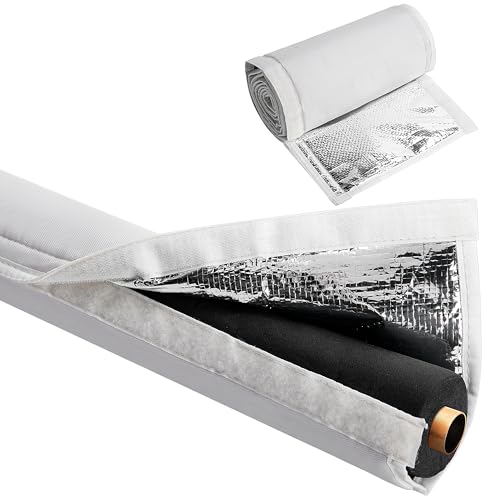
The Nkiy Quen sleeve provides five layers of protective insulation designed for outdoor HVAC piping. Its outer 600D Oxford fabric offers weather resistance, while the inner materials—pearl cotton and insulating foil—aid in temperature stability and moisture control. This option is ideal for outdoor line sets and long-term outdoor exposure. Best for homeowners in variable climates who need durable, weather-ready protection. A limitation is that it’s bulkier, meaning it may require slightly more space around the piping.
uxcell HVAC Copper Pipe Insulation Foam Tube (1/4″ / 1/2″ ID)

The uxcell foam tube uses expanded polyethylene (XPE) with inner E-P-E layers, offering good thermal performance and moisture resistance. It supports 1/4″ and 1/2″ ID piping with a 1.5-meter length. This option is best for versatile mini split configurations and quick on-site installations where flexibility and moisture resistance matter. It’s important to note that while long-term performance is solid, extreme outdoor UV exposure may require additional protection or shorter replacement intervals.
XFasten Foam Pipe Insulation Tape

XFasten offers a high-adhesion insulation tape designed for outdoor pipe insulation. It provides low thermal conductivity and strong resistance to weather, frost, and heat transfer. This option is best for wrapping irregular pipes or securing existing insulation where a tape-based solution is preferred for quick, tight fits. A notable limitation is that it may not replace a full sleeve in high-heat or long-run outdoor installations, where a thicker tube could be more durable.
Pipe Insulation Foam Tube 1/4 Inch

The Tsurpcao 1/4″ ID foam tubing is a 6-foot length, suitable for indoor and outdoor use. It’s described as fire-retardant and moisture resistant, with flexibility for bending and a relatively broad operating temperature range. It’s best for projects requiring flame-retardant insulation and robust cold/warm tolerance. The package may be shorter per unit length compared with others, so it’s important to match total length needs to avoid gaps in coverage.
uxcell HVAC Copper Pipe Insulation Foam Tube (1/4″ / 3/8″ ID)

The uxcell 1/4″ to 3/8″ ID foam tube features a dual inner diameter, enabling direct fit on common mini split copper lines. It emphasizes waterproof and moisture-proof performance with a double-layer structure. This makes it a solid choice for mixed indoor/outdoor line sets and humid environments. A limitation is that UV exposure should be managed with optional exterior protection if the lines are fully exposed for extended periods.
Buying Guide: How To Choose Mini Split Line Set Insulation
What size insulation fits my line set? Start by matching the inner diameter (ID) of the insulation to your pipe OD. Choose a sleeve or foam tube with a snug fit to minimize heat transfer and condensation.
Outdoor vs indoor use: Outdoor installations require UV and weather-resistant materials. Multi-layer sleeves and outer fabrics offer better protection against sun, rain, and temperature swings. Indoor options can prioritize flexibility and easy cutting.
Thermal performance versus ease of installation: Solid foam cores and thick walls provide better insulation but may be harder to fit in tight spaces. Tape-based solutions offer quick fixes but may not seal as completely as a full foam sleeve.
Durability and environment: In humid or coastal areas, moisture resistance matters. UV exposure requires materials designed to resist degradation. Consider corrosion protection for exposed copper lines when selecting insulation.
Installation considerations: Check if the product requires pre-cut sections, or if it’s a single-length sleeve that needs to be joined. Plan for potential wrap-around or bundling needs, especially on multi-pipe runs.
Safety and standards: Some products advertise fire-retardant properties; evaluate whether this aligns with your project requirements. Always follow local building codes and manufacturer guidelines for insulation use around plumbing and HVAC connectors.
Frequently Asked Questions
Q: Do I need insulation on both lines of a mini split line set? A: Yes, insulating both the supply and return lines helps reduce heat loss and condensation, improving efficiency and reducing moisture risk.
Q: Can I reuse insulation if I moved or modified the line set? A: It’s best to re-evaluate the fit and re-install with fresh insulation sections to ensure a proper seal and heat retention.
Q: How do I cut foam insulation to size? A: Use a sharp utility knife or scissors to cut cleanly, then press the ends together or join sections as needed. Keep ends tight to prevent gaps.
Q: Is UV exposure a concern for all foam insulations? A: It can be for some materials. If lines are outdoors for long periods, choose UV-rated sleeves or apply protective outer layers.
Q: Should I hire a professional for insulation of my outdoor line set? A: For complex runs or high-visibility setups, a professional can ensure correct fit, weatherproofing, and compliance with local codes.