Gas-powered garage heaters provide steady warmth even in uninsulated spaces. This guide highlights five top natural gas garage heaters, outlining what each model offers, from BTU output to venting options and installation considerations. Whether you’re warming a small workshop or a larger bay, these units are chosen for efficiency, durability, and suitability for garage environments in American homes and workplaces.
| Product | Brand | BTU | Vent Type | Approx. Coverage |
|---|---|---|---|---|
| Big Maxx MHU50NG | Mr. Heater | 50,000 | Powered exhaust (vertical or horizontal) | Up to 1,250 sq. ft. |
| Big Maxx MHU80NG | Mr. Heater | 80,000 | Category 1 vertical / Category 3 horizontal venting | Up to 2,000 sq. ft. |
| MHU125NG | Mr. Heater | 125,000 | Powered exhaust | Large garages and shops (space variable) |
| HD45AS0111 | Modine | 45,000 | Natural gas hot air heater for garage use | Medium garage spaces |
| MN200TBA-B | ProCom | 20,000 | Ventless (blue flame) with thermostat control | Smaller garages and offices |
Mr. Heater Big Maxx MHU50NG—50,000 BTU
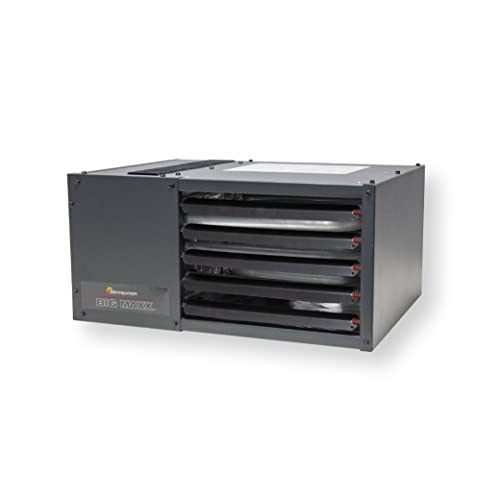
The Mr. Heater F260550 Big Maxx MHU50NG natural gas unit heater delivers 50,000 BTU per hour, designed to heat spaces up to about 1,250 square feet. It features powered exhaust, allowing vertical or horizontal venting to accommodate different garage layouts. The design includes easy outside access to the thermostat and gas connections, simplifying installation and maintenance. This unit is suitable for mid-size garages that require reliable, consistent warmth without frequent refueling.
Considerations include ensuring proper clearances, venting compatibility, and outdoor access routing. While a thermostat is accessible externally, verify your garage wiring and gas line requirements before purchase. This model balances robust output with straightforward installation for most residential garages.
Mr. Heater Big Maxx MHU80NG—80,000 BTU
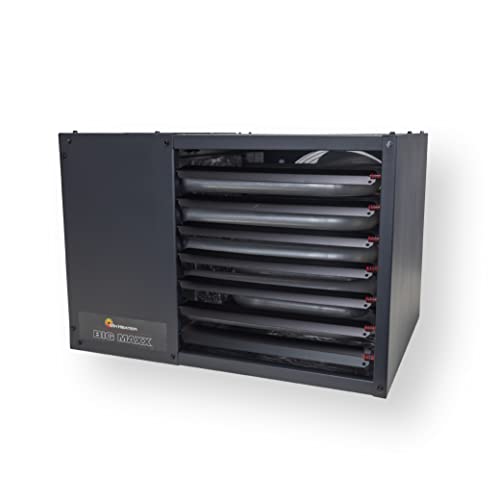
The MHU80NG model from Mr. Heater supplies 80,000 BTU and is designed for larger garages up to around 2,000 square feet depending on insulation and layout. It supports Category 1 vertical venting and Category 3 horizontal venting, providing flexible installation options. Included details in typical listings note that the unit ships with brackets and a conversion kit for propane, though thermostats and gas hoses may be sold separately. This heater emphasizes high output for demanding spaces without sacrificing efficiency.
Key considerations include ceiling height, ventilation strategy, and the need for adequate clearance around combustible materials. For long-term reliability, confirm that your electrical and gas supply meet the unit’s requirements and that you can access the thermostat externally for temperature control.
Mr. Heater MHU125NG—125,000 BTU
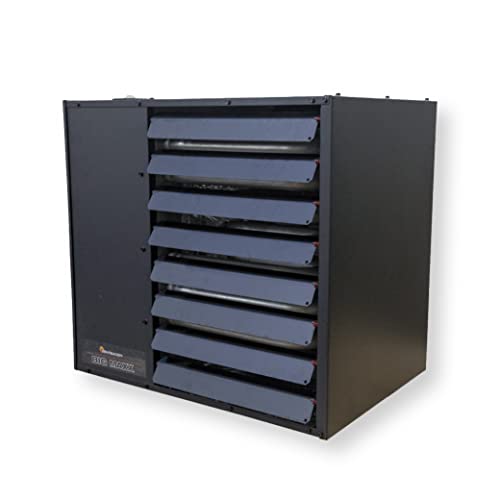
The MHU125NG from Mr. Heater offers a substantial 125,000 BTU output for very large garages or workshops. It uses powered exhaust to vent, enabling flexible placement with vertical or horizontal venting. This model is frequently listed with a note about the heater’s dimensions and venting options, designed for spaces that demand significant heat output in colder climates. If installed correctly, it can maintain comfortable temperatures in sizable structures during winter months.
Important installation factors include proper clearance, vent routing, and service access. Prospective buyers should plan for professional installation or thorough DIY preparation to ensure safe operation and efficient venting. Also verify compatibility with your existing gas line and power supply, since some installations require electrical supply and external thermostat connections.
Modine HD45AS0111 Natural Gas Hot Dawg—45,000 BTU
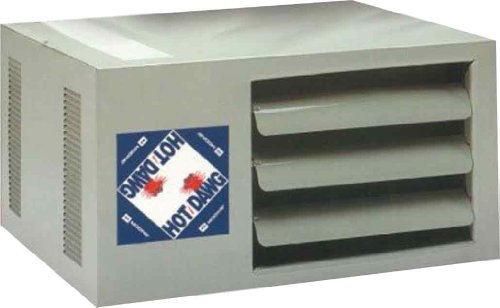
The Modine HD45AS0111 Hot Dawg unit delivers 45,000 BTU and is noted for quiet operation and broad residential, commercial, and industrial suitability. Its low-profile design helps integrate into garages with limited ceiling space, and it maintains a neutral gray appearance. The unit is designed to be efficient and durable, offering reliable heat in smaller-to-medium garage configurations while complying with typical safety standards for natural gas space heaters.
When evaluating this model, assess ceiling height, ventilation needs, and the presence of a suitable combustion air supply. A compact footprint can be advantageous in tight garages, but ensure the unit’s output aligns with the space’s heat loss characteristics and insulation level for optimal performance.
ProCom MN200TBA-B Ventless NG Blue Flame Heater—20,000 BTU

The ProCom MN200TBA-B provides 20,000 BTU with a ventless blue flame design, suitable for smaller garages or office spaces where a compact heater is desired. It includes a thermostat control with high/medium/low settings and can be wall-mounted or placed on the floor using included feet. The ventless operation simplifies installation, but it requires careful placement to ensure adequate combustion air and proper air quality in enclosed spaces.
Consider trade-offs: ventless systems are easier to install but rely on indoor air for combustion, so ensure good room ventilation and CO considerations. This model is best for smaller spaces or as a supplementary heat source rather than a primary heating solution for larger garages.
Buying Guide: Key Considerations For Natural Gas Garage Heaters
Heat Output And Space Size
Choose BTU output based on your garage square footage, insulation level, and climate. Larger spaces require higher BTUs or multiple units. For typical attached garages, sizes in the 40,000–125,000 BTU range cover a wide spectrum of needs. Consider real-world heat loss calculations rather than only wattage claims.
Ventilation Type And Installation Flexibility
Vented units (powered exhaust) offer flexible placement and safer venting in larger spaces. Ventless or blue-flame models simplify installation but depend on adequate fresh air and indoor air quality considerations. Ensure venting clearance, ceiling height, and nearby combustibles are accounted for during planning.
Thermostat And Control Features
External thermostats or built-in controls affect how easily you maintain comfortable temperatures. Look for adjustable setpoints, high/low limits, and compatibility with existing thermostat ecosystems. For smaller spaces, a thermostat with precise control helps minimize fuel use.
Durability And Build Quality
Garage environments can be dusty and damp. Favor units with corrosion-resistant components, robust housings, and solid warranties. Units designed for industrial or commercial settings often offer greater durability and longer service life in demanding garages.
Installation Clearance And Safety
Verify clearance requirements from walls, ceilings, and any stored materials. Follow manufacturer installation instructions for gas line connections, venting runs, and electrical supply if needed. Proper professional installation enhances safety and performance.
Maintenance And Serviceability
Regular inspection of gas lines, venting, ignition systems, and air intakes helps sustain efficiency. Choose models with accessible components and straightforward service procedures to minimize downtime and maintenance costs.
Cost Of Operation
Fuel efficiency and heater design influence ongoing costs. While higher BTU units can heat faster, ensure they’re not oversized for the space. In some cases, zoning multiple lower-output units provides better overall comfort and efficiency than a single oversized heater.