If you’re seeking a dependable natural gas heater to extend your growing season or keep a greenhouse comfortable, these models offer strong heating power, ventless or vented options, and practical controls. This guide highlights five top picks, tailored for small to large spaces, garages, and workshops. Whether you need compact infrared warmth or high-capacity forced-air heating, you’ll find clear comparisons to help you choose.
| Product | BTU | Heats Up To | Fuel | Best For |
|---|---|---|---|---|
| Mr. Heater 30,000 BTU Vent Free Blue Flame | 30,000 | ~1,000 sq ft | Natural Gas | Medium rooms, well-ventilated spaces |
| Mr. Heater 50,000 BTU Forced-Air | 50,000 | ~1,667 sq ft | Propane or Natural Gas | Garages, barns, large workshops |
| ProCom MN100TPA-B Infrared Plaque Heater | 10,000 | ~500 sq ft | Natural Gas | Offices, bedrooms, small living areas |
| ProCom MN100TBA-B Blue Flame Ventless | 10,000 | ~500 sq ft | Natural Gas | Office spaces, small rooms |
| Mr. Heater 80,000 BTU Forced-Air | 80,000 | ~2,667 sq ft | Propane or Natural Gas | Large garages and workshops |
Mr. Heater 30,000 BTU Vent Free Blue Flame Natural Gas Heater

Technical highlights: 30,000 BTU/hr, heats up to 1,000 sq ft, battery-operated electronic ignition. Best for medium rooms with good ventilation or spaces where a compact, vent-free solution is preferred. Choose this if you need steady, zone-specific warmth without ducting. Caution: vent-free units rely on indoor air for combustion; ensure adequate ventilation and carbon monoxide awareness. Suitable for homes with proper clearances as specified by the manufacturer.
Mr. Heater 50,000 BTU Forced-Air Unit Heater

Technical highlights: 50,000 BTUs, heats up to ~1,667 sq ft, compatible with standard 24-volt or new Wi‑Fi enabled thermostats (sold separately). Best for large garages, barns, and workshops where ducted or ceiling-mounted heat is desired. This model excels in rapid space heating and can support a bigger workspace. Limitation: thermostat integration requires compatible controls; ensure wiring compatibility before install.
ProCom MN100TPA-B Infrared Plaque Heater

Technical highlights: 10,000 BTU, infrared heat up to 500 sq ft, thermostat with High/Medium/Low settings. Best for offices, bedrooms, and living rooms where steady, quiet warmth is preferred. This unit offers a slim, modern profile with wall-mount or base feet. Limitation: infrared warmth is directional—position for even heat distribution in smaller spaces.
ProCom MN100TBA-B Ventless Blue Flame Heater

Technical highlights: 10,000 BTU, heats up to 500 sq ft, ventless blue flame with thermostat control. Best for compact spaces where straightforward, low-profile heating is needed. Choose this if you want a simple, stand-alone heater with adjustable thermostat. Caution: ventless operation relies on indoor air; ensure proper room ventilation and monitor oxygen levels in enclosed spaces.
Mr. Heater 80,000 BTU Forced-Air Unit Heater
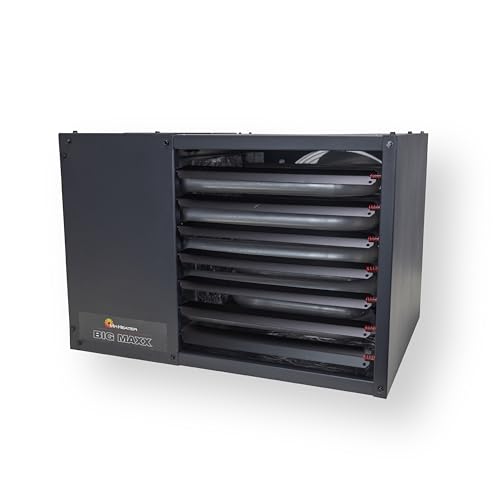
Technical highlights: 80,000 BTUs, heats up to ~2,667 sq ft, ceiling-mounted design. Best for large garages, barns, or industrial spaces requiring robust, zone-wide warmth. It supports ductless or existing ductwork setups for large-volume heating. Limitation: installation involves ceiling mounting and venting considerations; ensure structural support and clearance guidelines are met.
Buying Guide
What size BTU do I need?
Estimate the space in square feet and choose a model that provides sufficient BTUs for the volume and insulation quality. Larger spaces typically require higher BTUs and, for efficiency, better insulation and zoning.
Ventless vs vented—what’s the difference?
Ventless heaters burn natural gas without a vent, making them easy to install but relying on indoor air and oxygen levels. Vented models exhaust combustion byproducts outside, requiring proper venting but often offering safer long-term indoor air quality in poorly insulated spaces.
Should I pick infrared, blue flame, or forced air?
Infrared heaters provide direct warmth to objects and people, useful in small spaces. Blue flame/vent-free models heat the air more evenly in a room. Forced-air units move warm air quickly through the space, suitable for larger areas like garages or workshops.
What about controls and energy efficiency?
Look for models with programmable thermostats, compatibility with smart thermostats, and reliable ignition systems. Thermostatic control helps maintain consistent temperatures and can reduce fuel use in well-insulated spaces.
Installation considerations
Consider ceiling mounting for large units, wall mounting for space-saving design, or floor placement for portable needs. Verify clearances, gas line requirements, and electrical needs where applicable. Safety features like oxygen depletion sensors and automatic shutoffs are valuable in enclosed spaces.
Frequently Asked Questions
- Is ventless natural gas heating safe for greenhouses? Ventless heaters can be safe with proper ventilation and oxygen monitoring. Always follow manufacturer guidelines and local codes.
- Can I run these heaters on propane? Some models are dual-fuel, but many listed here are natural gas only. Check the product specs for fuel compatibility.
- Do these heaters need electricity? Infrared and some small models require electricity for ignition or controls; vented/ventless variations may rely on minimal power or piezo ignition.
- Which heater is best for a large greenhouse? For large spaces, high-BTU forced-air units (like the 80,000 BTU model) or multi-zone setups are more suitable, depending on insulation and space layout.
- What maintenance is required? Regular inspection of gas connections, ignition systems, and venting (for vented models) helps maintain safe operation.
- Are there safety features to look for? Oxygen depletion sensors, automatic shut-off, and sealed combustion systems improve safety in enclosed spaces.