Basements require reliable, space-saving heating that can stand up to cool, damp conditions. The following natural gas heaters are selected for basement-friendly performance, safety features, and versatile installation options. Each model supports ample warmth for closed, partially open, or finished basement spaces, with burn efficiency and safety systems designed for continuous operation. Read on to compare top options and find a heater that fits your basement size and ventilation setup.
| Product | BTU | Area Coverage | Brand |
|---|---|---|---|
| ProCom MN300TBA-B Ventless Blue Flame | 30,000 | Up to 1,400 sq. ft. | ProCom |
| Mr. Heater MHVFRD20NGT Vent Free Radiant | 30,000 | Up to 1,000 sq. ft. | Mr. Heater |
| Mr. Heater F260560 Big Maxx MHU80NG | 80,000 | Up to 2,000 sq. ft. | Mr. Heater |
| ProCom MN100TBA-B Ventless Blue Flame | 10,000 | Up to 500 sq. ft. | ProCom |
| ProCom MN200TBA-B Ventless Blue Flame | 20,000 | Up to 950 sq. ft. | ProCom |
ProCom MN300TBA-B Ventless Blue Flame Heater

The ProCom MN300TBA-B offers a compact blue flame design that delivers up to 30,000 BTU using natural gas and heats areas up to 1,400 square feet. It features a built-in thermostat with High/Medium/Low settings for flexible comfort, and a slim, modern profile designed to blend with various indoor spaces. It can be wall-mounted using included hardware or placed on the floor with base feet, making it adaptable for basement layouts where floor space is limited.
Mr. Heater Vent Free Radiant 30,000 BTU (MHVFRD20NGT)

This vent-free unit from Mr. Heater delivers 30,000 BTU with infrared technology that warms occupants directly and efficiently, covering spaces up to 1,000 square feet. Its radiant heat mirrors sunlight, providing quick comfort in basements. A safety feature includes automatic low-oxygen shut-off to prevent unsafe oxygen depletion. Suitable for a basement where quick warmth and localized comfort are priorities, whether used as a primary heat source or supplemental warmth.
Mr. Heater F260560 Big Maxx MHU80NG
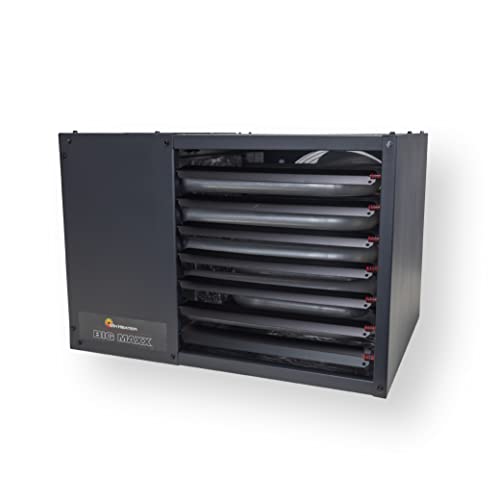
The 80,000 BTU Mr. Heater Big Maxx is designed for larger basement spaces and can heat areas around 2,000 square feet. It supports both vertical and horizontal venting, depending on installation needs, and includes thermostat access. It is a robust option for unfinished basements or open-concept lower levels requiring significant warmth. Clearance requirements and venting configuration should be planned according to installation space and local codes.
ProCom MN100TBA-B Ventless Blue Flame Heater

The MN100TBA-B provides 10,000 BTU, heating up to 500 square feet with a compact footprint suitable for small basements or secondary living spaces. The thermostat offers High/Medium/Low settings for controlled heat output, and the unit can be wall-mounted or used with base feet. This model is a practical option where space and energy efficiency are essential on a budget.
ProCom MN200TBA-B Ventless Blue Flame

The ProCom MN200TBA-B delivers 20,000 BTU and heats spaces up to 950 square feet. It combines a slim profile with a blue flame design and includes adjustable thermostat control. Wall mounting or floor placement with base feet is supported, offering flexible installation for basements needing mid-range heat output and compact dimensions.
Buying Guide: Key Considerations For Basements
- Heat output and space size: Calculate your basement’s square footage and choose a unit with sufficient BTU (noting that basements often require higher output in colder climates). For larger, open areas, units in the 60,000–80,000 BTU range may be appropriate, while smaller or partitioned basements can be served by 10,000–30,000 BTU units.
- Ventilation and installation: Vent-free models are common in basements when proper ventilation exists. If venting is required, ensure you follow local codes and have a compliant venting plan. Consider whether wall mounting or freestanding installation better suits your layout and furniture placement.
- Safety features: Look for oxygen depletion sensors, automatic shut-off, and child-safety considerations. Vent-free units should be installed with clearances and detectors as recommended by the manufacturer and code requirements.
- Thermostat control: Built-in thermostats with High/Medium/Low settings help maintain comfortable basements without overheating. Some models offer remote or wall thermostat compatibility for centralized climate control.
- Energy efficiency and running costs: Compare efficiency ratings and typical operating costs. While natural gas is often economical, check for features like automatic shut-off and adjustable heat to minimize waste.
- Maintenance and durability: Choose units with robust materials and straightforward maintenance. Accessories like mounting hardware, conversion kits, and service accessibility can influence long-term performance.
- Vent-free vs. vented pros and cons: Vent-free systems provide immediate warmth with fewer installation constraints, but require careful room-to-ventilation balance. Vented units may offer more controlled emissions and installation flexibility in certain basements.
- Installation clearance: Ensure the chosen model meets clearance requirements from walls, ceilings, and combustibles. Professional installation may be advisable for larger BTU units or complex venting setups.