Answering your search for reliable natural gas heating for a garage or workshop, this guide highlights five strong options and explains who each is best for. The top picks cover ceiling-mounted units, vented and vent-free designs, and models suitable for larger spaces or tight installations. Use the quick reference table to compare key details at a glance.
| Product | Brand | BTU | Best For |
|---|---|---|---|
| Mr. Heater 50,000 BTU | Mr. Heater | 50,000 | Medium garages up to about 1,667 sq ft; setup with standard thermostats |
| Mr. Heater 80,000 BTU | Mr. Heater | 80,000 | Larger garages or barns up to ~2,667 sq ft |
| Mr. Heater 30,000 BTU Vent Free | Mr. Heater | 30,000 | Small to mid-size spaces; battery ignition |
| Mr. Heater 125,000 BTU | Mr. Heater | 125,000 | Very large spaces or extreme cold conditions |
| Comfort Glow 17,000 BTU Direct Vent | Comfort Glow | 17,000 | Smaller spaces or wall-mounted needs |
Mr. Heater 50,000 BTU Forced-Air Unit Heater

Best for medium garages and workshops. This ceiling-mounted unit delivers up to 50,000 BTU, heating up to about 1,667 sq ft. It can operate with standard 24-volt thermostats or newer Wi-Fi enabled thermostats (sold separately), making it flexible for existing systems. The design helps keep the floor clear, ideal for users who want ceiling-mounted warmth without occupying wall space.
Who it’s for: DIYers and homeowners with mid-size spaces needing consistent warmth and easy thermostat compatibility. Why selected: strong balance of capacity and compatibility, suitable for typical American garages.
Caution: Ceiling installation may require a suitable mounting framework and clearances; verify fuel type compatibility for propane or natural gas in your system.
Mr. Heater 80,000 BTU Forced-Air Unit Heater
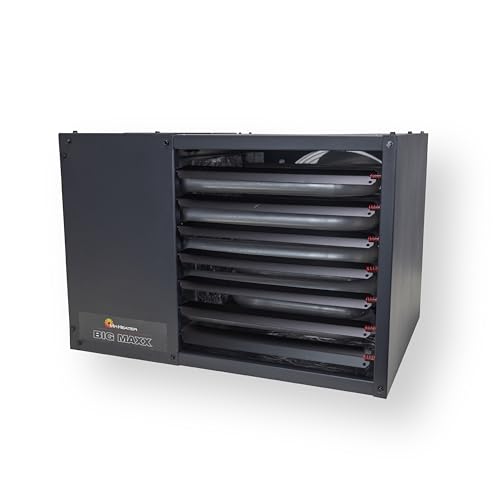
Best for larger garages and barns. This ceiling-mounted unit delivers 80,000 BTU, heating up to about 2,667 sq ft. It’s designed for robust spaces and may vary in color between grey and tan. It pairs well with larger or taller spaces requiring strong, centralized warmth.
Who it’s for: Homeowners with expansive workspace needs or multi-vehicle garages. Why selected: higher output to cover more square footage efficiently.
Caution: Color may vary between installations; confirm mounting and clearance requirements before purchase.
Mr. Heater 30,000 BTU Vent Free Blue Flame Natural Gas Heater

Best for smaller to medium spaces that require a vent-free installation. It emits 30,000 BTU per hour and heats up to 1,000 sq ft. Features include a battery-operated electronic ignition (battery included), offering convenience where electrical access is present.
Who it’s for: Users needing a vent-free solution for compact garages or workshops. Why selected: compact design and reliable ignition for quick warmth.
Caution: Vent-free heaters can impact indoor air quality in tightly sealed spaces; ensure proper ventilation and use as directed.
Mr. Heater 125,000 BTU Forced-Air Unit Heater
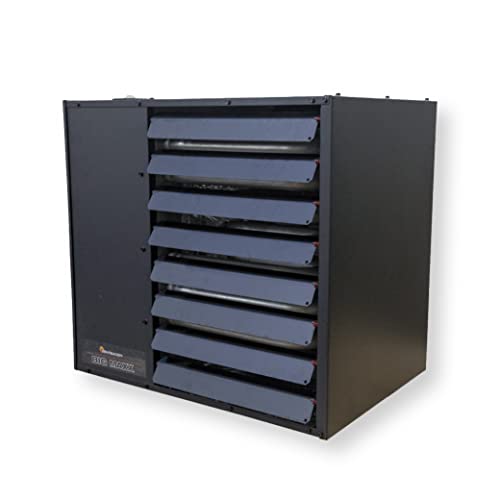
Best for very large spaces or extreme cold regions. This high-output unit offers 125,000 BTU with electronic ignition, powered exhaust, and a liquid propane conversion included. It’s designed to deliver substantial warmth to large shops or expansive garages.
Who it’s for: Commercial-scale garages or workshops requiring serious heating power. Why selected: highest capacity among Mr. Heater options in this list.
Caution: Higher output units may require more robust venting and fuel supply considerations; ensure proper installation clearances.
Comfort Glow 17,000 BTU Direct Vent Natural Gas Wall Heater

Best for smaller spaces or where wall installation is preferred. This 17,000 BTU direct vent heater heats up to 500 sq ft with a thermostatic control. It includes a sealed burn system, electronic ignition, safety pilot, and an integrated regulator for gas flow control.
Who it’s for: Homeowners who want a compact wall-mounted solution with built-in safety features. Why selected: efficient heat in a space-efficient form factor.
Caution: Venting and clearances are essential for safe operation; ensure the wall space supports direct vent routing.
Buying Guide
What size space do you need to heat?
Measure square footage and consider ceiling height. Larger spaces require higher BTUs or multiple heaters for even distribution. For typical garages, 30,000–80,000 BTU units cover most needs; for very large spaces, consider 125,000 BTU units or a combination strategy.
Ventilation and vent type
Vent-free models are easier to install in smaller spaces but may affect indoor air quality. Direct vent models use outside air and are better for well-sealed garages. Ventilation requirements vary by model and local codes.
Fuel type and compatibility
All listed units use natural gas or propane. Confirm that your supply matches the unit’s fuel type and that conversion options (if any) are appropriate for your system.
Installation considerations
Ceiling-mounted units save floor space but require sturdy mounting and proper clearances. Wall-mounted direct vent models are compact for small spaces. Verify access to power, gas lines, and venting routes before purchase.
Thermostat and control options
Many models support standard 24-volt thermostats or newer Wi-Fi enabled thermostats. If smart control is important, verify compatibility prior to purchase.
Safety features to expect
Look for electronic ignition, safety pilots, and regulator protections. For vent-free models, ensure adequate ventilation and carbon monoxide considerations per local codes.
FAQ
- What size garage heater do I need for a 2-car garage? A 50,000–80,000 BTU unit often covers a 400–800 sq ft space, depending on climate and insulation. For larger spaces, consider higher BTU options or multiple units.
- Is vent-free heat safe for a garage? Vent-free heaters can be safe when properly installed and vented as required by the manufacturer and local codes. Ensure adequate ventilation to avoid moisture buildup and CO concerns.
- Can I use a natural gas heater in a detached garage? Yes, if you have a suitable natural gas line to the structure and comply with local codes and venting requirements.
- Do these heaters require professional installation? For ceiling-mounted and wall-mounted units, installation typically requires professional mounting, venting, and connection to gas and electrical supply to ensure safety and code compliance.
- Will a high-capacity heater save energy? Higher BTU output provides quick heating of large spaces but may consume more fuel. Use zoning, thermostats, and proper insulation to optimize efficiency.
- Are vented and vent-free options interchangeable? Not exactly. Vented heaters expel combustion byproducts outside, while vent-free heaters release byproducts into the space. Choose based on space, ventilation, and safety considerations.