When selecting a natural gas leak detector, look for devices that quickly sense common fuels like methane, propane, and butane, alert you with audible and visual signals, and are easy to use in tight spaces. This guide highlights five reliable options and explains who each is best for. Ideal buyers include homeowners with gas appliances, RV enthusiasts, and anyone needing portable, fast-detecting tools for basements, kitchens, or vehicles.
Summary Table of Chosen Products
| Product | Best For | Key Benefit | Detected Gases |
|---|---|---|---|
| PT520A Natural Gas Detector | Homeowners & RV users | 17-inch gooseneck for hard-to-reach spots | Methane, Propane, Natural Gas, LPG, Butane |
| PT199 Natural Gas Detector | Portable quick-sniffers | Fast 0.5s alarms | Natural gas, methane, propane, butane |
| PT177 Gas Leak Detector | Compact, pocket-ready use | Pocket-sized with clip | Methane, propane, butane, natural gas |
| KLEIN TOOLS ET120 | Professional-type detection | Adjustable sensitivity & wide range | Gas concentrations 50–10,000 ppm |
| PT210S Gas Leak Detector | Portable with clear readings | 4-inch probe for tight spots | Propane, methane, natural gas |
PT520A Natural Gas Detector With 17-Inch Gooseneck

The TOPTES PT520A is a long-reach gas detector designed to locate leaks in tight spaces. It detects methane, propane, natural gas, LPG, and butane, making it versatile for indoor and outdoor use. Its 17-inch gooseneck helps reach behind appliances, under sinks, and around pipelines. It responds within 0.5 seconds with seven colored bars and a 75 dB alarm that intensifies as gas concentration grows. Best for homeowners who need to probe behind appliances or in basements, and for RV setups where access is restricted. A drawback is that it requires manual positioning for accuracy in complex layouts. Suitable for quick spot checks and source locating.
Who it’s best for: Homeowners and RV users who need a long probe to reach tight areas and fast visual-audible alerts.
Why selected: Combines a long reach with rapid response and a broad gas detection range, aiding faster source localization.
Note: Effective in detecting leaks in methanous and propane-rich environments; keep away from dust and moisture to preserve sensor accuracy.
Home Natural Gas Leak Detector And CO

This detector provides natural gas sensing with a durable 10-year seal on the backup battery and offers audible and visual alerts for quick hazard recognition. It’s designed for steady wall outlet mounting, enabling continuous monitoring without frequent replacement. It’s a straightforward option for households seeking constant, passive monitoring rather than frequent handheld testing. Limitations include ongoing power dependence and potential nuisance alarms if located near cooking appliances or ventilation systems.
Who it’s best for: Households wanting long-term, continuous monitoring with clear alerts without daily manual operation.
Why selected: Simple plug-in setup and a proactive alert system help maintain safety with minimal effort.
Consideration: Ensure proper placement away from direct heat sources and airflow that could affect sensitivity.
PT199 Natural Gas Leak Detector With Alarm
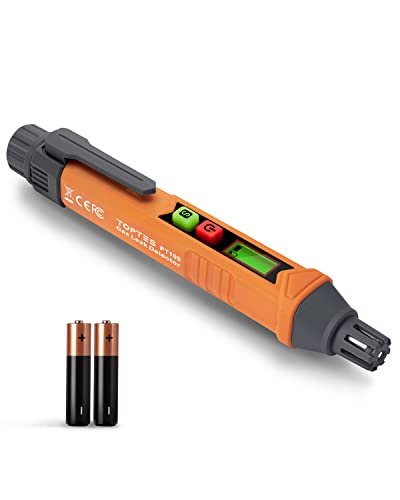
The PT199 is a portable, pocket-sized gas detector ideal for quick checks around the home or on the road. It detects methane, propane, butane, LPG, and natural gas, with visual and audible alarms that begin within 0.5 seconds of detection. It runs on included batteries and has a low-battery indicator with auto-off after five minutes of inactivity. Best for RV travelers and DIYers who want a compact tool for immediate leak pinpointing in multiple spaces. A limitation is the shorter detection range compared with long-probe models.
Who it’s best for: Individuals needing a compact, fast-sniffing detector for on-the-go checks.
Why selected: Ultra-portable with rapid alarms, making it ideal for quick spot checks and travel use.
PT177 Gas Leak Detector With Visual & Audible Alarms

The PT177 is a pocket-sized detector designed for quick pinpointing of leaks in a non-technical format. It detects a range of gases including methane, propane, butane, LPG, and natural gas. It requires a 30-second warm-up in a clean environment and auto-calibrates after startup. Five LEDs and a 75 dB alarm intensify with gas concentration. The compact size makes it convenient for RV users and homeowners who want a discreet tool for rapid checks. A potential limitation is that the device needs a stable, clean environment for accurate warm-up and calibration.
Who it’s best for: RV owners and DIYers who need a small, ready-to-carry detector for occasional checks.
Why selected: Pocket-friendly with rapid response and clear indicators for escalating danger levels.
Kidde CO + Explosive Gas Alarm
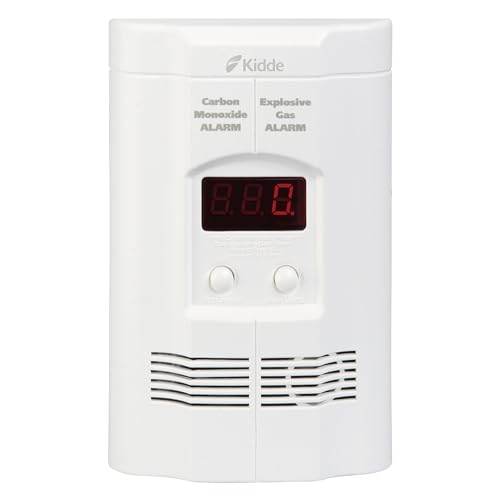
This device combines carbon monoxide detection with explosive gas warnings. It plugs into a standard outlet and includes a 9-volt battery backup, ensuring monitoring during power outages. A digital LED display shows CO levels or indicates “GAS” when an explosive gas is present. It is suitable for integrated home safety, especially where CO and gas leak risks coexist. A limitation is reliance on AC power with battery backup, so consider placement for uninterrupted monitoring during heavy outages.
Who it’s best for: Homes needing combined CO and gas leak monitoring with a clear display and backup power.
Why selected: Combines essential gas safety with CO monitoring in a familiar plug-in format.
Buying Guide: How To Choose The Right Natural Gas Leak Detector
What to consider when buying
- Detection range and accuracy: Look for detectors with fast response (0.5 seconds or less) and clear ranges (ppm or %LEL).
- Probe length and accessibility: Longer probes help reach hard-to-access areas; pocket-sized units suit quick checks.
- Alarm types: Prioritize devices with both audible (dB level) and visual indicators (LEDs or displays).
- Power source: Battery-powered units offer portability, while plug-in models enable continuous monitoring with battery backups.
- Gas compatibility: Ensure the detector covers methane, propane, butane, and natural gas, as applicable to your environment.
- Calibration and warm-up: Some models require warm-up; others auto-calibrate after startup. Consider maintenance needs.
Best use-case scenarios
- Home safety: A plug-in detector with CO and gas alarms provides ongoing protection for kitchens, basements, and utility rooms.
- RV and travel: Portable detectors with quick response are ideal for mobile setups and locating leaks in compact spaces.
- Professional or DIY projects: Long-reach probes and adjustable sensitivity help locate leaks around appliances, fireplaces, and outdoor lines.
Placement tips
- Avoid direct heat sources and vents that could skew readings.
- Place detectors near gas appliances, storage areas for fuels, and potential leak points like basements or garages.
- Test alarms regularly and replace batteries as needed to maintain reliability.
Maintenance and compliance
- Follow manufacturer guidelines for calibration and replacement cycles to ensure accurate detection.
- Keep sensors clean and free of dust or moisture that can impair sensor function.
- Store spare batteries and perform routine tests after any relocation or environmental change.
FAQ
- What is a typical response time for a gas detector? Most reliable detectors respond within 0.5 seconds of reaching a detectable gas concentration.
- Should I use multiple detectors in a home? Yes, placing detectors near kitchens, basements, garages, and RV storage areas can improve coverage and reduce blind spots.
- What gases do these detectors sense? Common gases include methane, propane, butane, LPG, and natural gas; some models also monitor CO and other combustibles.
- Can these detectors be used outdoors? Some models are designed for indoor use; check the product specs for outdoor suitability and weather resistance.
- How do I maintain the detectors? Regularly test alarms, replace batteries as needed, and calibrate or reset per the manufacturer’s instructions.
- Are there detectors recommended for RV use? Compact, portable units with fast response are well-suited for RVs, where space and accessibility are limited.