Discover the latest gas-powered heaters that combine reliability, efficiency, and easy installation. This guide highlights five new options designed to heat spaces ranging from compact rooms to larger living areas. Each model features distinct venting, BTU output, and control options to fit different homes and climates. Use the buying guide to compare critical factors like venting needs, fuel type, and installation considerations before choosing the right heater for your space.
| Product | Brand | BTU | Type |
|---|---|---|---|
| Mr. Heater Big Maxx MHU80NG | Mr. Heater | 80,000 | Unit Heater |
| Mr. Heater Big Maxx MHU50NG | Mr. Heater | 50,000 | Unit Heater |
| ProCom MN100TBA-B | ProCom | 10,000 | Ventless Blue Flame |
| 9,000 BTU Portable Buddy Radiant Heater | Mr. Heater | 9,000 | Portable Radiant |
| Ashley Hearth DVAG17N | Ashley Hearth | 17,000 | Direct Vent |
Mr. Heater F260560 Big Maxx MHU80NG Natural Gas Unit Heater
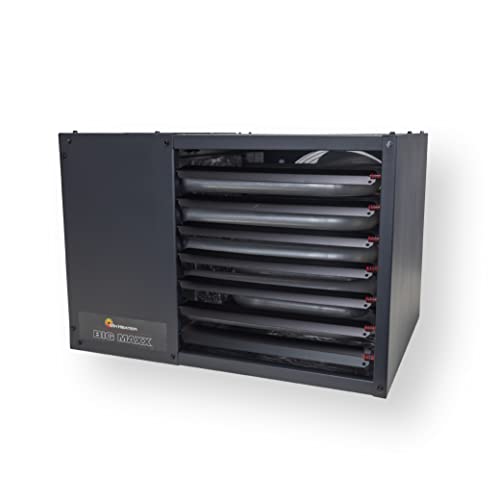
The Big Maxx MHU80NG delivers 80,000 BTU to heat large spaces efficiently. Designed for natural gas, it supports vertical or horizontal venting and includes mounting brackets for straightforward installation. It requires a 120 V power supply and runs with a minimal 2.3 amps draw. The unit is sized at 29.33 inches long, 15.50 inches wide, and 26.37 inches high, making it suitable for garages or workshops with adequate clearances. Note that thermostat, hose, and regulator are not included, so plan for compatible controls and gas fittings separately. This model is ideal for spaces up to about 2,000 square feet depending on insulation and climate.
Mr. Heater F260550 Big Maxx MHU50NG Natural Gas Unit Heater
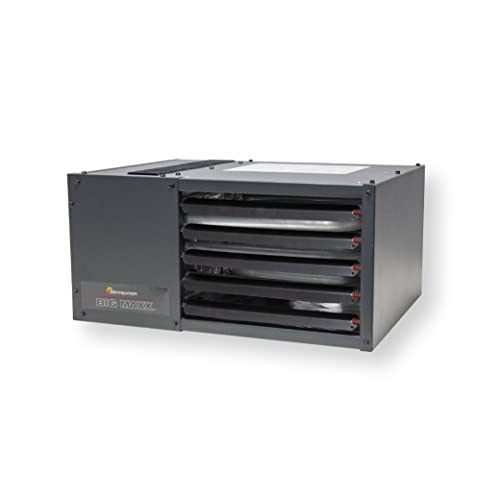
The 50,000 BTU Big Maxx MHU50NG is a compact unit heater designed to warm mid-size spaces. It supports vertical and horizontal venting and is built for natural gas operation. The heater focuses on efficient warm air distribution and is suited for space-heating applications such as garages, workshops, or sunrooms where steady heat is needed. Installation requires appropriate clearances and connections, with thermostat and gas components included separately. This model provides a balance of output and footprint for more modest spaces.
ProCom MN100TBA-B Ventless Blue Flame Heater

This ventless blue flame space heater provides up to 10,000 BTU and is designed for use with natural gas. It includes thermostat control with High/Medium/Low settings for adjustable warmth, and can be mounted on a wall or placed on the floor using base feet. The compact design makes it suitable for bedrooms, offices, or living rooms where venting options are limited. Safety and installation should follow manufacturer guidelines, including adequate ventilation in living spaces.
9,000 BTU Portable Buddy Radiant Heater

This portable radiant heater emits 4,000 or 9,000 BTU of heat, suitable for indoor and outdoor use. It heats up to approximately 225 square feet and is designed for flexible placement in rooms, garages, or outdoor seating areas. The device emphasizes portability with a simple setup, making it a practical supplemental heat source for seasonal use. Users should ensure proper clearance from flammable materials and follow all safety instructions for operation and venting where applicable.
Ashley Hearth DVAG17N Direct Vent Natural Gas Heater

The DVAG17N is a 17,000 BTU direct-vent natural gas heater designed for bedrooms and living spaces. Its sealed burn system minimizes indoor air leakage while delivering steady warmth. The direct-vent setup typically uses outside air for combustion and venting, which can help maintain indoor air quality. This model is suited for smaller-to-medium rooms and emphasizes efficient heat output with compact form factors and a cream finish that blends with various decors.
Buying Guide: Key Purchase Considerations
- Space and BTU needs: Larger spaces require higher BTU output (e.g., 60,000–80,000 BTU) while smaller rooms can be adequately heated with 10,000–25,000 BTU units. Always calculate room size, insulation, and climate to select appropriate heat output.
- Ventilation type: Vented vs ventless units impact installation and indoor air quality. Ventless models are easier to install but require proper room ventilation and adherence to safety guidelines.
- Fuel flexibility: Natural gas vs propane compatibility offers convenience if you have an existing gas line or portable fuel sources. Some models support dual fuel or require conversion kits.
- Venting orientation: Vertical versus horizontal venting affects where you can place the heater. Ensure clearance from combustibles and safe routing for exhaust.
- Control and efficiency: Look for thermostatic control, energy efficiency ratings (UEF or similar), and compatibility with smart home controls if desired. Quick Flush and other maintenance features can simplify future servicing.
- Installation considerations: Some models come with mounting brackets or require professional installation, gas line routing, and electrical supply checks. Venting components and regulators may be sold separately for certain units.
- Safety features: Overheat protection, tip-over shutoff, and appropriate clearance radiation distances are important for homes with children or pets. Always follow the manufacturer’s safety guidelines.
- Maintenance and serviceability: Availability of replacement parts, ease of cleaning, and common failure points influence long-term reliability and cost of ownership.
When selecting a new gas heater, balance heat output with space constraints, venting needs, and installation practicality. Consider whether you prefer a more permanent unit heater for garages and workshops or a portable option for flexible warmth in living areas. Always follow local codes and, if necessary, consult a licensed professional for installation and venting assessment.