During power outages, outdoor adventures, or remote spaces, non-electric heaters provide reliable warmth without relying on electrical power. This guide highlights five robust no-electric options, comparing heat output, fuel type, safety features, and portability to help you choose the right model for garages, workshops, camping, and emergency use.
| Product | Fuel Type | Approximate Heat Output | Best For |
|---|---|---|---|
| Windpost Indoor & Outdoor Kerosene Heater | Kerosene | Up to 23,500 BTU | Emergency heating, camping, outdoor spaces |
| Sengoku HeatMate Kerosene Heater | Kerosene | Up to 23,500 BTU | Large rooms, garages, basements |
| Heat Hog 9,000 BTU Portable Propane Radiant Heater | Propane | 9,000 BTU | Small-to-medium spaces, garages, tents |
| Heat Hog 18,000 BTU Portable Propane Radiant Heater | Propane | 18,000 BTU | Garage heat, outdoor gatherings, larger areas |
| Mr. Heater F232017 MH9BXRV Buddy | Propane | 4,000–9,000 BTU | RVs, small rooms, portable warmth |
Windpost Indoor & Outdoor Kerosene Heater

Windpost’s kerosene heater operates without electricity, using a compact, portable design ideal for emergencies, camping, or unpowered spaces. It delivers up to 23,500 BTU, translating to rapid warmth for rooms up to several hundred square feet depending on insulation. Its three-core system offers extended fuel life and consistent heat. Safety features include a protective grill and sturdy construction with a carrying handle, making it easy to relocate during outages or outdoor sessions.
Sengoku HeatMate Kerosene Heater
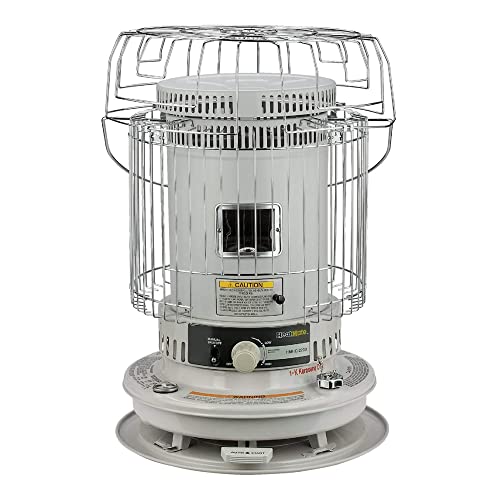
The Sengoku HeatMate kerosene heater provides substantial heating capacity with up to 23,500 BTU, designed for both indoor and outdoor use. It offers robust warmth for large spaces such as garages, basements, or outdoor gatherings. Aimed at reliability, this model emphasizes safety with automatic shut-off and protective grills. Fuel efficiency and extended run times suit extended outages or cold-weather projects where electricity is unavailable.
Heat Hog 9,000 BTU Portable Propane Heater

This compact propane heater delivers 9,000 BTU of radiant heat, suitable for smaller spaces like garages, tents, or workshops. It operates without electricity, offering tiltable heat dispersion and a wider heating area via curved plaque technology. The unit’s portability, quick heat, and simple fuel source make it a practical option for on-demand warmth during outages or outdoor activities.
Heat Hog 18,000 BTU Portable Propane Heater

For larger spaces, the 18,000 BTU propane heater from Heat Hog provides significant radiant warmth without relying on electricity. Its tiltable design directs heat where needed and features curved plaque technology to broaden the heating area. Best suited for larger garages, workshops, or outdoor setups where power is unavailable but sustained heat is required for extended periods.
Mr. Heater F232017 MH9BXRV Buddy
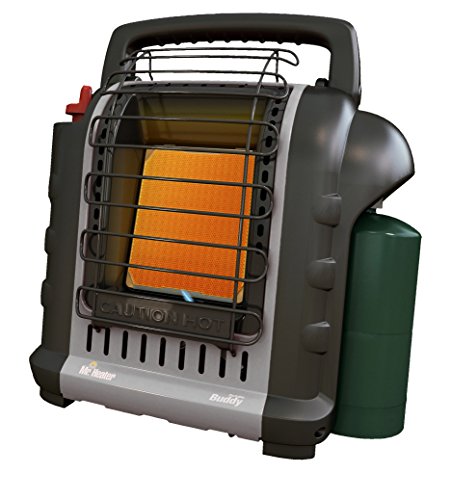
The Mr. Heater Buddy is a versatile, indoor-safe portable radiant heater with a 4,000–9,000 BTU range. It is designed for RVs, small spaces, or as a portable heat source in outages. Features include auto shut-off if tipped or if oxygen is low, low-emission clean burning, and suitability for higher altitude operation. Its compact size makes it easy to transport and use in diverse scenarios where electrical power is not accessible.
Buying Guide: No-Electric Heater Considerations
- Fuel type and availability: Kerosene and propane are common for no-electric heating. Ensure fuel is readily available where you’ll use the heater and store fuel safely away from living areas.
- Heat output and space size: BTU ratings indicate heating capacity. For smaller rooms, 4,000–9,000 BTU may suffice; for larger spaces, 18,000–23,500 BTU models are more appropriate.
- Portability and footprint: Consider whether you need a compact unit for camping or a larger heater for a garage. Look for built-in handles, tiltable heads, and stable bases.
- Safety features: Tip-over shut-off, automatic oxygen depletion sensors, protective grills, and flame guards reduce risk in busy or child-pied environments.
- Ventilation and emissions: Kerosene and propane burn with different byproducts. Ensure adequate ventilation in enclosed spaces and select models with smokeless or low-emission designs when possible.
- Fuel storage and runtime: Check tank size, fuel consumption, and run time per fill. Longer runtimes are beneficial during outages but require safe storage practices.
- Regulatory and usage guidelines: Some heaters are approved for indoor use while others are intended for outdoor or semi-enclosed spaces. Follow manufacturer recommendations for placement and operation.
- Durability and warranty: Look for solid build quality, corrosion resistance, and warranty coverage to ensure long-term performance in varying environments.