Finding the right oil-filled baseboard heater that operates on 120 volts can deliver steady, aisle-free warmth for bedrooms, living rooms, and home offices. This guide highlights reliable 120V options that pair the efficient radiant heat of oil-filled elements with the simple, wall-mounted baseboard format. Below, five well-reviewed models are explored, with a practical buying guide to help you compare capacity, safety features, and installation considerations for your space.
| Product | Brand | Wattage / Length | Voltage | Notes |
|---|---|---|---|---|
| 4K1210BW K Series Baseboard Heater | KING | 1000W / 4 ft | 120V | Hard-wired; Aluminum Ribbon Fin Element; Full Length Safety Cutout |
| 6K1215BW 1500-Watt Baseboard Heater | KING | 1500W / 6 ft | 120V | Hard-wired; Aluminum Ribbon Fin Element; Full Length Safety Cutout |
| 3K1207BW 750-Watt Baseboard Heater | KING | 750W / 3 ft | 120V | Hard-wired; Aluminum Ribbon Fin Element; Full Length Safety Cutout |
| 72-Inch Cadet F Series Electric Baseboard Heater | Cadet | 1500W / 72 in | 120V | Transmits heat continuously; Made in China |
| 36-Inch Cadet F Series Electric Baseboard Heater | Cadet | 750W / 36 in | 120V | Requires thermostat; All metal, powder-coated finish |
Introduction note: The following sections profile five 120-volt oil-filled or oil-based baseboard heaters that fit typical home electrical setups and deliver steady warmth with a simple installation approach. Each product uses a sealed oil-filled system to provide even heat, with enclosure safety features designed for residential use. The selections emphasize reliability, safety, and compatibility with standard 120V circuits in American homes.
KING 4K1210BW K Series Baseboard Heater

The KING 4K1210BW is a 4-foot, 1000-watt baseboard heater designed for 120-volt electrical systems. It is not a plug-in model but is meant to be hard-wired, providing a stable and consistent heat output suitable for medium-sized rooms. The unit uses an aluminum ribbon fin element that improves heat transfer efficiency, helping to distribute warmth along the length of the heater. A full-length safety cutout adds a layer of protection to prevent overheating, aligning with common safety expectations for baseboard heating installations.
KING 6K1215BW 1500-Watt Baseboard Heater
The KING 6K1215BW is a 6-foot baseboard heater rated at 1500 watts for 120-volt operation. This model targets larger spaces and features a hard-wired setup, which is common for longer baseboard installations. Its aluminum ribbon fin element supports efficient heat dissipation along the full length of the unit, while a full-length safety cutout helps guard against overheating. Installation typically requires a dedicated circuit or appropriate electrical planning for higher heat output zones in a room.
KING 3K1207BW 750-Watt Baseboard Heater

The 3K1207BW is a compact 3-foot baseboard heater rated at 750 watts for 120V. It follows the same non-plug-in, hard-wired design with an aluminum ribbon fin element. A full-length safety cutout supports safe operation in smaller rooms or zones where baseboard heating is preferred for quiet, steady warmth. This option suits spaces like bedrooms or home offices where wall-mounted heating along a shorter wall is desirable.
Cadet F Series 36-Inch Electric Baseboard Heater
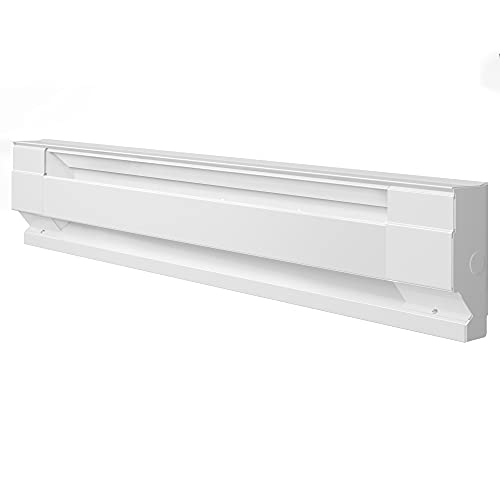
The Cadet F Series 36″ baseboard heater offers 750 watts of heat at 120V and is designed to accommodate thermostat control as part of the system. The unit is constructed with 25-gauge steel, a 20-gauge junction box with ground, and a powder-coated finish for durability. It is positioned as an all-metal, robust solution that fits standard baseboard configurations while providing reliable heat for mid-sized rooms when paired with an appropriate thermostat setup.
PELONIS Oil Filled Radiator Heater

While not a traditional baseboard heater, the PELONIS oil-filled radiator provides a high-output 1500W solution suitable for larger spaces. This model emphasizes whole-room warmth with multiple heat settings and a timer. Its oil-filled design helps sustain heat post-usage, and the unit’s thermal protection and timer features support energy-conscious operation. For rooms that require flexible positioning, an oil-filled radiator can complement baseboard heating by targeting a zone or larger open areas.
Dreo Oil Filled Radiator Heater

The Dreo oil-filled radiator uses eight fins and an efficient 1500W output to deliver broad, even heat across larger rooms. It emphasizes safety with multiple protections, including tip-over and overheating safeguards, and a digital control interface with remote for convenience. The design aims to maximize heat distribution while maintaining a compact footprint, making it a versatile option for living spaces or home offices where wall-mounted options are less convenient.
Buying Guide: Key Purchase Considerations
- Heat output vs. room size: Baseboard heaters are linear and can spread heat gradually along a wall. For larger rooms, select higher wattage (e.g., 1500W) or multiple units, considering insulation and ceiling height for accurate capacity planning.
- Hard-wired vs. plug-in: Most baseboard models in this list are designed for hard-wired installation, offering steady operation and fewer tripping hazards on outlets. If you require a plug-in option, verify model compatibility and outlet support.
- Installation considerations: Long baseboard heaters require careful placement along walls with appropriate clearances. Consult an electrician for circuit requirements, especially for 1500W units that may need dedicated circuits.
- Safety features: Look for full-length safety cutouts, automatic overheat protection, and durable finishes. Oil-filled systems tend to retain heat longer, but ensure proper clearance from furniture and drapes.
- Thermostatic control: Thermostats (built-in or external) help maintain consistent warmth and energy efficiency. For range-based control, consider models with programmable schedules or smart connections.
- Maintenance and durability: Oil-filled radiators and baseboards are generally low-maintenance. Confirm the finish and corrosion resistance, especially in humid spaces like bathrooms or laundry rooms where splashes may occur near baseboard installations.
- Energy efficiency: ECO or economy modes, as well as programmable timers, can reduce energy use. Evaluate how each unit’s features align with your typical heating schedule and occupancy.
- Noise and aesthetics: Baseboard heaters are typically quiet; oil-filled radiators may emit subtle ticking sounds while warming. Consider how the unit’s color and dimensions fit your room design.
These considerations help compare units across brands and models, balancing heat output, installation needs, and ongoing energy use. When selecting a combination of baseboard heaters for a space, consider room layout, insulation quality, and potential heat loss to ensure even, comfortable temperatures throughout the day.