Answering the question, the right pellet stove for about 2000 square feet combines heat output, hopper capacity, and smart features. These options target homeowners who want efficient, consistent warmth without frequent refueling. The top picks below are suited for living spaces around 2,000 square feet, with some extra headroom for colder days. They vary in hopper size, Wi‑Fi capabilities, and fuel efficiency to fit different budgets and setup needs.
| Product | Best For | Key Feature |
|---|---|---|
| Cleveland Iron Works Large Pellet Stove – 130lb Hopper | Cold climates, larger spaces requiring smart control | WiFi, 130 lb hopper, heats 2000–3000 sq ft |
| Ashley 2,200 Sq. Ft. Pellet Stove w/Wi-Fi | Mid-sized to larger living areas, tech-friendly homes | Wi‑Fi, up to 2,200 sq ft, 90 lb hopper |
| Cleveland Iron Works Medium Pellet Stove – 60lb Hopper | Smaller rooms within 2000 sq ft, compact footprint | WiFi, heats 1500–2200 sq ft, 60 lb hopper |
| US Stove GW1949 Wiseway Non-Electric Pellet Stove | Low-maintenance, off-grid or simpler setups | Non-electric gravity feed, 40,000 BTU, up to 2,000 sq ft |
| US Stove 3,000 Sq. Ft. Pellet Stove, WiFi, 170lb Hopper | Very large 2000–3000 sq ft homes, extended burn time | WiFi, 170 lb hopper, up to 33,000 BTU |
Cleveland Iron Works Large Pellet Stove – 130lb Hopper

This large-capacity model targets homes that demand steady heat over long periods. Best for open-plan living areas or spaces that regularly dip below comfortable temperatures, thanks to its 130 lb hopper and wide heat range.
- Best for users who want extended burn times without frequent refueling
- Better for homes needing 2000–3000 sq ft coverage
Best for: Medium to larger living spaces, tech-savvy homeowners who value remote control and automation. Caution: Heavier unit; installation may require a dedicated venting layout and proper clearances.
Ashley 2,200 Sq. Ft. Pellet Stove w/Wi-Fi
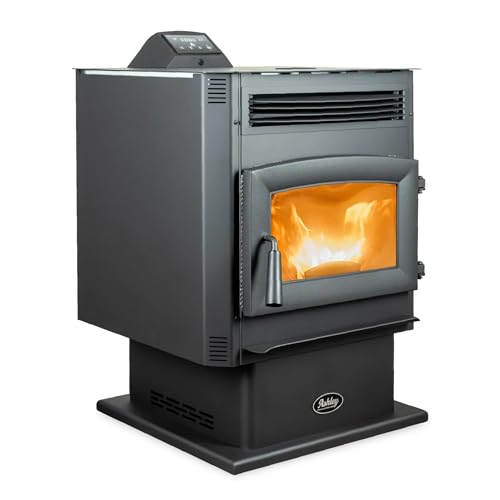
A solid choice for tech-friendly homes requiring robust heating with integrated Wi‑Fi. This model supports up to 2,200 sq ft and offers a substantial 90 lb hopper for longer burn intervals.
- Best for: Homes that want smart integration and reliable warmth in slightly larger spaces
- Better for: Users who appreciate remote monitoring and control
Caution: Depending on climate and home layout, actual heat distribution may vary; ensure proper insulation and venting.
Cleveland Iron Works Medium Pellet Stove – 60lb Hopper

Compact yet capable, this model fits smaller living spaces within 2000 sq ft. It includes WiFi connectivity and a medium hopper for scenarios where space is at a premium.
- Best for: Apartments or smaller homes needing efficient heat without bulk
- Better for: Quick installation in limited spaces
Limitation: Smaller hopper means more frequent refueling in very cold periods; plan for regular maintenance cycles.
US Stove GW1949 Wiseway Non-Electric Pellet Stove

Designed for simplicity and lower maintenance, this non-electric stove uses gravity feed for pellets and heats up to 2,000 sq ft. It’s ideal for off-grid setups or homes prioritizing fewer moving parts.
- Best for: Off-grid homes or customers seeking a straightforward operation
- Better for: Reducing electrical dependencies
Limitation: Non-electric operation may limit some smart features and automatic temperature control present in other models.
US Stove 3,000 Sq. Ft. Pellet Stove, WiFi, 170lb Hopper

This high-capacity option targets larger homes or rooms with high heat demand, delivering up to 33,000 BTUs and extended burn time courtesy of a 170 lb hopper. Wi‑Fi helps with remote adjustments and monitoring.
- Best for: Large living areas or very cold climates requiring sustained heat
- Better for: Users who want max BTU output and long intervals between refuels
Caution: Higher BTU output may require more robust venting and clearance planning; verify space and local codes.
Buying Guide
What size pellet stove do I need for about 2000 sq ft?
A stove in the 2,000–3,000 sq ft range typically provides enough heat for most two-to-three room layouts during shoulder seasons. Look for models with at least 40,000 BTUs for reliability in colder zones and consider hopper capacity to minimize refueling.
What features matter for comfort and convenience?
Remote control and Wi‑Fi connectivity help manage operation, temperature, and scheduling. Automatic ash and cleaning routines reduce maintenance. A higher-efficiency rating conserves pellets and reduces emissions.
Is a non-electric stove a good choice for 2000 sq ft homes?
Non-electric stoves are appealing for simplicity and off-grid use, but they require more manual operation and planning. They are best for homes that prioritize low electrical use or have reliable natural ventilation without a motorized feeder.
How important is hopper size?
Hopper size determines burn time between refills. For larger spaces or longer cold spells, choose 90–130 lb or more. Smaller hoppers need more frequent tending, which may affect convenience.
What installation considerations matter?
Ensure proper clearance from walls, flooring, and combustibles. Verify venting requirements (3-inch or larger pellet vents, as applicable), and confirm that the chosen model complies with local codes and safety standards.
How do I compare energy use and efficiency?
Focus on efficiency ratings, EPA certification where applicable, and the heat output per hour (BTUs). Higher efficiency means more heat per bag of pellets and lower emissions.
FAQ
- What is the best pellet stove for 2,000 sq ft with Wi-Fi?
Models like the Cleveland Iron Works Large Pellet Stove or the Ashley 2,200 Sq. Ft. Pellet Stove with Wi‑Fi are strong options due to their heat output and smart controls.
- Can a 60 lb hopper handle 2,000 sq ft?
Yes, in moderate climates or with efficient insulation, but it will require more frequent refueling than larger hoppers.
- Are non-electric pellet stoves suitable for large homes?
They work for basic heating needs and off-grid setups, but they lack automatic feed and thermostat control that many homeowners expect.
- Is a 170 lb hopper necessary for 3,000 sq ft?
For consistently long burn times in larger homes, a bigger hopper is advantageous, especially in cold climates.
- What maintenance issues should I expect?
Regular ash removal, vent inspection, and cleaning of burn pots are typical maintenance tasks across most pellet stoves.
- Do these stoves meet EPA standards?
Many models on the market today comply with EPA or equivalent standards; check product specifications for each unit.